Keep an eye on the Upcoming Events tab periodically so you don’t miss any of our winter/spring meetings. Also, check out the latest episode of the SC Grower Exchange Podcast below.
Don’t forget to look at our Resources tab for links to crop handbooks, helpful websites, and related blogs. Be sure to scroll all the way to the bottom to see this week’s Question of the Week, and check back on Thursday for the answer.
Coastal Region
Anna Sara Hill
- Members of the Clemson peach team met and visited some local peach orchards this week.
- Loads of peaches are being picked. Harvest dates are running early due to all the rain, and harvest intervals that would normally be spaced out a few weeks are coming in on top of one another. A grower estimated culling about 30% of the fruit harvested this year.
- This year has been an especially bad one for peach disease. Growers saw a lot of bacterial canker and bacterial leaf spots. Copper and Fireline are about the only treatment options for bacterial leaf spot. There are no good controls for bacterial canker.
- Some trees had a disease called peach fungal gummosis (PFG), which is caused by Botryosphaeria, a fungus that attacks the vascular system, ultimately limiting the growth and yield of the peach trees.
- PFG normally enters the tree through wounds caused by pruning, wildlife feeding, and other environmental pressures. Cultural control methods and reduction of environmental stress, as well as a good fungicide spray regime, can help protect healthy trees and minimize the spread of the disease.
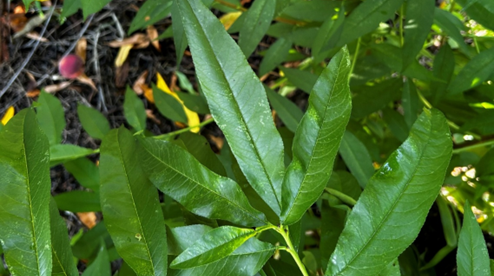
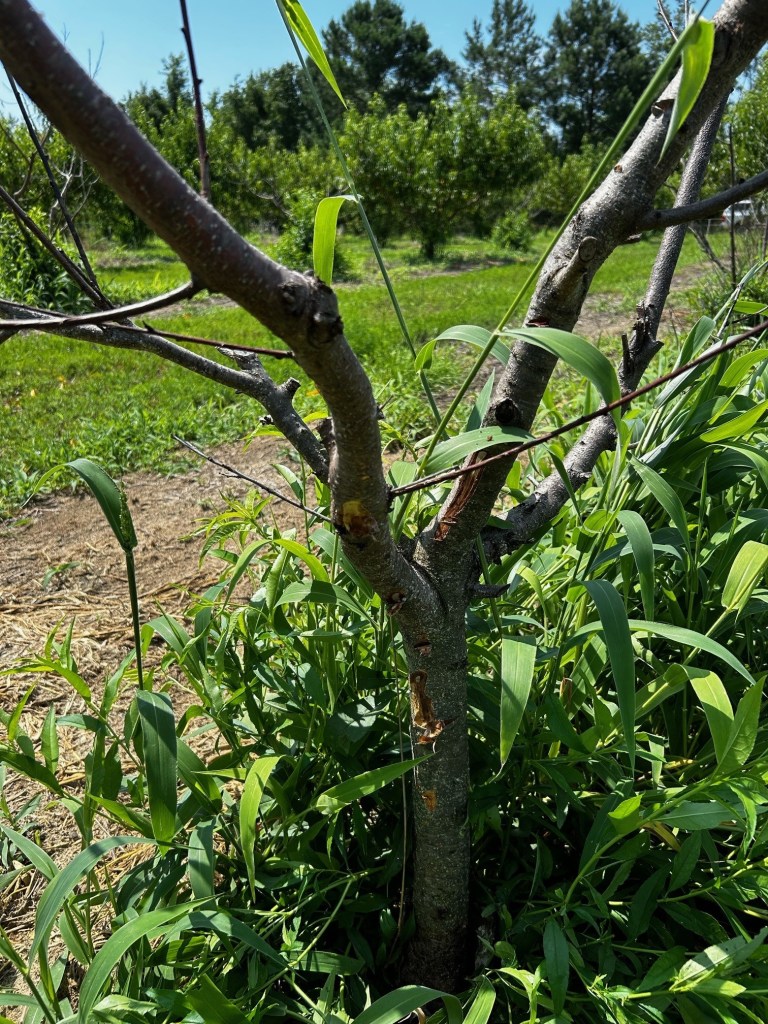
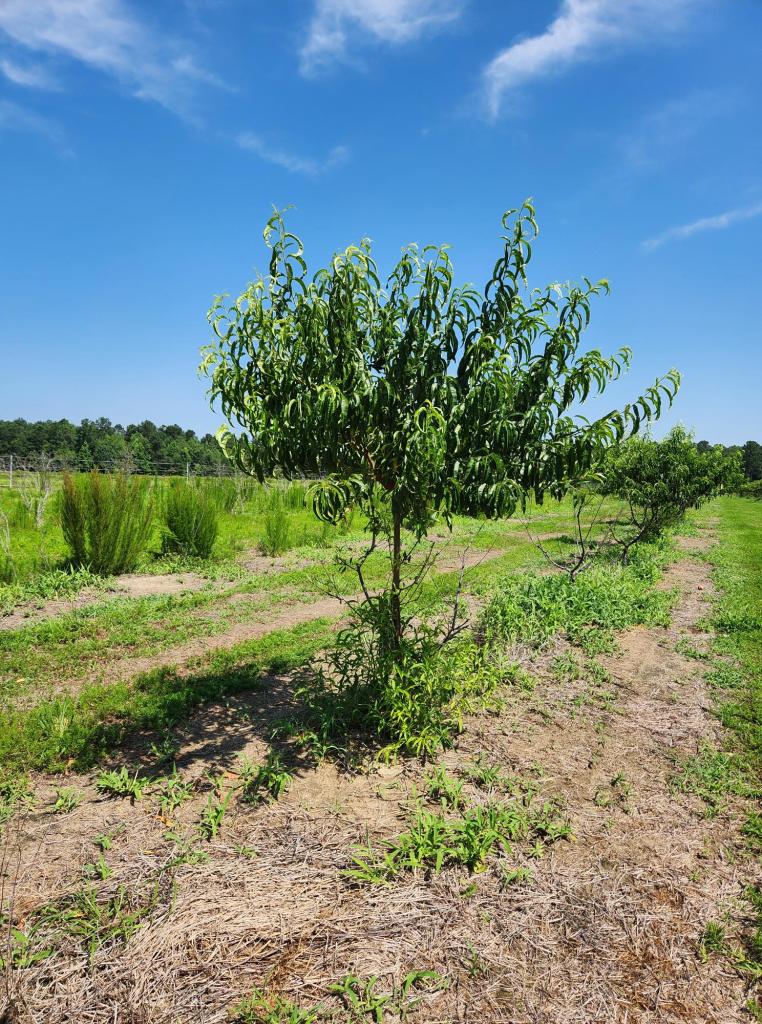
- We looked at some trees with phony peach syndrome (PPS). This syndrome is caused by a bacterium that is transmitted by Glassy Wing Sharpshooters (GWS) and mechanical injury. The disease causes stunting and shortened internodes between leaves, giving an overall appearance to the tree.
- Once trees have PPS, it is best to remove the inoculum source by pulling the trees out. Hedging during the fall or after harvest spreads the disease and increases the exposure time of the wounds, during the growing season, when GWS are active, promoting the spread. It is best to prune in the spring, just before trees break dormancy. The wounds heal more quickly at that time, and the GWS are less active. Hand pruning is a better management choice than mechanical hedging. Hand pruning is more selective and reduces stress and damage to the tree.
- Some isolated White Peach Scale colonies were observed on a few trees. Esteem is a good insecticide choice for controlling scale.
- Feeding damage caused by mites and thrips was also observed on some leaves. Thrips damage looks more like scratching and generally starts on the edge of the leaf. Mite damage has a stippling appearance and tends to start closer to the midrib. If populations are high enough, thrips and mites can also feed on fruit, causing blemishes.

Midlands
Rob Last
- After an incredibly hot and humid start to the week, we are entering a period of more normal seasonal weather patterns. Some parts of the area reported hail impacts, and the downpours on Wednesday night were strong enough to sandblast crops and split leaves. It is important to remember that these wounds can be a site for disease infection.
- Good volumes of a range of crops are coming to market at the moment, with cucurbits and leafy greens beginning to slow down.
- Disease remains a constant factor at the moment, so remember to rotate FRAC fungicide codes to minimize disease resistance.
- Anthracnose is present in many crops, characterized by a tan sunken lesion, often with salmon-pink sporulation visible.
- On the plus side, insect pressure remains relatively low; however, melon growers should be aware that pickleworm activity is increasing. Consulting the Southeastern Vegetable Crop Handbook gives a wide range of options for conventional growers; for organic producers, the options are more limited to Bt and Spinosad.

Anthracnose lesion and sporulation on bell pepper. (R. Last)
Sarah Scott
- Like many areas, the Ridge has been hot and dry this week. A positive spin on the dry conditions is growers have the ability to control the moisture in the fields an avoid excessive moisture on foliage.
- We are harvesting Scarlet Prince and July Prince varieties of peach and will continue with freestone varieties.
- A few reports of worms in fruit have come in. There are not really any options for chemical control during harvest but if you have some time before picking, Avaunt has a 7 day phi.
- As blueberries are nearing harvest, growers should start thinking about their post harvest fertility. If it’s been a while since you did a soil sample, go ahead and get one submitted so you can have the results to plan with.
Question of the Week
Did Zack find a hybrid squash-cucumber this past week? What is going on here?
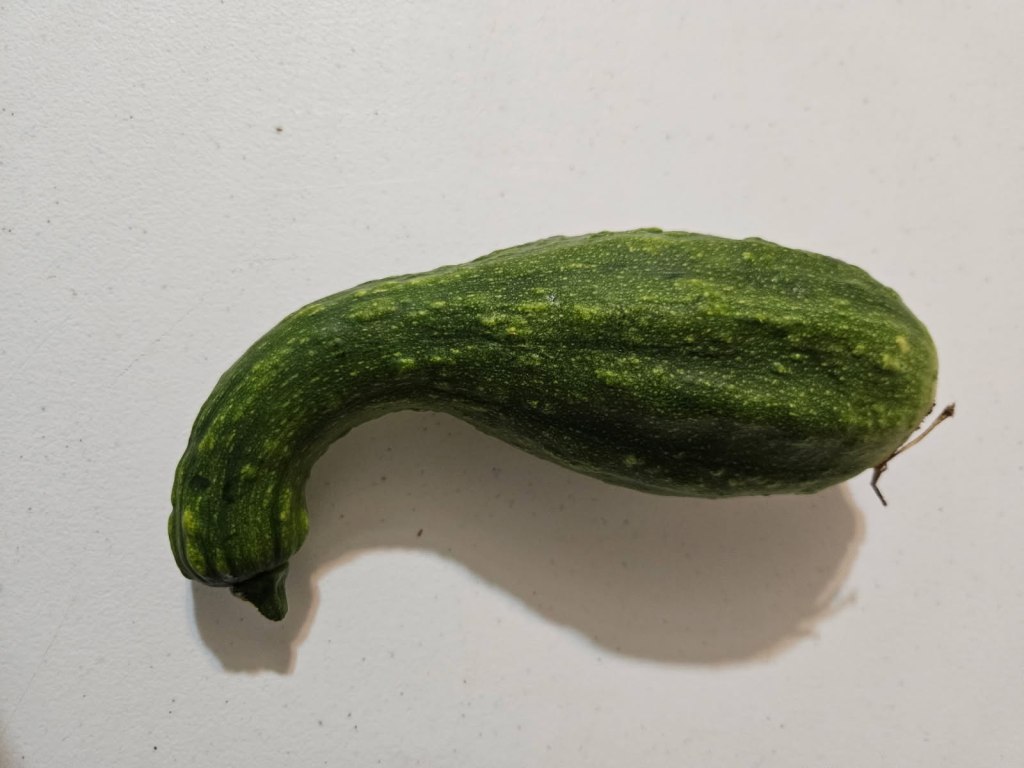
Answer in the comments below and check back on Thursday to see the answer.
 The South Carolina Grower