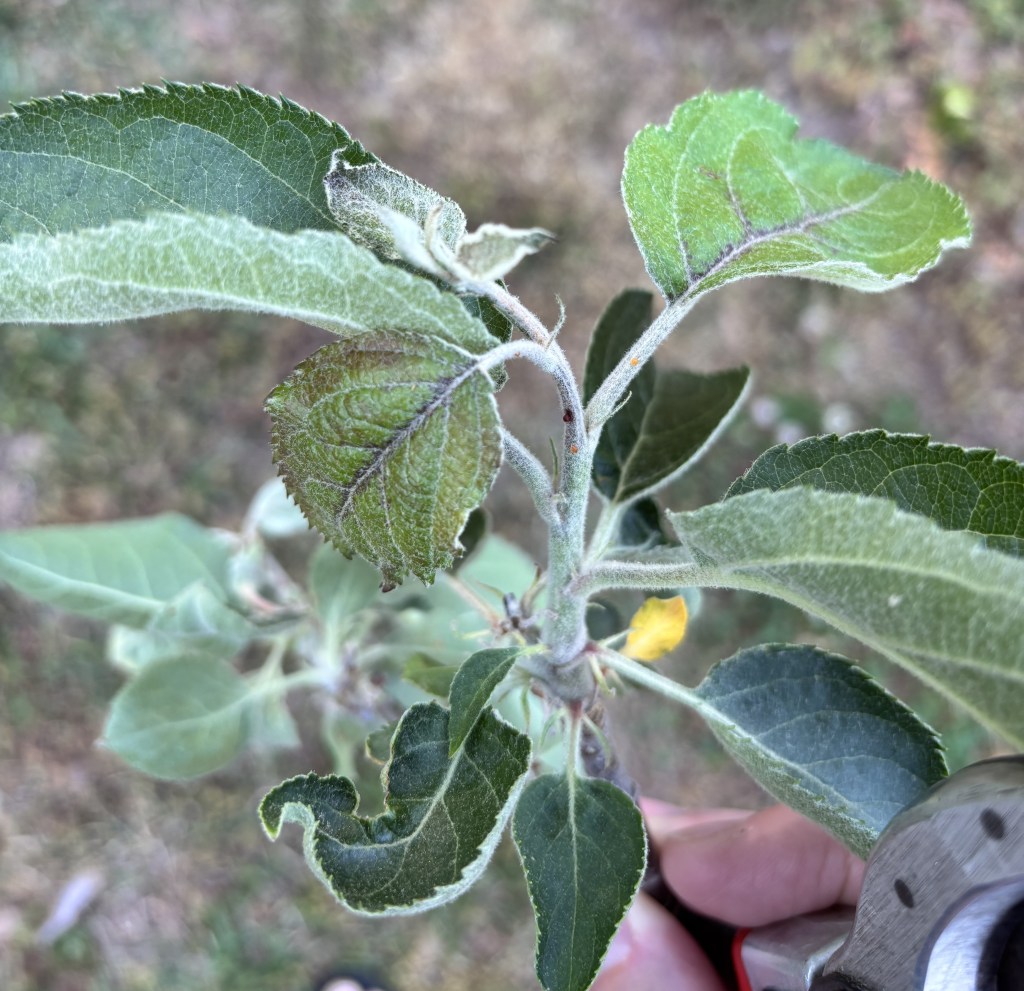
What’s causing this apple shoot tip to wilt and droop?
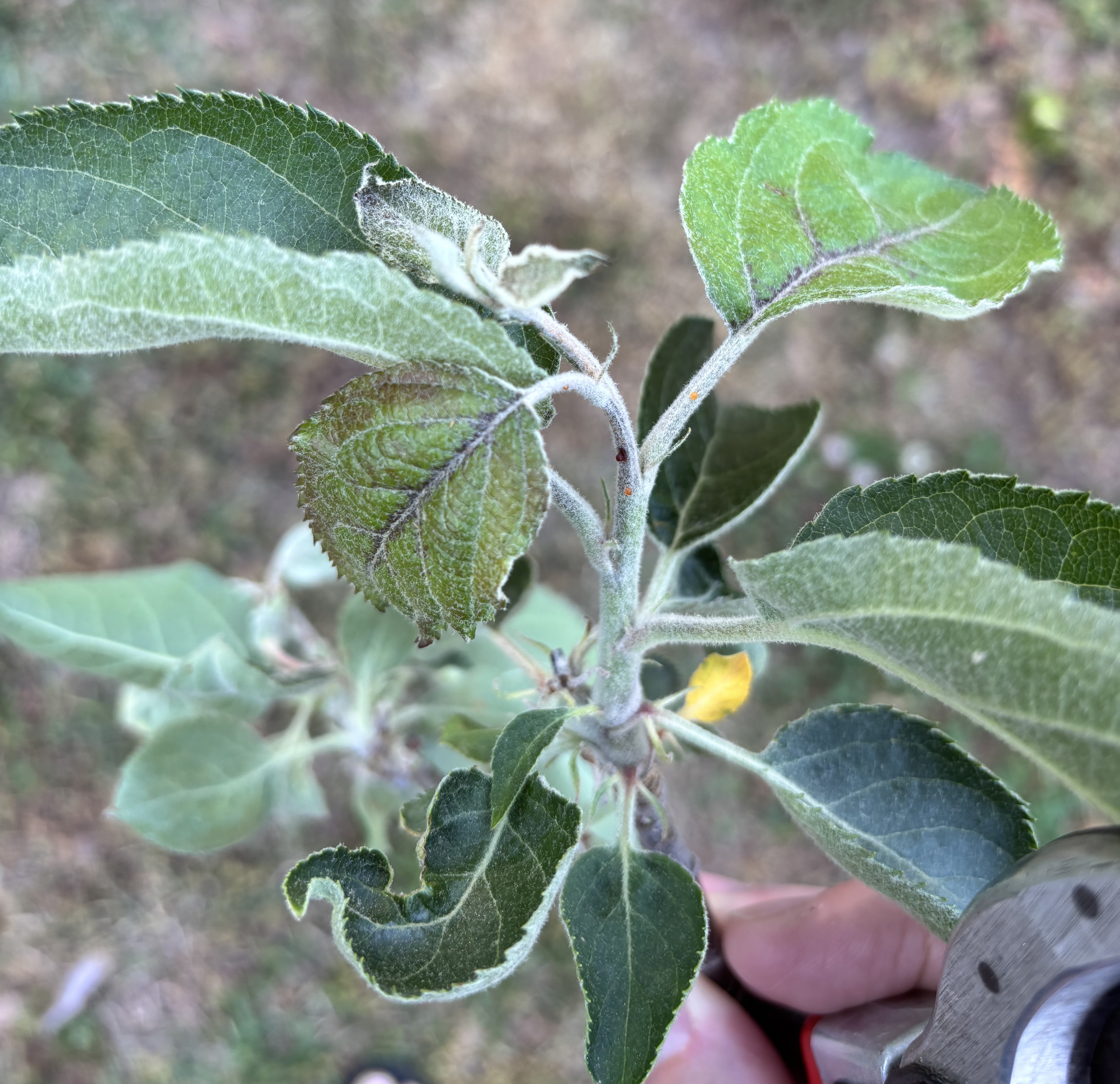
This picture shows very early symptoms of fire blight disease on a young apple shoot. Fire blight, caused by the bacterium Erwinia amylovora, is a disease that affects apple trees and can move quickly through young, tender growth. Early on—like in the shoot shown here—the first signs are subtle: the tip of a new shoot begins to wilt, and the youngest leaves may look slightly dull, water-soaked, or discolored. Blackening of the leaf tissues at the base and along the midribs is a common early symptom.
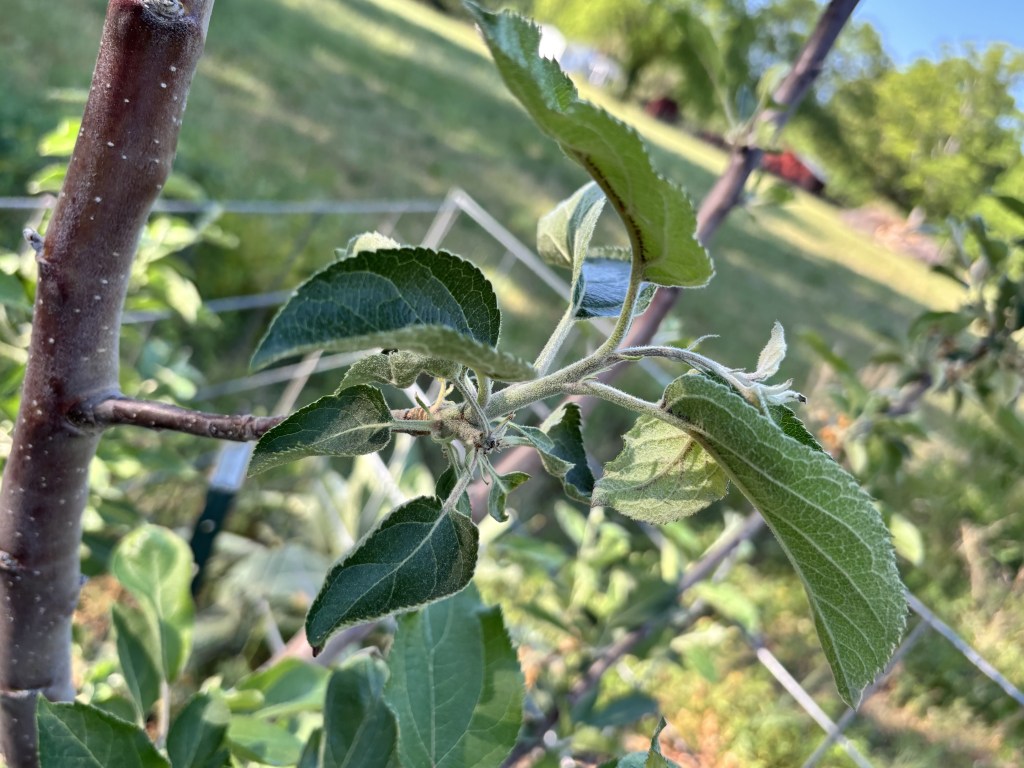
As the infection develops, that soft, green growth collapses and starts to turn brown/black. The shoot tip often bends over into a gentle hook, sometimes described as a “shepherd’s crook,” which is one of the most recognizable early clues.
Despite its dramatic name, fire blight doesn’t involve heat—rather, the infected tissue dries and darkens, giving it a scorched appearance. Left unchecked, the disease can move from these young shoots into larger branches and even threaten the whole tree.
Catching these early symptoms, especially on new shoots, is key to managing the disease and protecting the tree’s health. Read more about fire blight here.
This week’s question is from Cory Tanner, Extension Horticulture Team Director.

