The Upstate received some rain over the weekend, while nothing much materialized in the Midlands or along the coast. With cooler temperatures and more chances for rain this week, we’ll be keeping a close watch on disease pressure. Insect pests, including scale, Colorado potato beetle, cucumber beetles, and mites, are causing problems in some areas.
Key Takeaways for Growers This Week
- Upstate received some rain – disease pressure is likely to increase
- Cooler temps expected this week – should be helpful to strawberry bloom
- Blueberry harvest has started on the coast – volume looks good so far
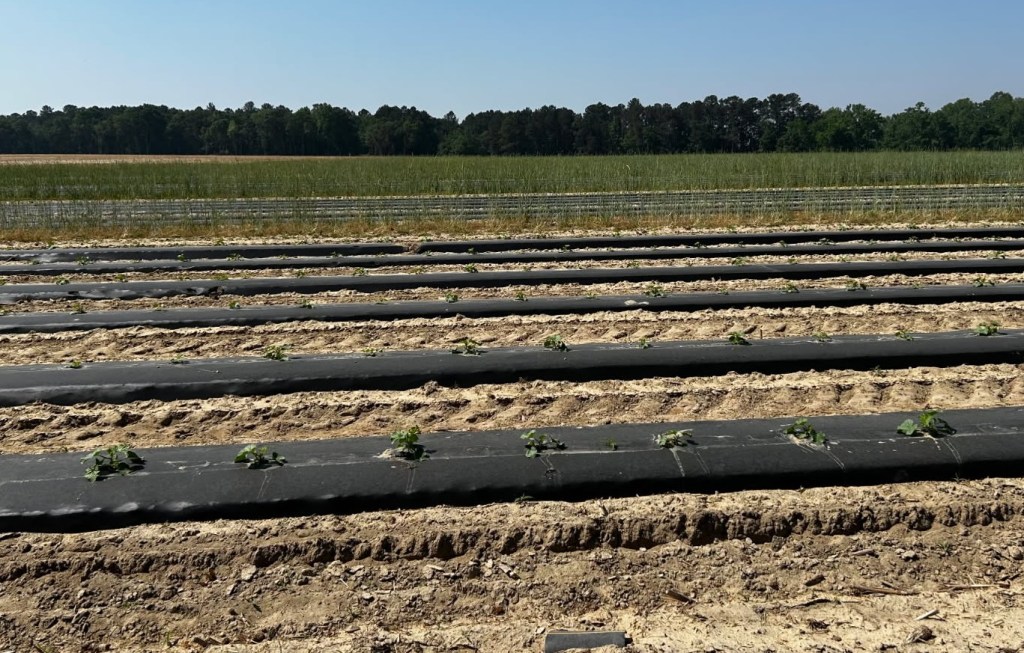
- Wind has been rough on veggie transplants – including cucumbers and watermelons
The latest episode of the SC Grower Exchange Podcast is available now.
Lowcountry Report
Anna Sara Hill
- April is almost gone, and we are all still waiting on those legendary “April Showers”.
- Irrigation is currently the primary factor keeping crops alive. Growers are adopting creative irrigation strategies such as rotating zones and schedules and prioritizing high-value crops to conserve diminishing surface water.
- On the plus side, the dry weather is keeping disease issues at bay. However, be on guard when it starts raining and scout frequently to catch emerging issues.
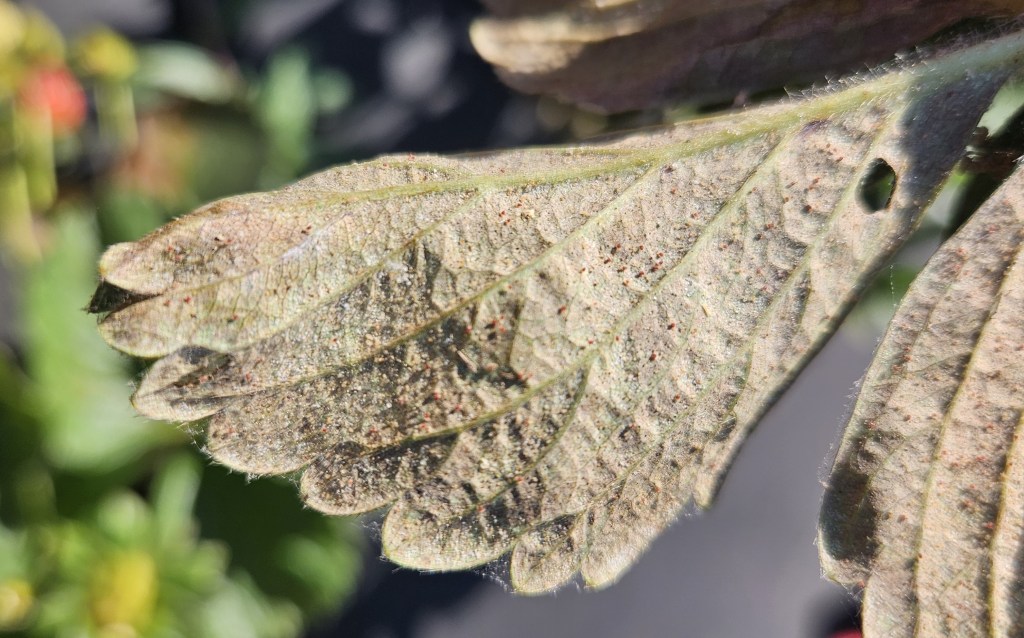
- Spider mites love the environmental conditions and are everywhere. Continue treating miticides, rotate active ingredients and use label rates.
- Keep an eye out for cucumber beetles, as one farm that had problems with them last year is already seeing some this year. Begin treating them before the populations get out of hand.
Zack Snipes
- Another week of dry, windy weather.
- Strawberries are still being picked at decent volumes, but it seems we may have a bit of a lull this week. I think we were pushing the fruit so hard over the past few weeks that the plants didn’t bloom much. I expect the cooler weather this week to slow them down just a bit, which I think is a good thing.
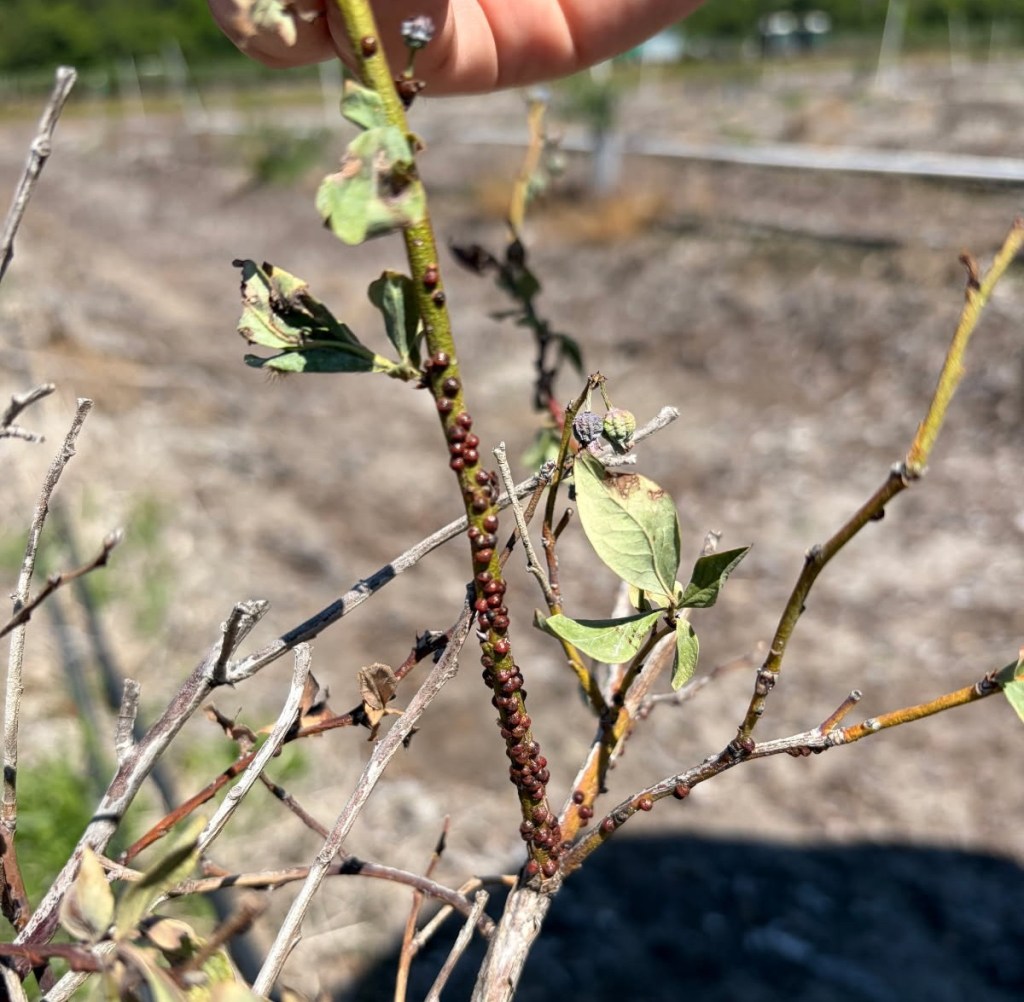
- We are in the middle of highbush blueberry harvest with heavy volumes coming off. We are seeing some scarring from the freezes we had during bloom. No disease issues to mention. I did find a good bit of scale on plants, so be mindful of that when out scouting. I am also seeing a decent amount of scale on blackberries.
- All other crops, if irrigated, look pretty good.
Midlands Report
Daniel Lyon
- Strawberry season is progressing nicely. The somewhat cooler temps we saw last week reduced the sunscald issues we saw the week before. Although I would much rather see some rain, the dry weather has helped to reduce pressure from some of our humidity-loving pathogens. Be on the lookout for powdery mildew, though, as it prefers this hot and dry weather. Although I have not seen many in my area, continue to look for spider mites.
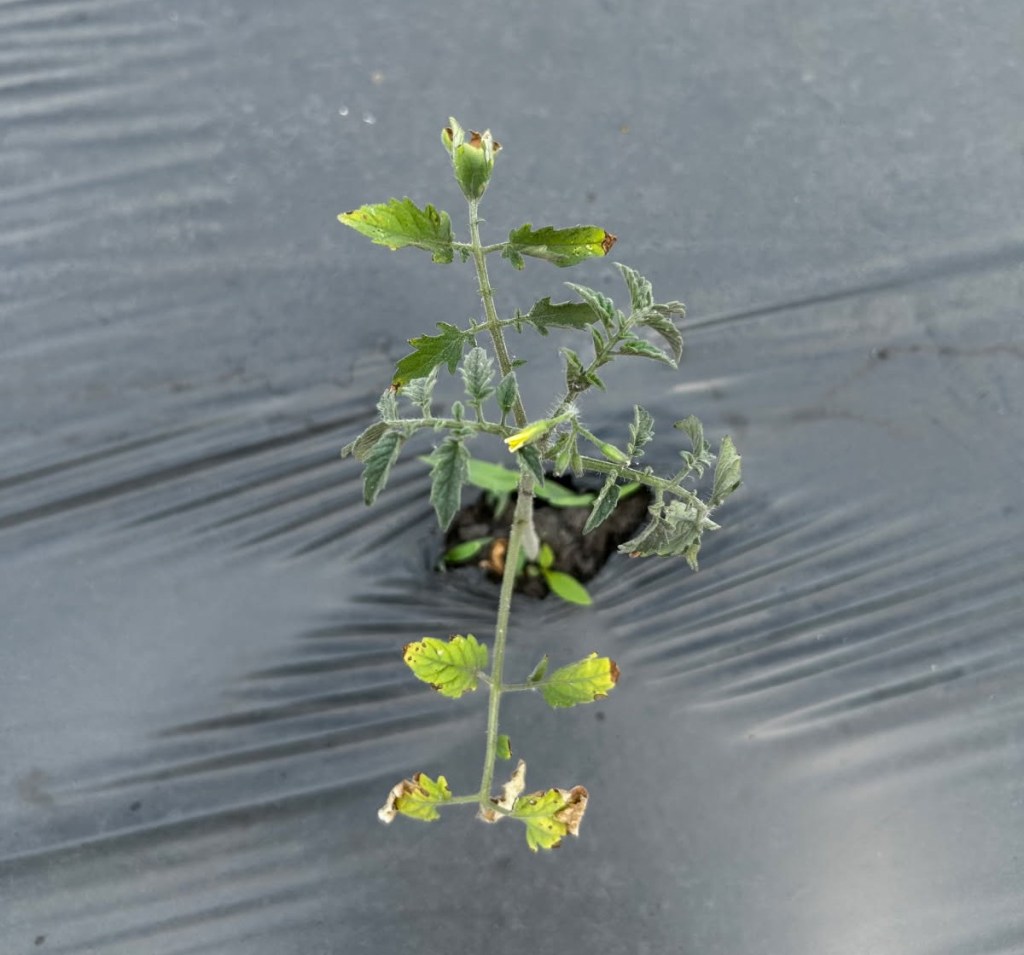
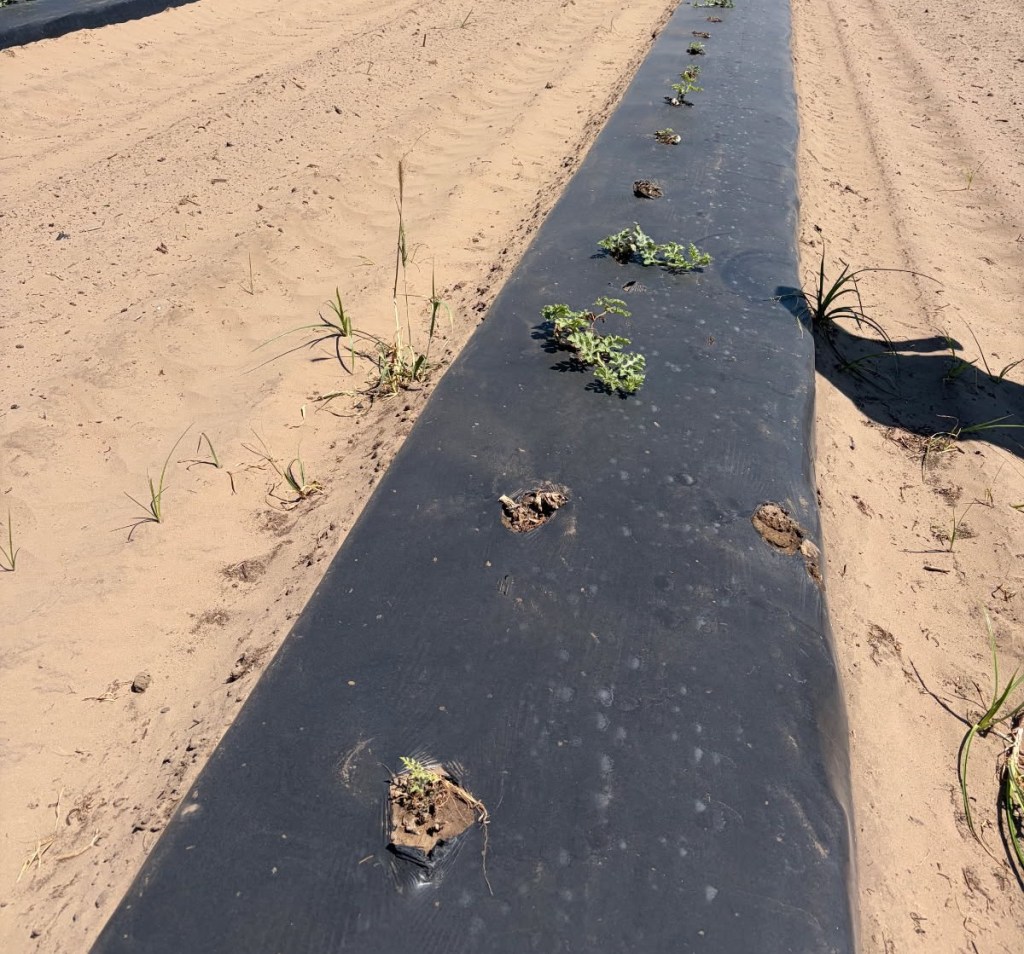
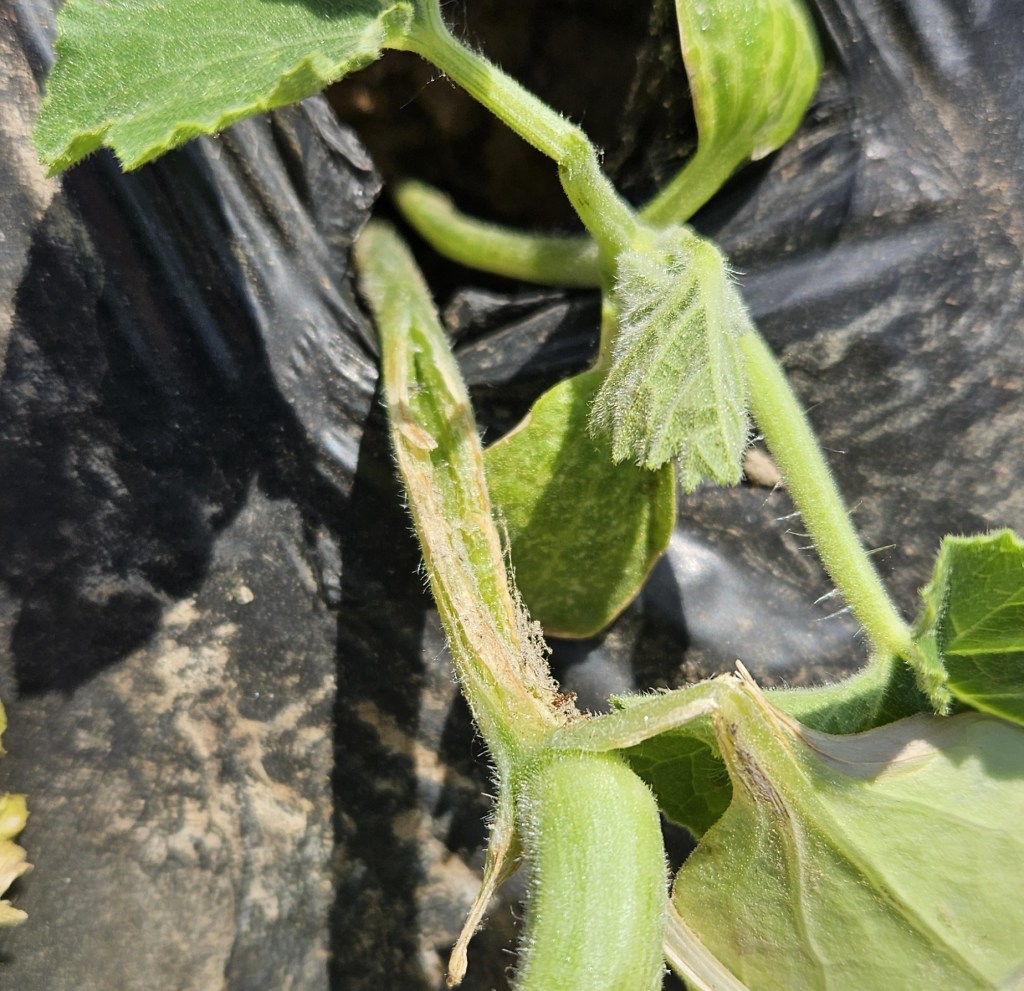
- I have seen some wind damage on cucurbits and squash. This damage can be identified by injury to the stem at the soil line. In some cases, you can see a bullseye pattern on the plastic where the plants were spun, causing the injury. In large-scale production, windbreaks should be used to reduce the wind’s effect on the crop.
Pee Dee Report
Brad Fowler
- Some parts of the Pee Dee got a little rain over the weekend, but it wasn’t enough, and most areas remain really dry. Despite the lack of moisture, most crops are looking pretty good, and it looks like rain might be in the forecast this week.
- Cooler weather and potential moisture may lead to some fungal issues, so be on the lookout in the coming weeks.
- While there hadn’t been much spider mite activity on strawberries, I did see some popping up last week. Keep an eye on it and spray it before it gets out of hand. Powdery mildew is also popping up in some areas.
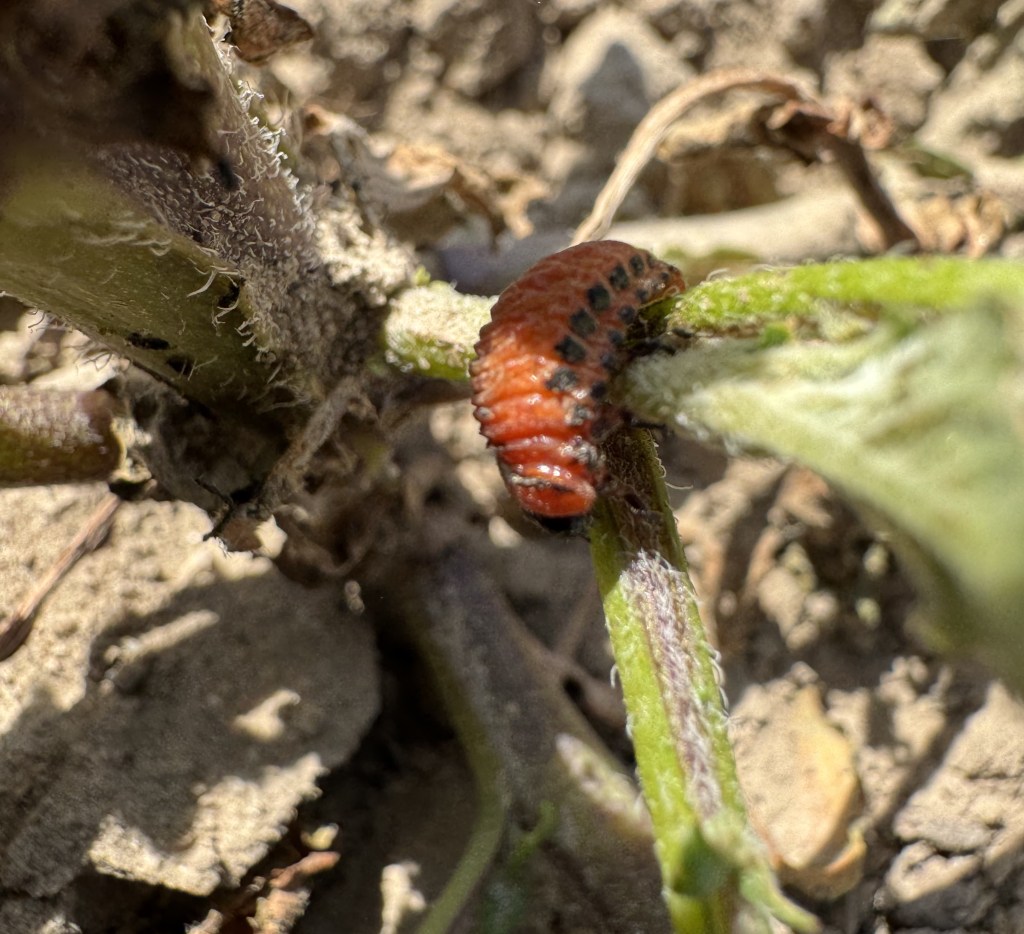
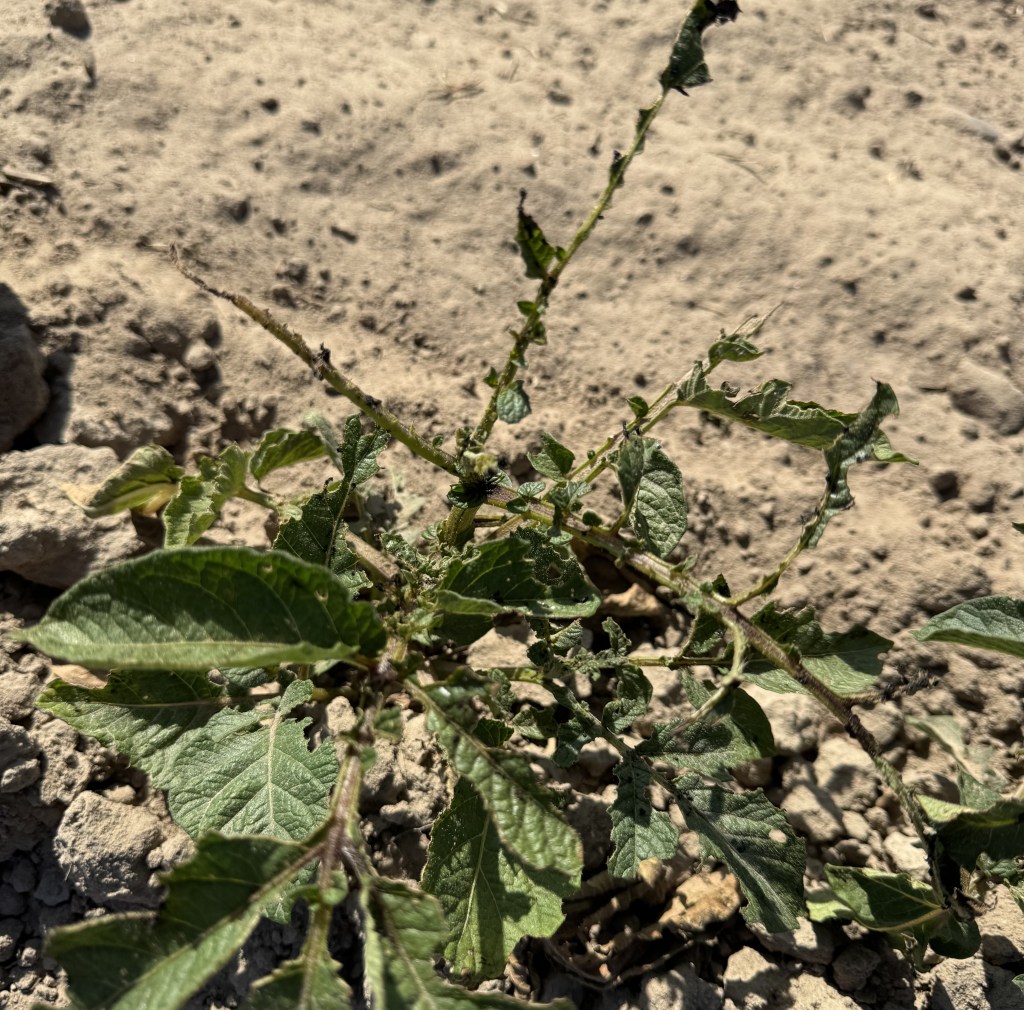
- Be on the lookout for Colorado potato beetle, especially when plants are young.
Upstate Report
Samantha Brown
- The Upstate received some much-appreciated rainfall over the weekend, with additional chances throughout the week. While the rain is beneficial for soil moisture and recently planted crops, the cooler temperatures may temporarily slow fruit and vegetable production.
- Growers should remain proactive with scouting, as wet conditions can increase the risk of fungal pathogens. Disease pressure has remained relatively low, so do not let this catch you off guard.
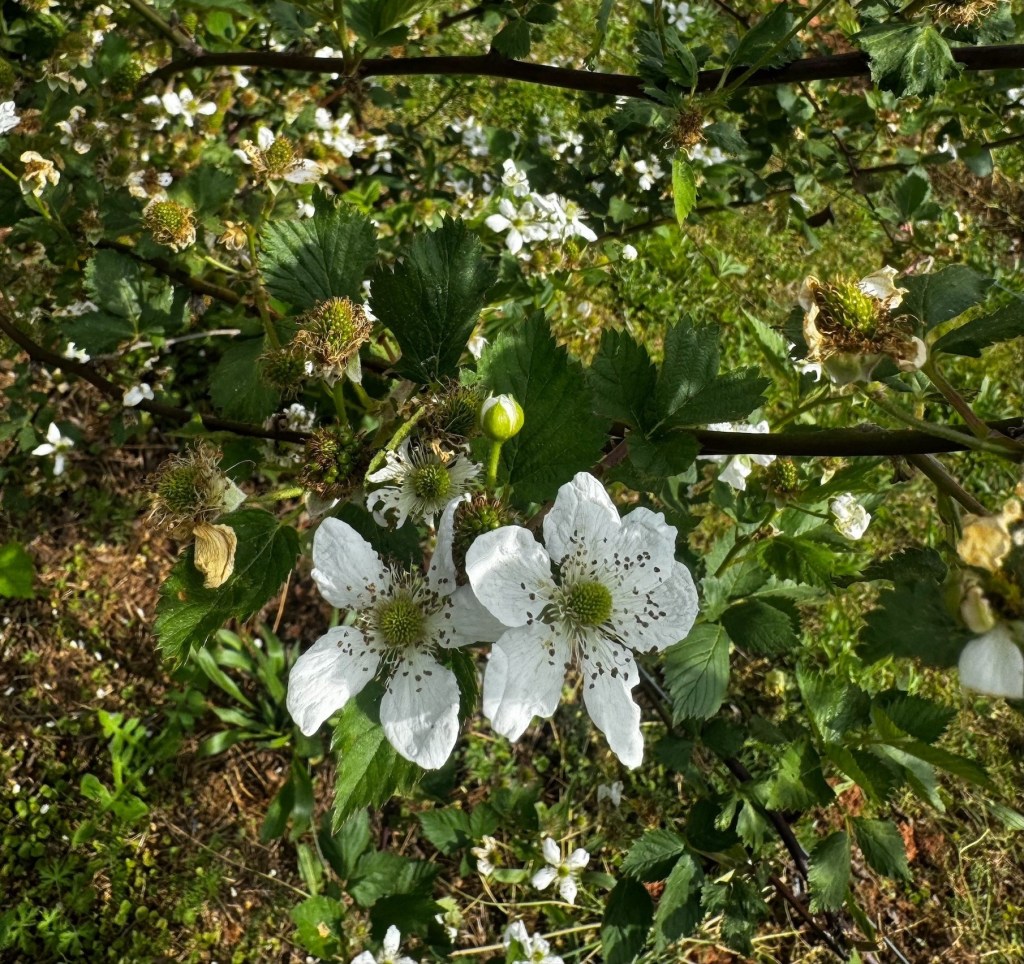
- Blackberries are showing potential for good production, with lots of blooms on the canes. Keep an eye on any weather events that could impact bloom quality or fruit set.
Andy Rollins
- Slight relief from the extended drought came to the upstate on Saturday. We’re hoping for more rain on Tuesday this week.
- I am still finding powdery mildew/rusty spot on peaches. Applications of Tilt/propiconazole the week before were helpful, but did not completely control the problem. The MyIpM app shows other fungicide options available for growers to choose from. I like using Captan with systemic fungicides with just 1 mode of action, like Tilt. Had these been sprayed together, the problem might already have been fixed.
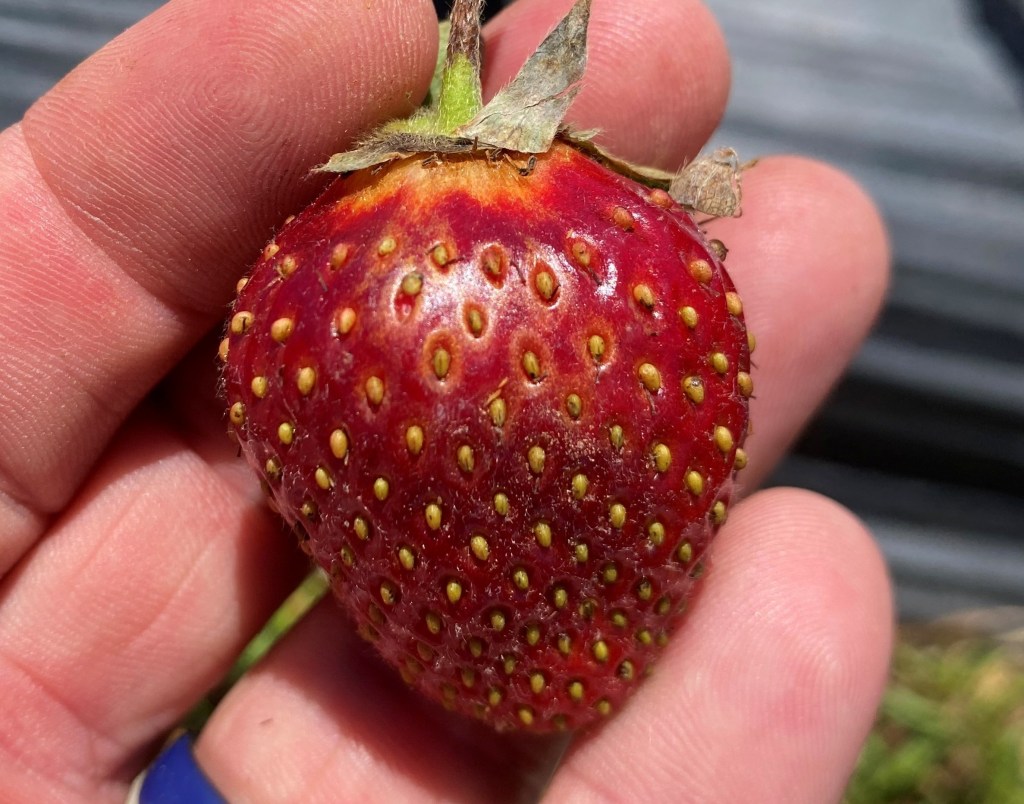
- We’re still finding thrips and spider mites in strawberries. The picture below shows a few thrips and feeding damage around the seeds. Applications of Radiant have been helpful for controlling thrips on some farms but not others. Exeril has been a more effective option. I am looking at the effectiveness of a new product that controls both thrips and spider mites, though it is not currently labeled for strawberries.
Question of the Week
What’s causing this apple shoot tip to wilt and droop? (Hint: It’s not the drought)
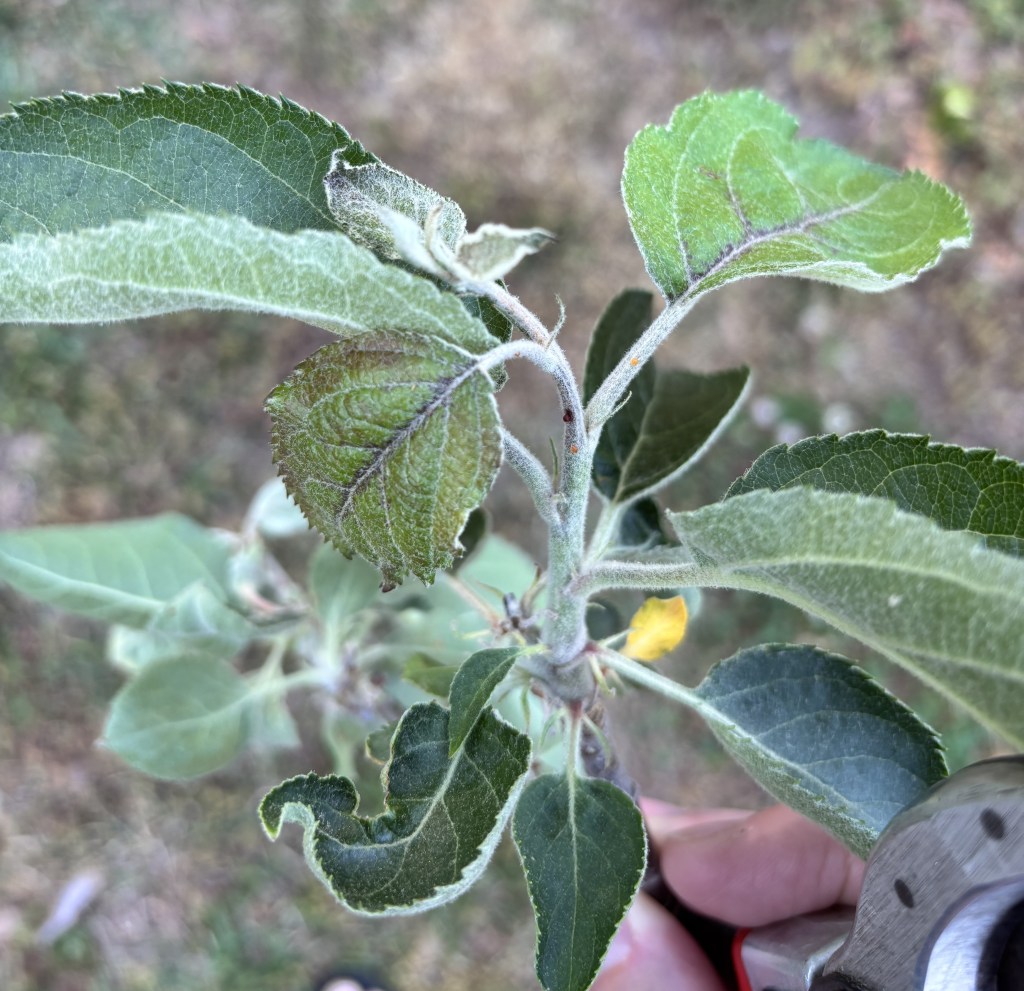
Answer in the comments below and check back on Thursday to see the answer.
Don’t forget to look at the Resources tab for links to crop handbooks, helpful websites, and related blogs. Have a great week!

