The current week has given a taste of fall, with cooler mornings. Muscadine harvesting is finishing for processing cultivars and continues for some fresh market cultivars. Fall crops are developing well with the emphasis being placed on preparing for strawberry planting.
Key Takeaways for Growers This Week
- Muscadine harvests are coming to an end – some fresh market pickings available
- Brassica plantings emerging well – fall brassica plantings are growing well.
- Timely destruction of previous crops – helps reduce pest pressures in the following crops.
- Midlands Strawberry pre-plant meeting is on Thursday, 24 September.
Lowcountry Report
Zack Snipes
The cooler mornings have been a nice surprise lately. We are pretty dry in most production areas along the coast.
- A good many fall crops have been planted with many more to come.
- We are just about to begin cutting fall watermelons.
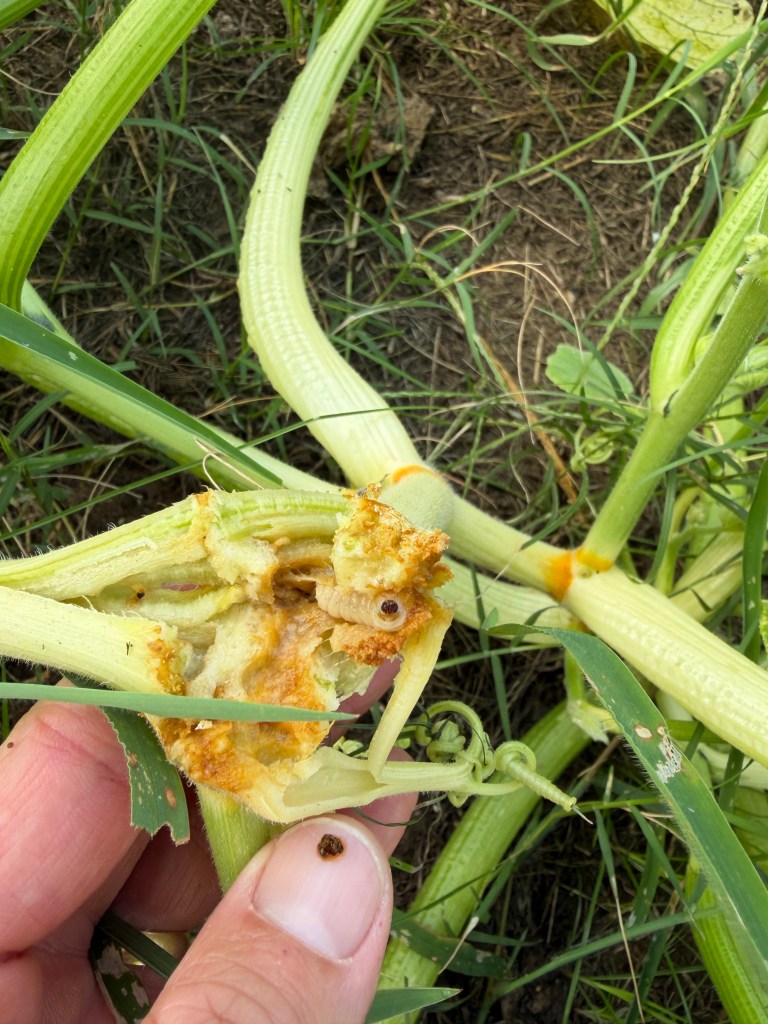
Squash vine borer larva causing wilting and death in winter squash. (Z. Snipes)
- I have seen some issues from leftover summer crops that should be addressed. Leaving summer crops in the ground this time of year allows for root knot nematode populations to build. I have seen this on many farms recently.
- Terminate those crops (pull them out if possible) and get a root knot nematode resistant cover crop in the ground immediately.
- A mustard mix would be an excellent choice for this time of year. I like to think of nematodes as silent killers, meaning they take away yield without growers really knowing why.
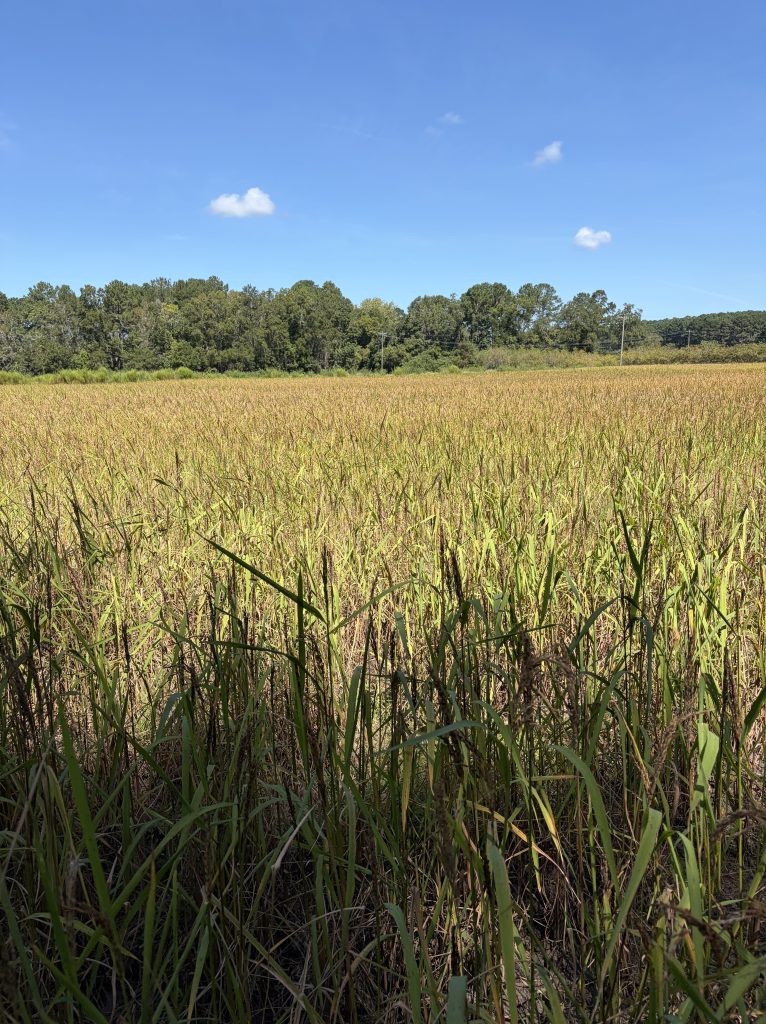
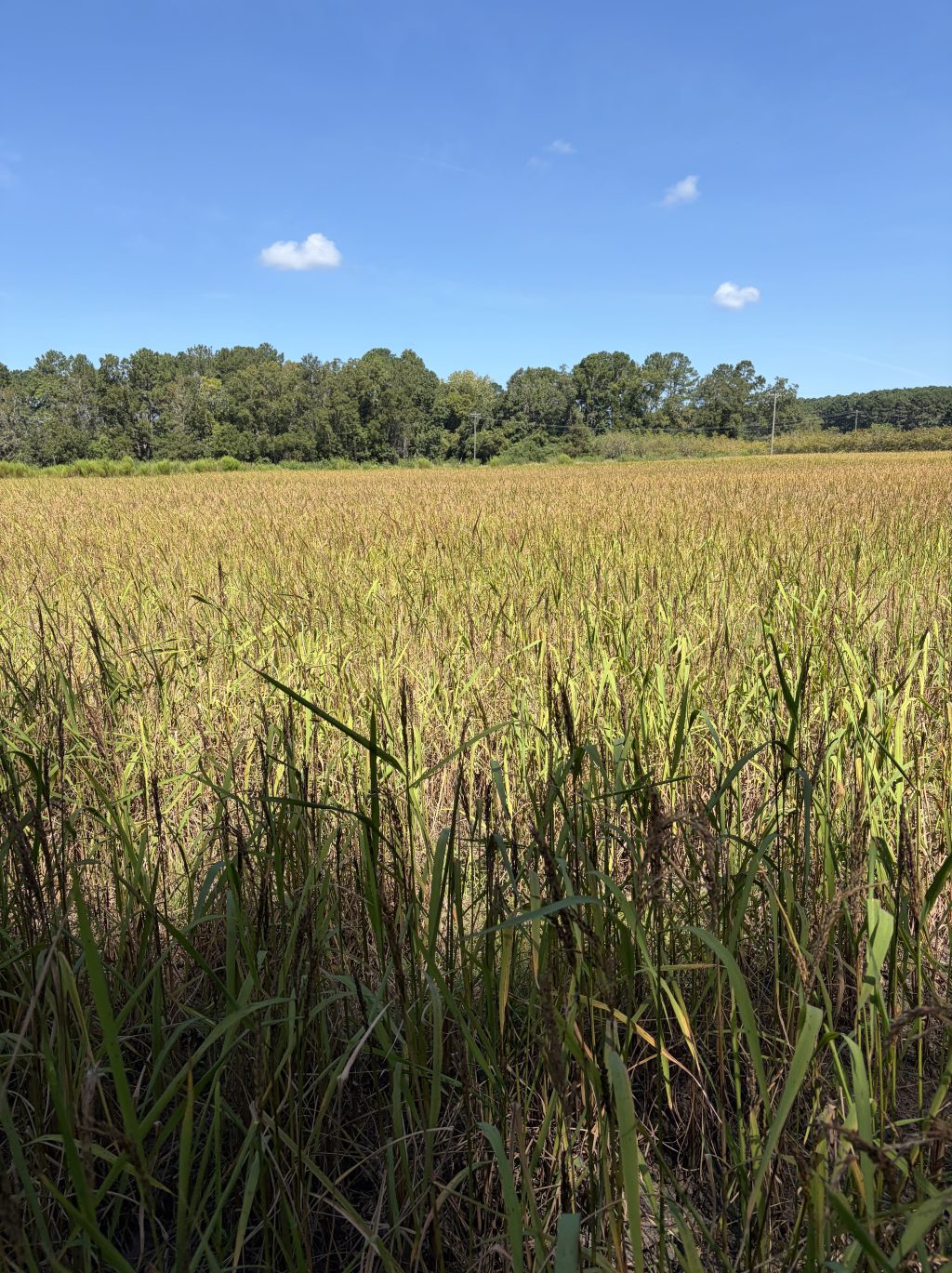
Carolina Gold rice on Wadmalaw Island approaching harvest. (Z. Snipes)
Midlands Report
Rob Last
- The cooler, fresher mornings experienced in the Midlands are making it feel a little like fall.
- Soil conditions remain dry with rainfall being very sporadic.
- Many fall-planted warm-season crops are fruiting well with little in the way of disease.
- Continue to monitor crops closely for pest and disease activity.
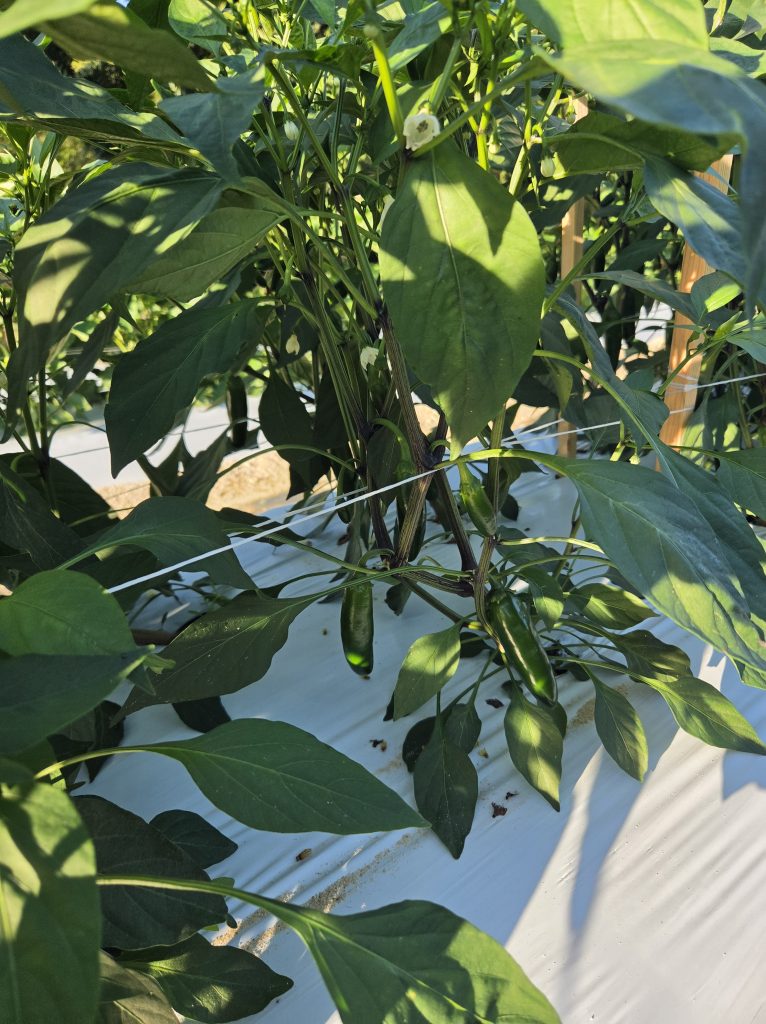
Jalapenos are developing well in the Midlands. (R. Last)
- Many of our cool-season crops, collards, cabbage, mustard, and kale are emerging well.
- There is some seed wash evident in places affected by heavy rainfall; monitoring these crops closely will aid the decision on whether to replant.
- As we progress into strawberry season, make sure your beds are ready and in good condition.
- We are looking for clean, defined shoulders on the beds, with a 150-lb man creating a 1-inch indent.
- Firm, even beds will help the crop to thrive and maximize the efficiency of irrigation and fertilizer applications.
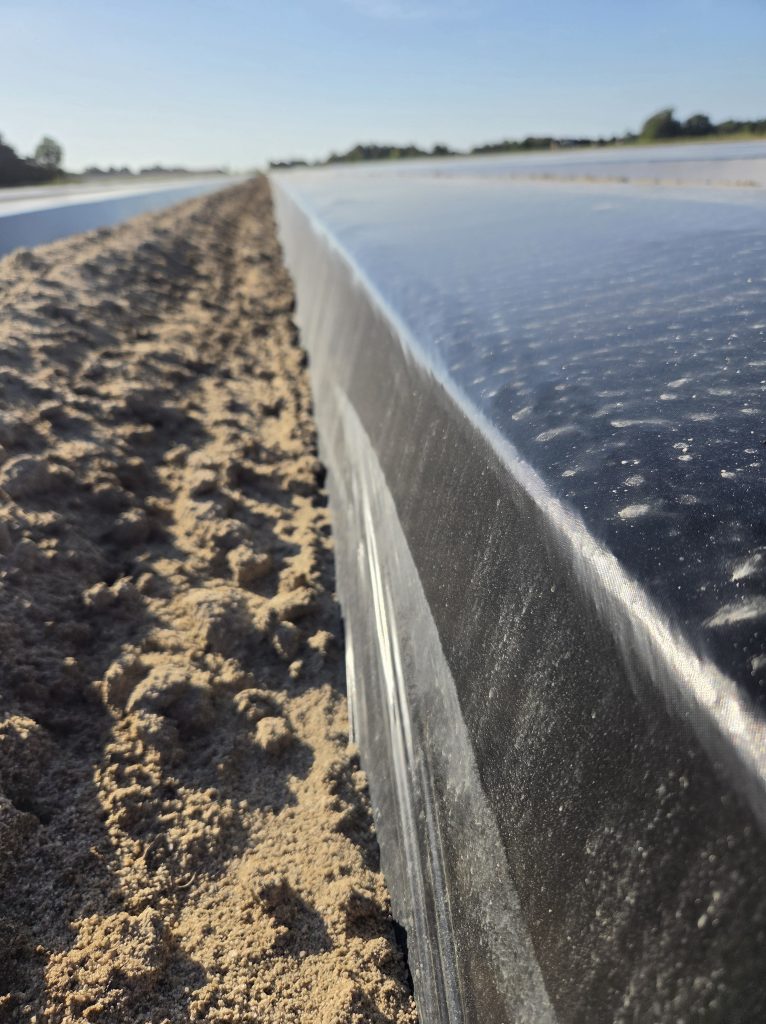
Plastic laid in preparation for strawberries in the Midlands. (R. Last)
Pee Dee Report
Bruce McLean
Parts of the Pee Dee got a shot of rain at the end of last week, but it wasn’t as much as most were hoping for. We have another decent chance between tomorrow and Thursday, then it is supposed to turn dry and noticeably cooler. The cooler temps will be a nice break. Here is what was observed around the Pee Dee this past week…
- Fall brassica plantings are coming along nicely. Early plantings are really starting to size up. Some of the latest plantings are going in now. Pest pressure is relatively light, with some caterpillar damage observed. Also, some bacterial leaf spot was spotted on turnips.
- Okra is still producing well. Some later plantings are really loading up. Pest pressure is light (in most locations). Some minor occurrences of leafhopper were observed, but not the Cotton Jassid leafhopper.
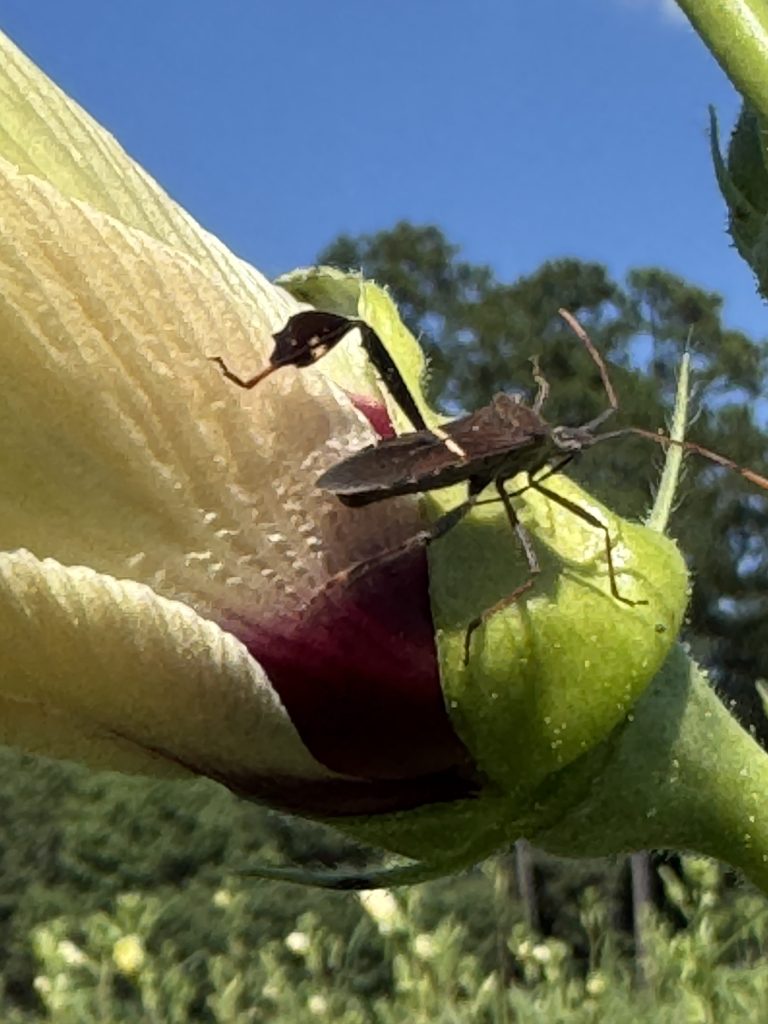
A Leaf footed bug on an okra bloom. (B. McLean)
- Some localized corn earworm and stink bug/leaf-footed bug damage seen.
- Sweetpotatoes are beginning to be harvested. So far, the quality looks very good, with light wireworm and nematode damage.
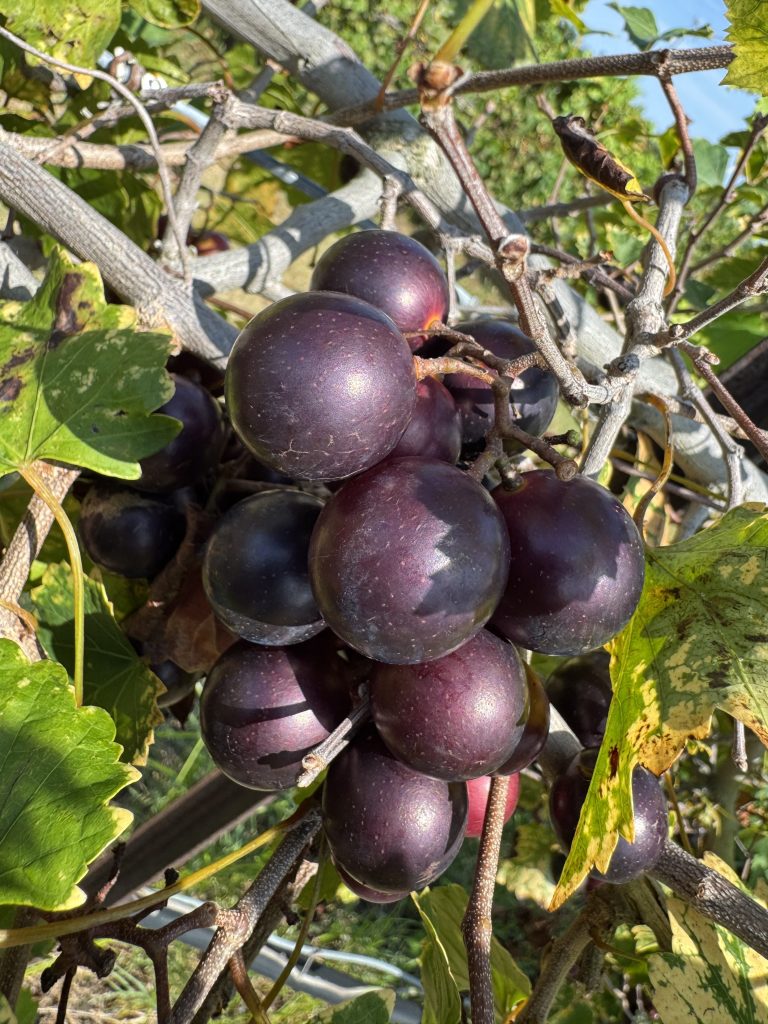
- Muscadine season is starting to wind down, with most of the wine/juice varieties completing harvest. Some fresh market varieties are still being picked with good volume. Supreme and Granny Val are two definite standouts, right now.
- Strawberry planting season is starting to get geared up. Some fall/winter (day-neutral) berries are going in now. Land for spring-harvest strawberries is being bedded and will be planted in the upcoming weeks.
Upstate Report
Andy Rollins
- Multiple onfarm tomato demonstrations were planted on farms in upstate SC with varieties coming out of Dr. Dilip Panthees NCSU tomato breeders program.
- Wayne Morgan (pictured) is a research technician in that program that has been instrumental in getting Dr. Panthees varieties into growers hands for them to see them first hand. They were harvested last week and evaluated for yield, size, weight, pressure, and sugar.
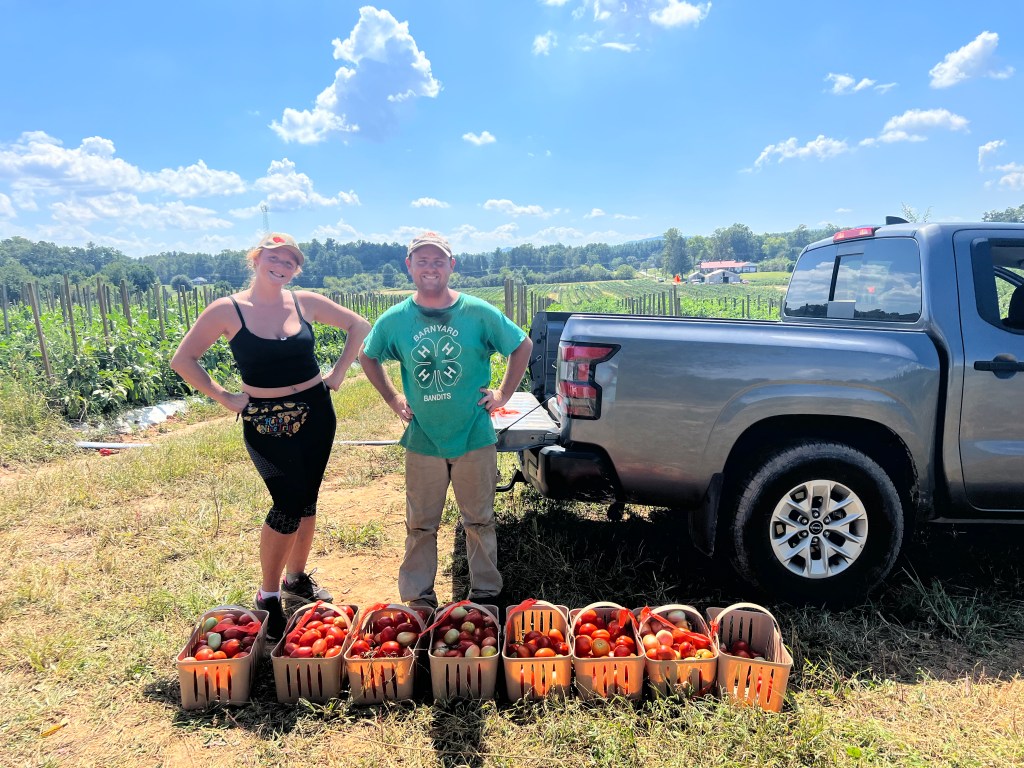
Wayne Morgan, North Carolina State University demonstrating some tomato cultivars from their field trials. (A. Rollins)
- More extensive evaluations are done at the Mountain Horticultural Research Center in Mills River NC. There are 2 replications of 9 large fruited varieties and 9 plum type varieties on each farm. Some are common like Mountain Fresh Plus (standard) compared to newer varieties like Mountain Defender and Mountain Ruby and Crown is a standard plum type. There are many advanced selections we are also looking at in both tomato types.
- Many of the newer varieties have heat set gene and seem to have less white tissue spread from the stem ends. Also many of his varieties have a deeper red internal color and are meatier than older varieties in general.
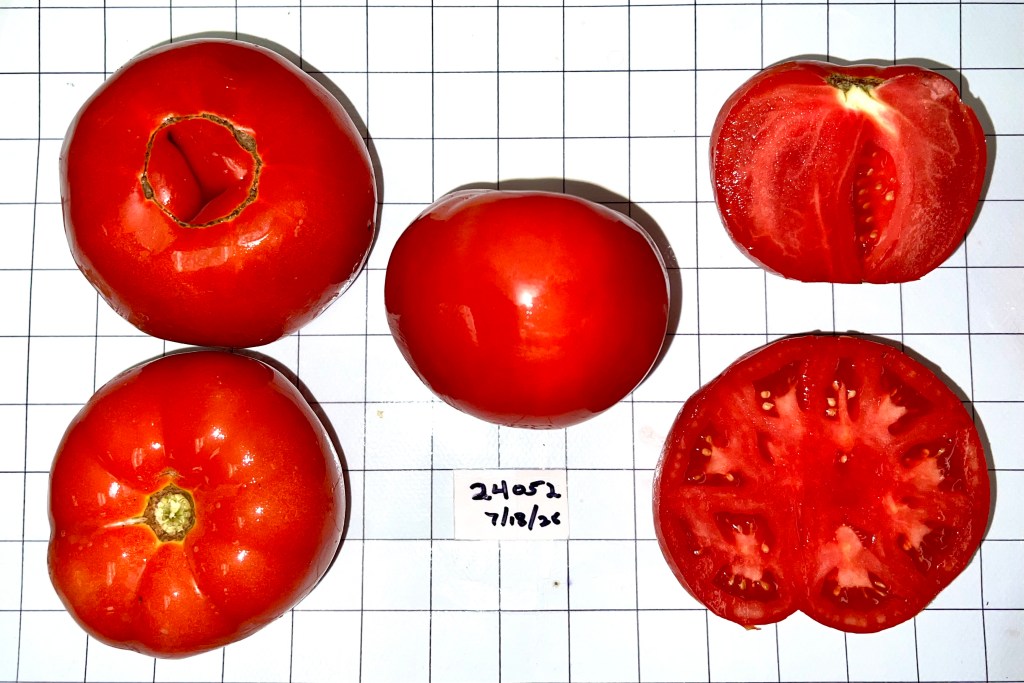
Tomatoes in the North Carolina State University program. (A. Rollins).
Question of the Week
What caused this foliar deformation on sweetpotatoes?
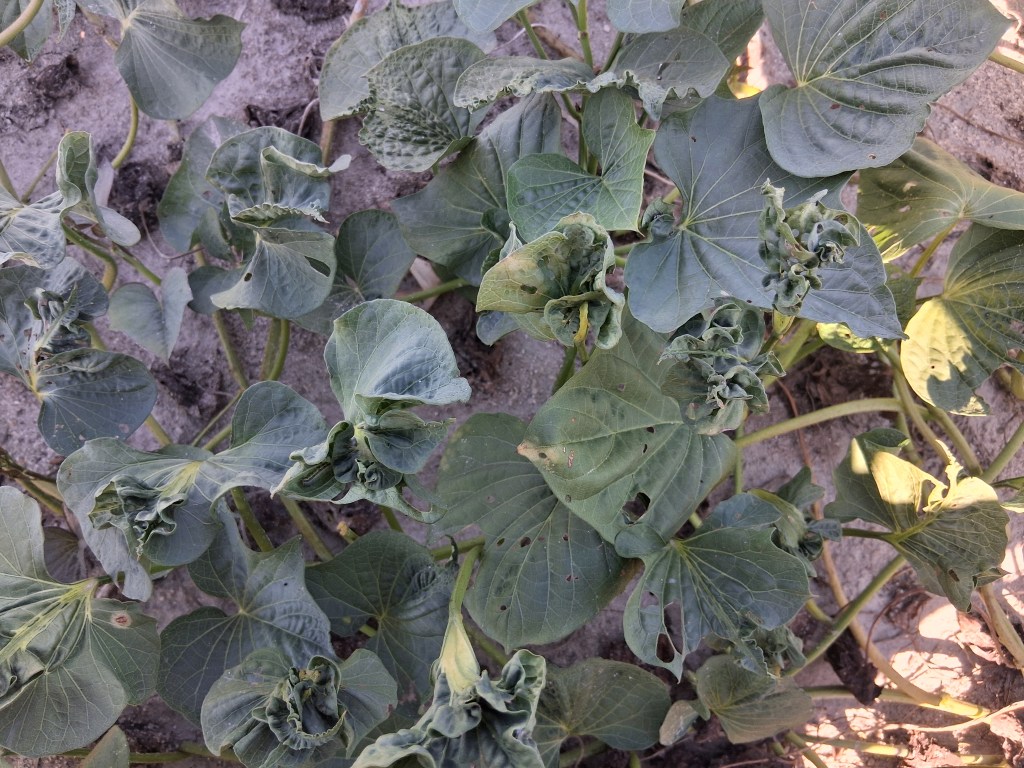
Answer in the comments below and check back on Thursday to see the answer.
Don’t forget to look at the Resources tab for links to crop handbooks, helpful websites, and related blogs. Have a great week!

