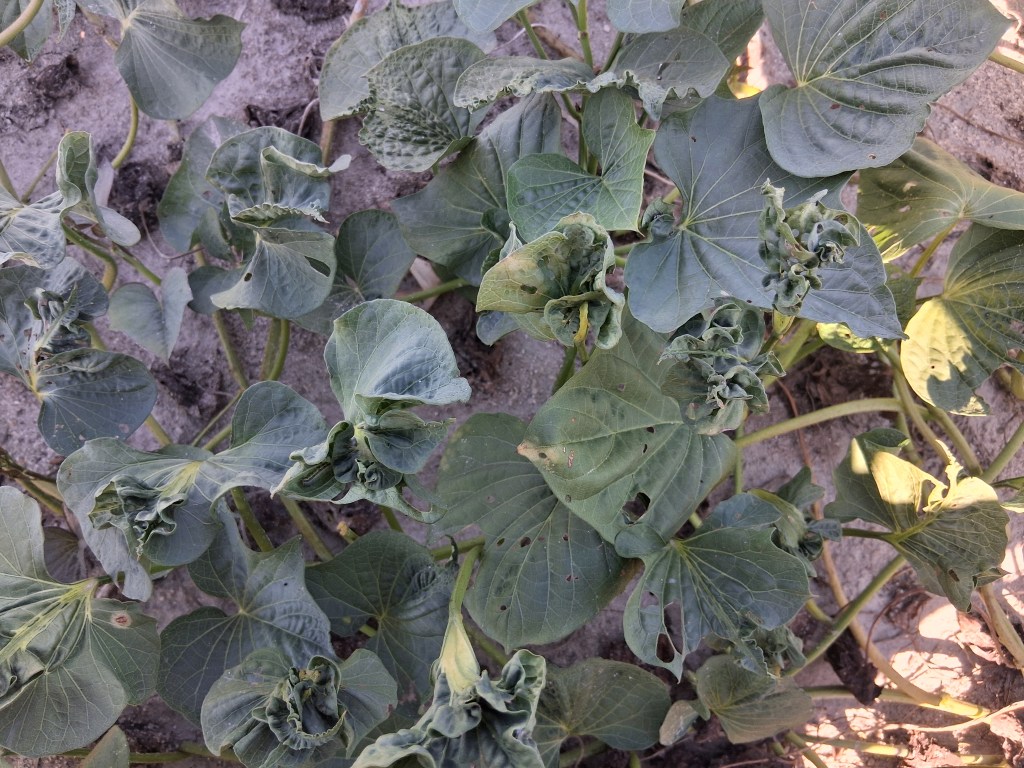
What caused this foliar deformation on sweetpotatoes?
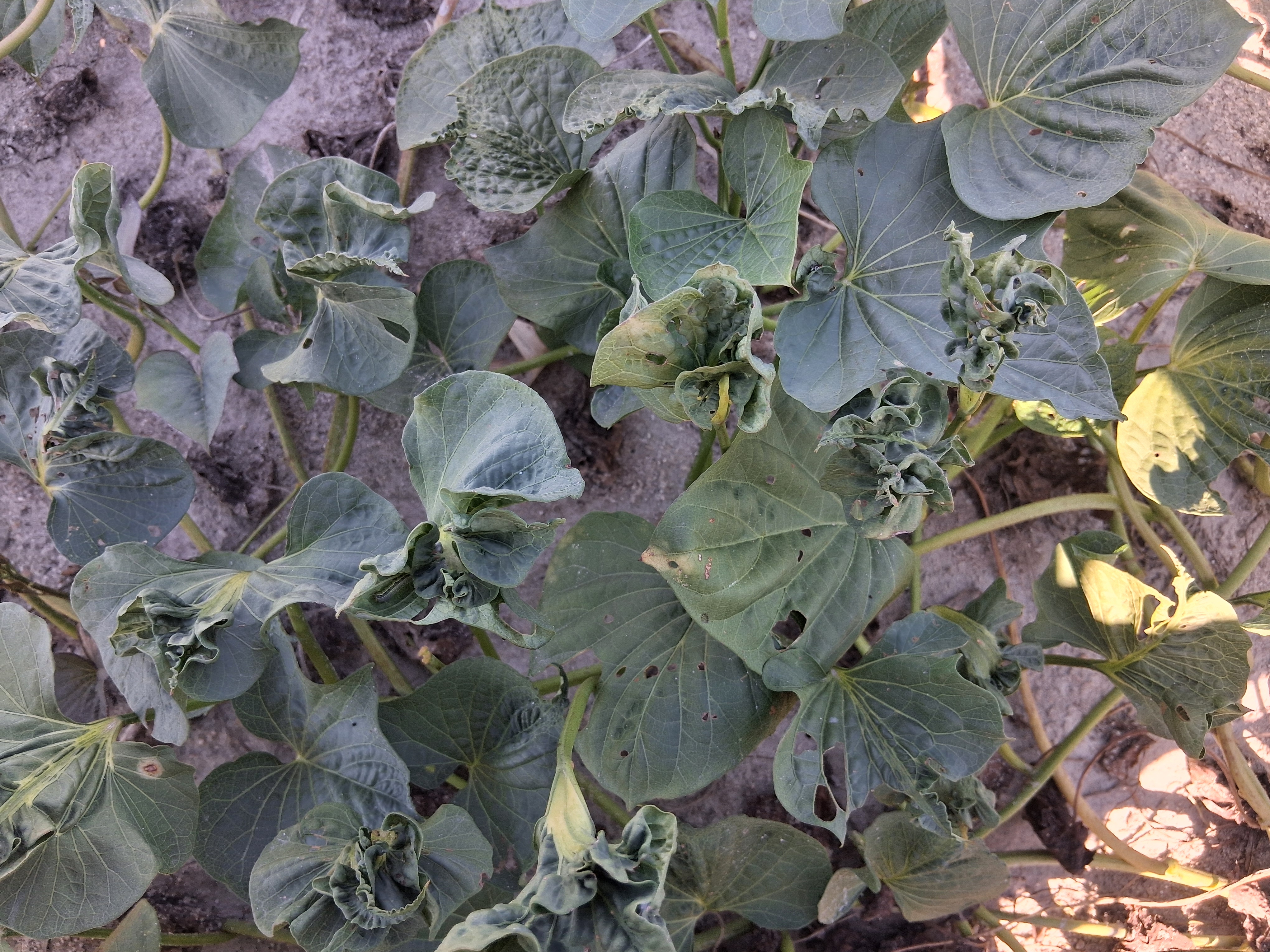
This deformation was caused by the drift or volatilization of a synthetic auxin herbicide (including 2,4-D, dicamba, clopyralid, aminopyralid, triclopyr, etc.), though the exact culprit was not known. The damage was pretty evenly distributed across the field, suggesting volatilization from a nearby field is the more likely cause. Synthetic auxin herbicides cause rapid, uncontrolled growth in broadleaf plants, symptoms often referred to as shoestringing or epinasty. Sweetpotatoes are extremely sensitive to these herbicides. In fact, no other plants or weeds around the field were exhibiting symptoms. The new growth on these plants was unaffected, suggesting the plants were beginning to grow out of the damage. No damage to the sweetpotatoes or yield is expected, but we won’t know for sure until the grower digs.
Volatilization occurs after an application when the herbicide turns into a gaseous vapor and moves away from the application site. This is more likely to occur when the weather is hot and humid. Certain herbicide formulations or tank additives can increase the likelihood of herbicide volatilization. This is a good reminder to select herbicide formulations carefully, check label warnings before tank-mixing products, and consider weather conditions prior to applying herbicides.
This week’s question is from Justin Ballew, Extension Fruit and Vegetable Research Associate.

