Cooler temperatures have arrived and the break from the heat is welcomed. Armyworms and fire ants are on the rise so keep an eye out for pests and act quickly if you find either in your fields. New training resources for strawberry planting crews were published recently, including English and Spanish-language planting videos.
Key Takeaways for Growers This Week
- New strawberry planting training resources available – view here
- Strawberry planting is underway– be sure to watch planting depth to avoid j-rooting
- Fall temperatures make an appearance– Brassicas and sweet potatoes are being harvested
Lowcountry Report
Zack Snipes
- With the recent rains, moderate daytime temperatures, and cooler nighttime temperatures, things are looking great in the Lowcountry.
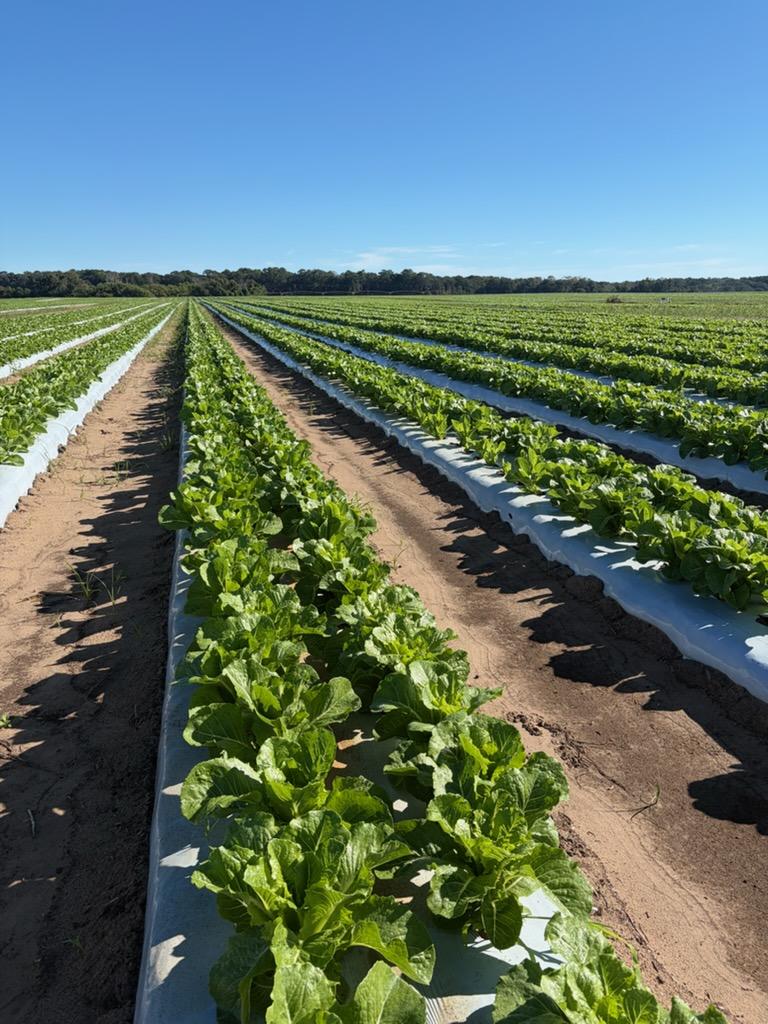
- We are wrapping up our watermelon and cantaloupe harvests this week. We are beginning to harvest brassicas, lettuce, and citrus.
- Most growers are busy picking up and planting strawberries. I want to remind folks that correct planting depth is absolutely CRITICAL when setting out plants. Planting too deep will cost you time and money (lots of it) this spring. Make sure to watch and show your workers our planting videos.
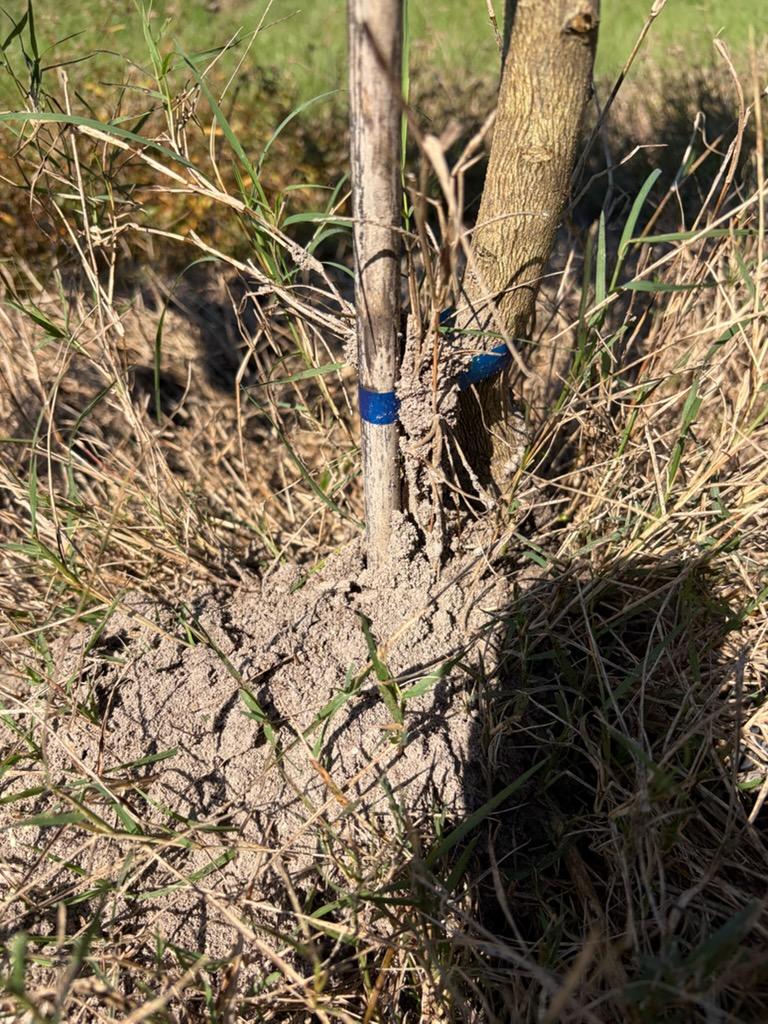
- I’ve gotten several reports of armyworms on a variety of crops. Usually these can be controlled relatively easily with Bt products. I am seeing a good number of whiteflies on brassica, so keep an eye out for those if populations begin to rise. I also saw a major uptick in fire ant activity last week. If you have perennial crops (pecan, pear, blackberry, citrus, blueberry), check the base of your plants, especially if you have trunk protectors on them. Ants will eat away at the bark and girdle plants at the crown of the plant and make the plant extremely weak. During cold snaps, heat waves, or times of drought, these plants will die. I recommend a labeled fire ant bait to control these ants.
Midlands Report
Rob Last
- Recorded rainfall from Isaias ranged between 0.9 and 1.4 inches in our area. This last week has been warm and dry, with reduced humidity, and a strong cold front has passed through, lowering temperatures.
- Fall is very much in the air, with pumpkins appearing in many retail outlets. Quality and volume from our local producers look great.
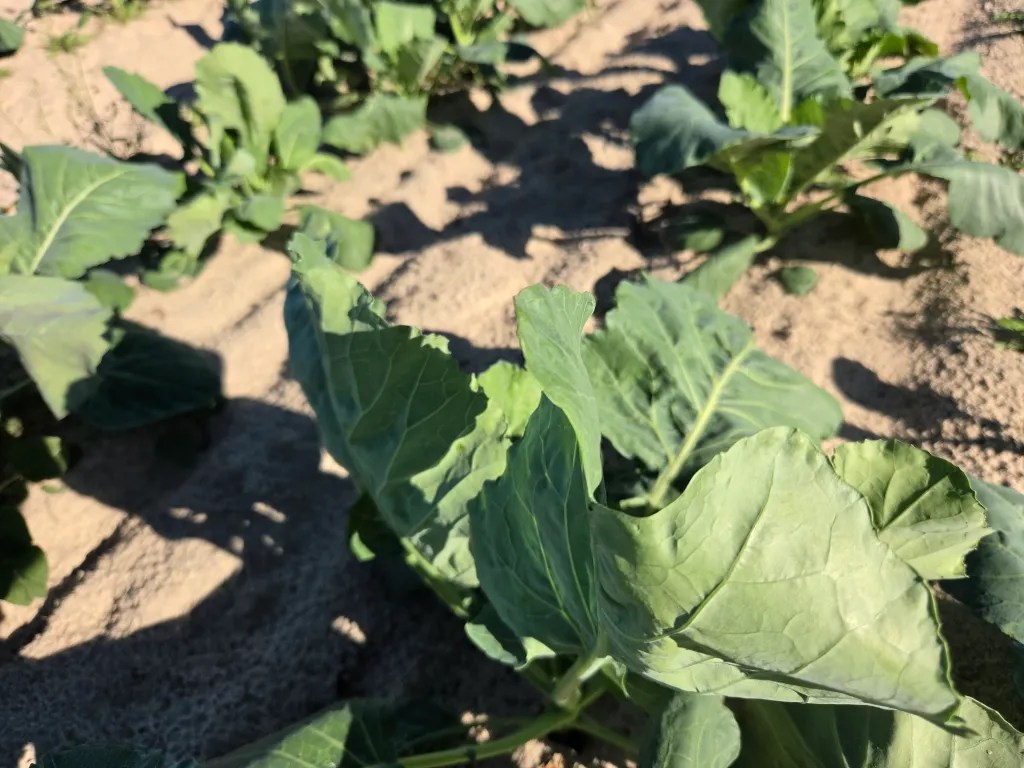
- Mentioning fall, brassicas are looking great and establishing well. Keep monitoring for caterpillars and disease. At present, both are low.
- Tomatoes, peppers and eggplant look great, with good volume and few issues currently.
- Keep scouting and monitoring closely for any change in pest and disease activity.
- Strawberry plants are being delivered. Remember to inspect plants closely for diseases and pests prior to planting. Be prepared to reject infested deliveries, as planting infested plants will make management much more expensive and challenging. Remember to take care and monitor planting crews to avoid j-rooting and maintain appropriate planting depth.
Pee Dee Report
Bruce Mclean
- I often say that we have two seasons – summer and not-summer. I think we can definitely say that we are in the not-summer season. Looking at some of the weather stations around the Pee Dee, I saw a few 42° temperature readings. And it looks like most everyone got some rain this weekend. The upcoming week looks to be sunny, with cool mornings and mild afternoons. It should be some really good weather for newly planted strawberry plants to get established.
- Sweet potatoes are still harvesting with very good quality. Earlier harvest of Covingtons were grading out with more #2s than what is usual. This was likely due to the lack of rain throughout the growing season. Later harvested Covingtons have really benefited from these recent rains, grading out with more #1s and some jumbos… hitting yield targets. Murasakis are being harvested this week. Earlier test dig shows that they should be very high quality as well.
- Collards, kale, mustard greens, turnip greens, and rutabagas are beginning to be harvested with some volume. Broccoli is likely to only be a couple of weeks out from harvest. I have seen what appears to be bacterial leaf spot on some turnip greens. On one particular farm, it is on approximately 90% of the turnip greens but on nothing else. In this situation, it’s very likely a seed problem. I have spoken to a couple of large vegetable seed companies that carry that particular variety of turnip greens to see if other growers have had similar issues. They will be checking around to see if others are seeing the same problem. Another problem that I’m seeing is false chinch bugs on mustard greens but not anything else. They are present in large numbers on the undersides of the leaves. Research shows that they cause relatively few problems with the quality of mature mustard. But the situation here is that they are in very large numbers when harvesting the leaves… and there lies the problem. Folks don’t like bugs and their mustard greens. A pyrethroid application proved to be effective at killing the insects that the spray actually came in contact with. But where the mustard is mature, the spray cannot get to the underside of the leaves and therefore is ineffective at control those insects.
- Strawberry plants are being planted, right now. So far, they are looking pretty good. It is a good idea to run a dose of Ridomil or Orondis Gold through the drip at 14 days post-plant to cleanup any lingering root diseases that may have come in on the plants.
Question of the Week
Which insect laid these black and white barrel-shaped eggs?
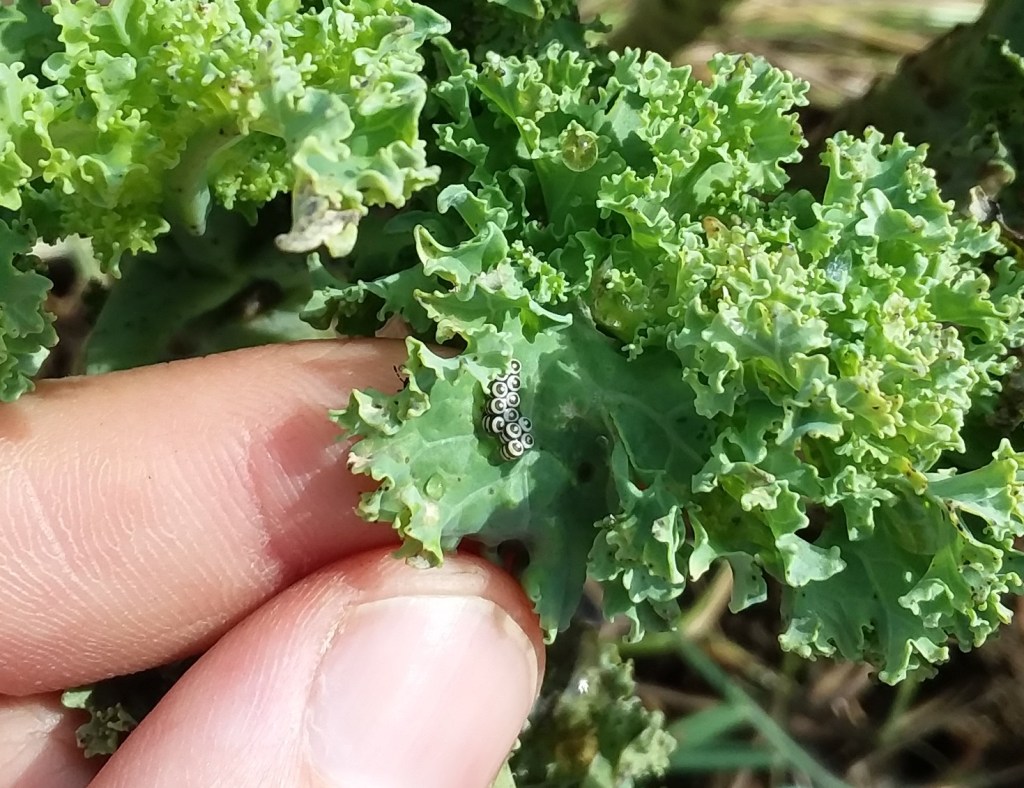
Answer in the comments below and check back on Thursday to see the answer.
Don’t forget to look at the Resources tab for links to crop handbooks, helpful websites, and related blogs. Have a great week!

