Strawberry planting has largely wrapped up, and some day-neutral varieties are beginning to set fruit. The recent cooler weather has slowed down some of our fall crops. There is a chance of rain in the forecast, and we desperately need it.
Key Takeaways for Growers This Week
- Strawberry planting is wrapping up – Continue overhead watering until plants are established
- Cool weather has slowed crops down – squash, tomatoes, okra, etc.
- Some spider mite activity has been found – Scout carefully before acting
- We are very dry – The forecast shows a chance for rain later in the week.
Midlands Report
Rob Last
- It has been another dry week in the Midlands; however, it looks like we may see some rainfall later this week. Prolonged leaf moisture may trigger pathogen development in crops. A protectant multi-site fungicide application may be beneficial. Temperatures have cooled off with cool, fall-like nights.
- Strawberry planting has finished in the Midlands, with many crops beginning to push true leaves. Keep beds moist for another week to further aid establishment, monitoring based on rainfall. Avoid over-wetting beds, which can promote the development of Phytophthora root rot. If you have planted plugs, check plants carefully for any lesions on new growth. Get any lesions identified.
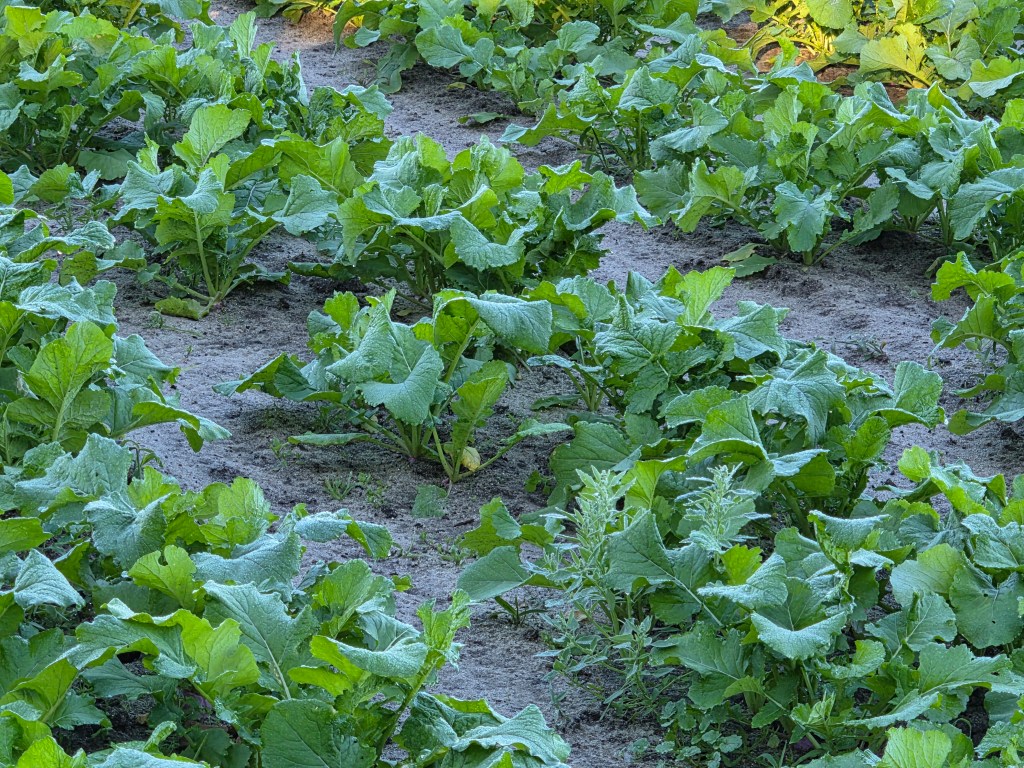
- Elsewhere, our summer crops continue to yield well with fair quality. Brassicas look fantastic with few issues. Continue monitoring for caterpillar activity.
Daniel Lyon
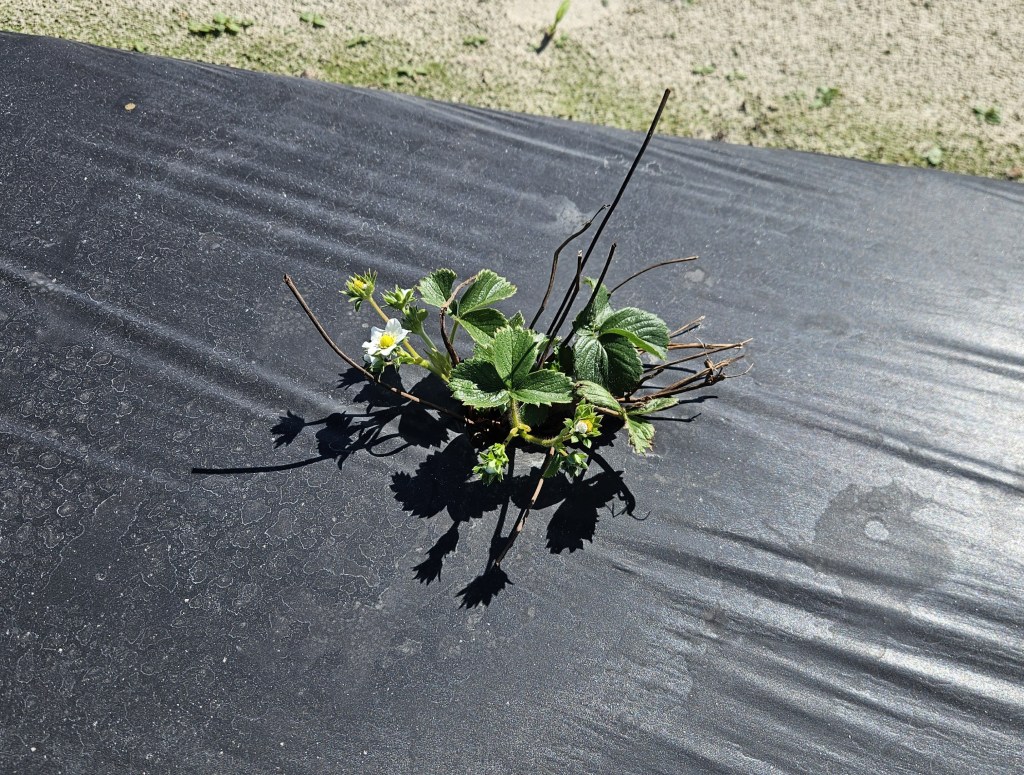
- Looks like almost all the strawberry acres in my region have been planted. They are establishing well, although the cooler temps seem to have slowed them down. Highs in the 70s and 80s this week should help get them going.
- Day-neutral strawberry varieties planted early should be producing soon.
- A few growers planted the new “Sweet Carolina” strawberry variety without knowing that it is day-neutral. It appears this was not very well advertised. They were planted in October and are now blooming with very little biomass. I would recommend picking the blooms off to encourage more vegetative growth before we go into winter.
- Other fall vegetable crops are starting to wind down with the exception of a few acres. Winter greens are being harvested and look good. Lack of rain is a familiar story I hear. Growers are reporting lower insect pressure than usual.
Pee Dee Report
Bruce Mclean
- Well, it’s starting to get a little dry around the Pee Dee again. We are needing a good soaking rain, but that doesn’t look like it’s in the forecast. We should see some rain a little later this week, maybe a quarter to a half inch. The temperature should remain pretty mild for the next week or so. Around the Pee Dee, it has been pretty busy. A lot of crops are being harvested, and a lot of crops are going in.
- Some summer crops are being harvested with some volume, like pickling cucumbers, yellow squash, watermelon, cantaloupe, and even some okra. This may be okra’s last harvest, but everything else looks like it may be picking until first frost.
- Sweetpotatoes should be just finishing up. Sweetpotato quality has been very good for the most part. The yield has been off a bit due to the drought. Fields that had a little heavier soil (and retain water a little better) saw better yields.
- Brassicas are still cruising along pretty well. Collards, cabbage, and broccoli are being harvested in good volume. Mustard, turnips, and kale continue to be harvested. Cauliflower and Brussels sprouts still have a few weeks to go. I haven’t seen many pests or diseases this year, other than bacterial leaf spot, false chinch bugs, and a little caterpillar damage. Here’s an update on both the bacterial leaf spot and false chinch bugs. I did see another field on another farm with bacterial leaf spot on a different variety of turnips. So if you’re seeing any funny leaf spots, especially on turnips, let your Agent know so that they can maybe take some samples and have it identified. There’s not a lot that you can do to correct it, but with identification, you can plan on how to manage it through rotation. And on the false chinch bugs, dinotefuran eventually cleaned them up… It just took a few days for it to get all of them.
- Primocane blackberries may not be as available this year as they have in past years. The heat this summer and early fall caused significant problems with flowering and fruiting, including small fruit, missing drupelets, and double fruit. Late flowers and fruit look really good, but there may not be enough time to finish them out.
- Looks like there’s a good bit of strawberries around the Pee Dee this year. I’ve seen some really good-looking plants, and I’ve seen some plants that were having problems. The main problem I have seen is poor-looking, diseased roots coming straight out of the nursery. Be sure to run some Ridomil or Orondis Gold through the drip to try to clean up some of that junk from the nursery. Going over the top with a multi-site fungicide would definitely help as well.
- Fall and winter strawberries should be coming into harvest in the next week or so. Some San Andreas plants I saw looked really good and were loaded with fruit.
Upstate Report
Andy Rollins
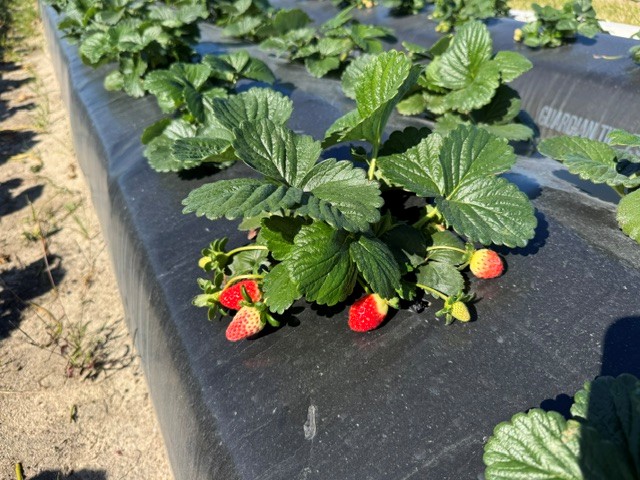
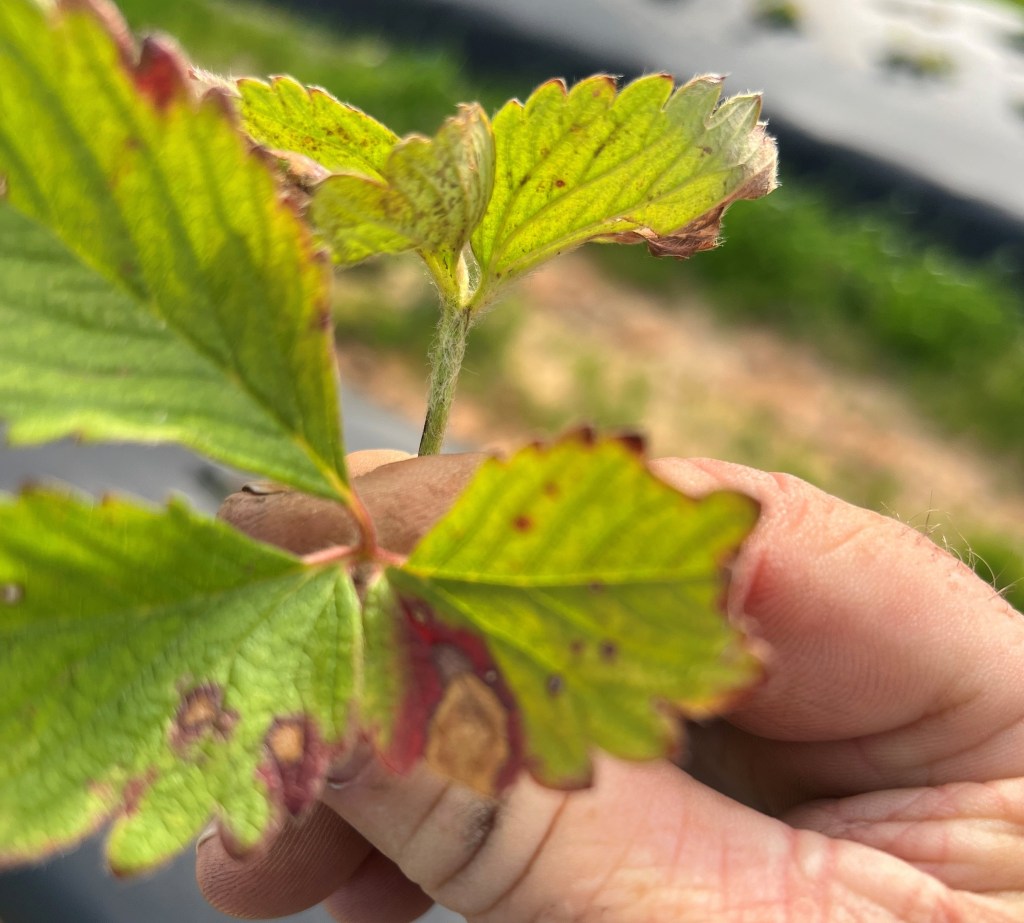
- I’m still inspecting strawberry farms across the Upstate. Many plants still have leaf spots as pictured and plenty of root rot on all plant sources (no surprise there). I was surprised to find significant numbers of adult two-spotted spider mites this past week, though no eggs. They were not very active at all.
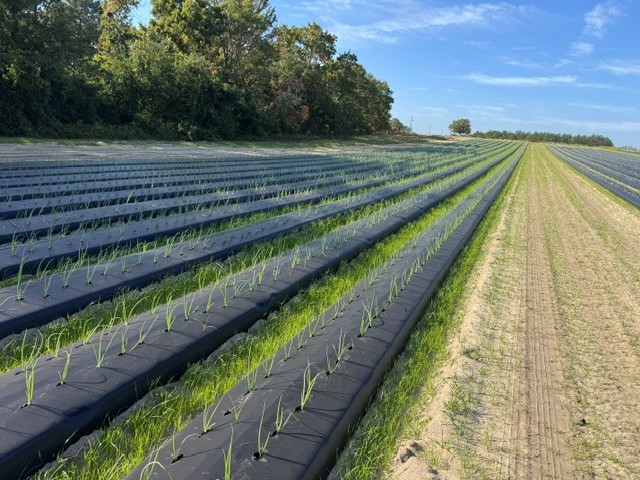
- Several growers did not apply preplant phosphorus this year. Clemson’s soil sample results indicate that even if the soil sample is high in phosphorus, applying 60 lbs per acre of actual phosphorus would still give higher yields and better plant growth. Regardless of soil sample results, please make sure you apply 60 lbs of actual P before planting (e.g., approx. 350 lbs per acre of 17-17-17). For anyone who didn’t, all is not lost; there are several products you could use. They should be high in phosphorus, low in nitrogen and water-soluble so you can inject them. I have recommended BlackLabelZN, RootEx, and 12-48-8 in the past to remedy this problem, but I’m sure there are others that will do the same or something similar. Right now, the order of business is to slowly grow a plant to 3 crowns before dormancy. The above recommendations will primarily grow the root systems while slowly growing the above-ground vegetation.
Question of the Week
What is this homemade machine used for?
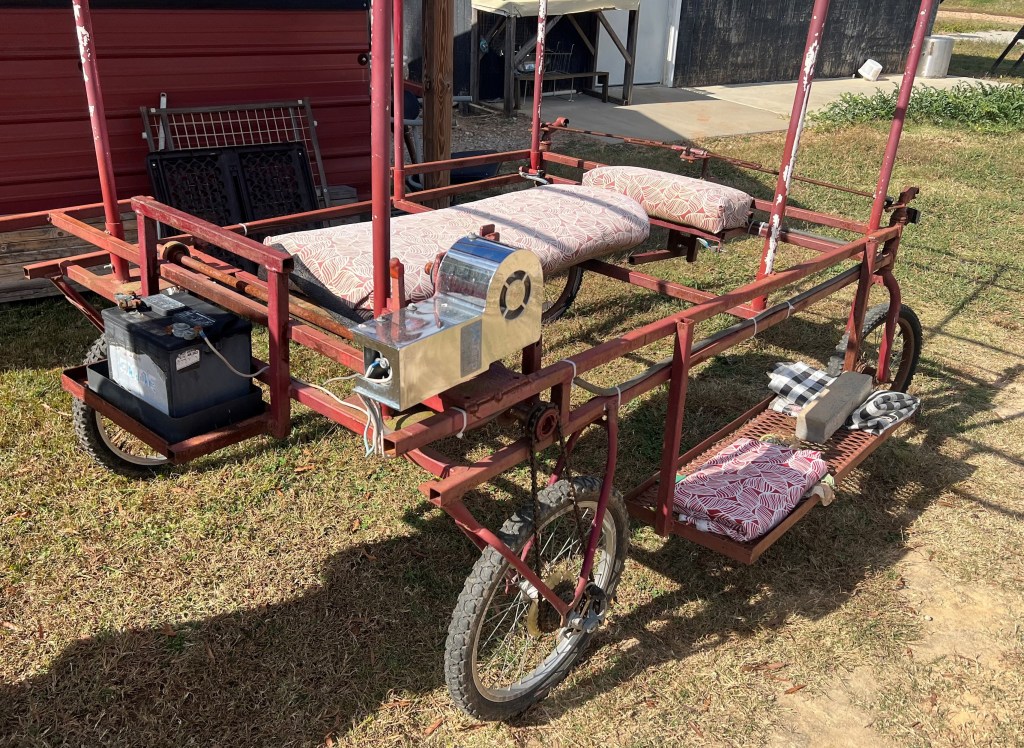
Answer in the comments below and check back on Thursday to see the answer.
Don’t forget to look at the Resources tab for links to crop handbooks, helpful websites, and related blogs. Have a great week!

