By Tom Bilbo, Extension Entomologist
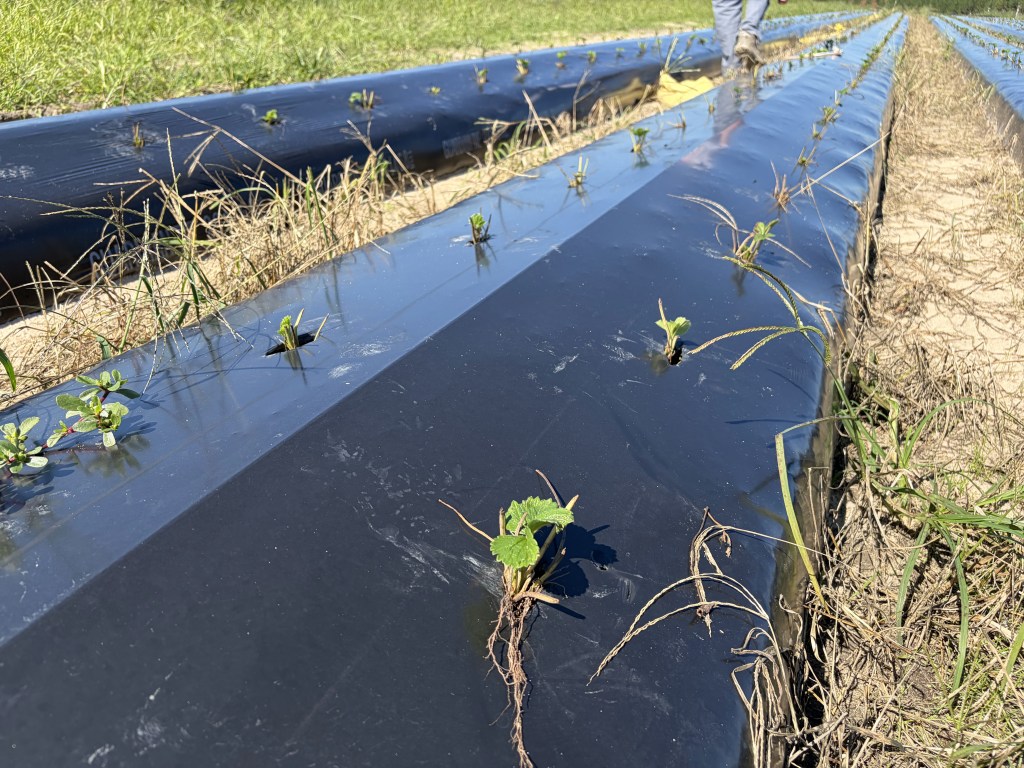
As part of a new SCDA block grant-funded project investigating the nature of spider mite pest problems in strawberries, I have been visiting strawberry farms to sample spider mites on transplant plugs and cutoffs in fields as they emerge with their first leaves. One goal of the project is to determine where fall spider mite infestations come from—Do spider mite issues primarily originate from the source nursery or the local farm after planting? Spider mite issues in the fall are bad not only for plant health and development but also likely carry over into the spring. Spider mite problems are likely exacerbated by some uses of row covers (another objective of the study).
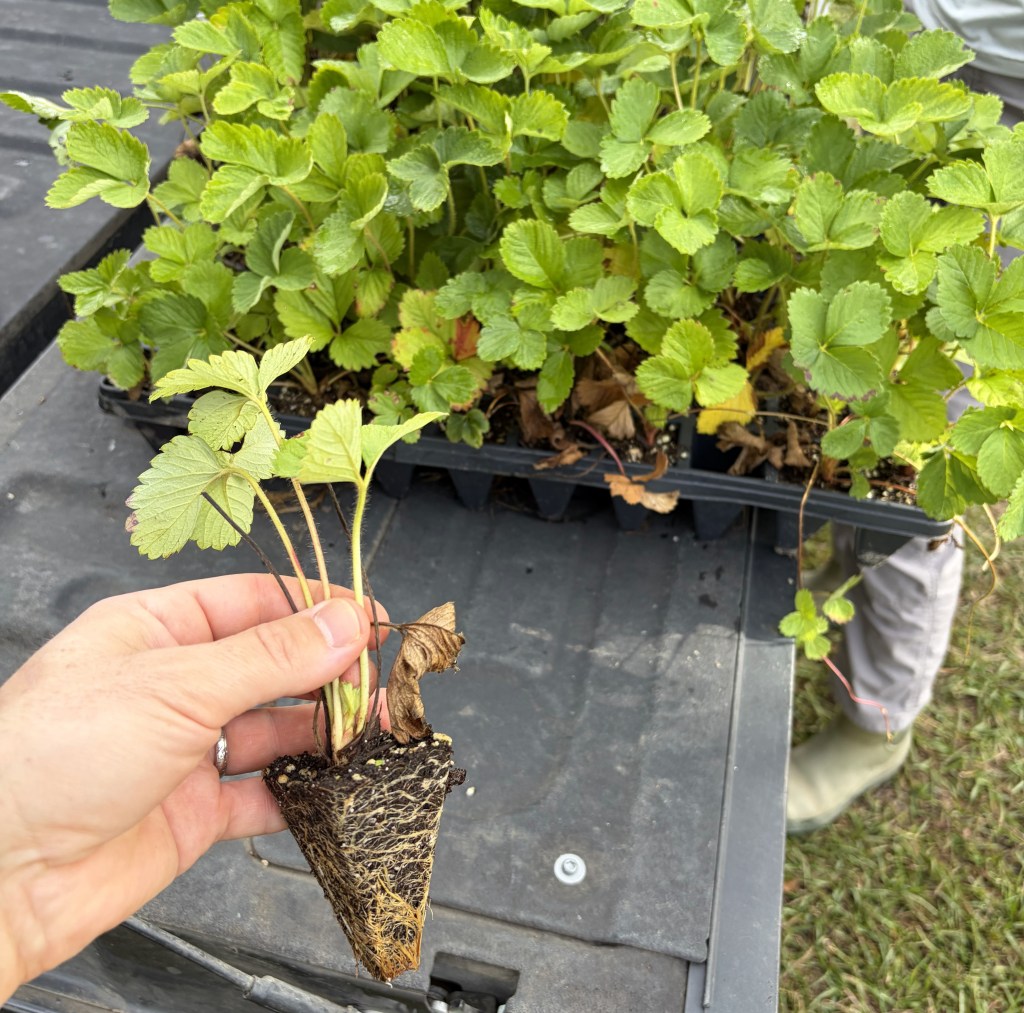
Results so far have been an interesting mix—most transplant plugs are free of spider mites and look very good. But one shipment of plugs from NC did come with low levels of spider mites. Likewise, most new foliage on cutoffs in the field has looked clean of mites and healthy, except on one farm, where spider mite levels were moderate to high.
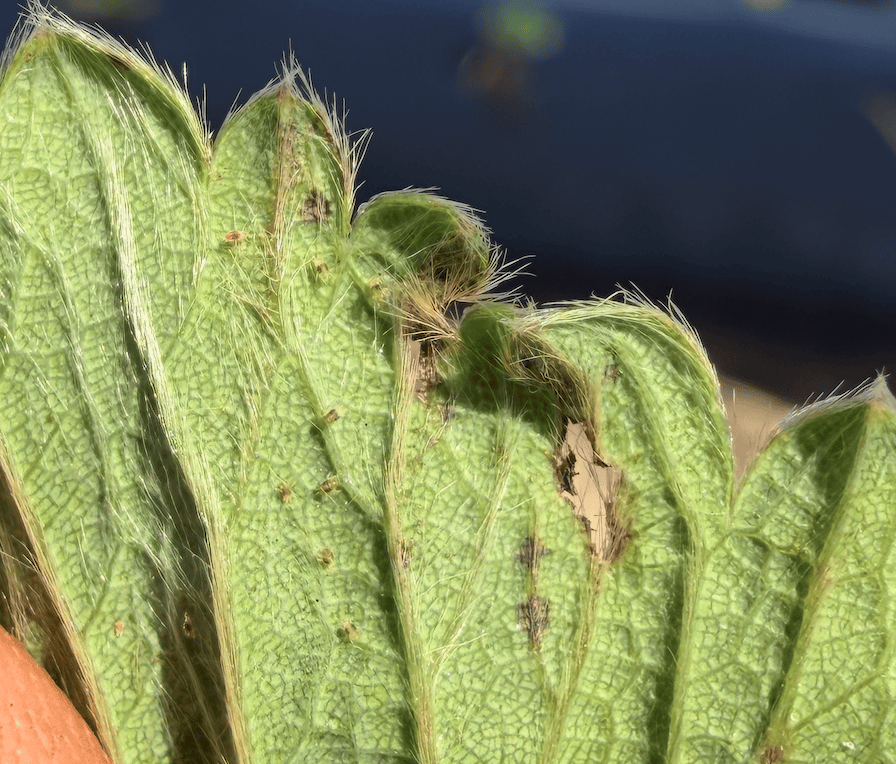
Until we know more about the role (and efficacy) of spider mite predators in the fall, I recommend that growers scout their strawberry fields and spray when more than 5% of leaves are infested, so they go into winter with reasonably clean fields. (Current spray thresholds are not geared towards these early season plants, so this is a bit of guesswork).
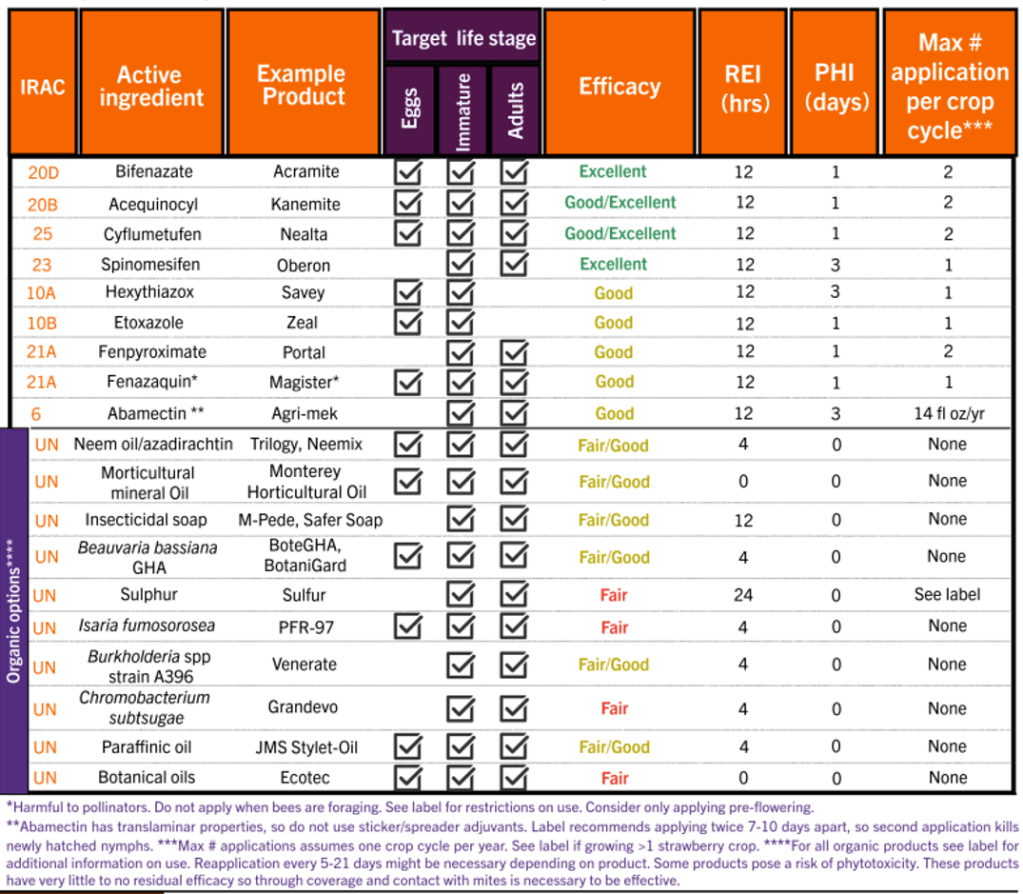
See the spider mite strawberry miticide guide published on the SC Grower previously. There are 9 effective [conventional] miticides to choose from. Use only these, and not other broad-spectrum insecticides (like bifenthrin, malathion, etc.). Note the limitations on Max # Applications. Most allow only 1-2 applications all season. Abamectin (e.g. Agri-Mek) allows 14 fl oz. Since the rate is 3.5oz and it should be applied twice 7-10 days apart, you can apply this effective (and inexpensive) product twice in the fall, and have 2 apps remaining in the spring, if needed. For organic or no-spray growers, I hope to have recommendations on the use of predatory mites next year (after current trials), but for the time being there are organic options with limited efficacy, and predatory mites can be used with very mixed results for SC.