Category: Watermelon
-
Why Reusing Watermelon Plastic for Watermelon is a Very Bad Idea and Other Plant Pathology Horror Stories
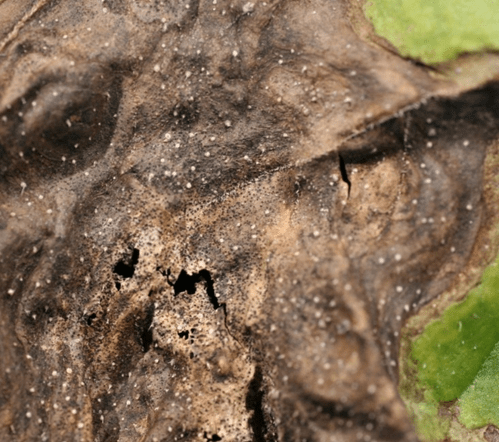
From Clemson Plant Pathologist Tony Keinath Extension agents have recently received some questions from growers about reusing plastic from a spring watermelon crop for a fall watermelon crop. This scenario is what I call a classic plant pathology “horror story.” It is literally the worst thing a watermelon, cantaloupe, or cucumber grower could do for…
-
More Evidence that Choosing Grafting or the Right Cultivar is More Important than Using Fungicides to Manage Fusarium Wilt of Watermelon

By Clemson Plant Pathologist Tony Keinath My 2024 Fusarium wilt experiment at Coastal REC, Charleston, SC, was a streamlined version of the 2023 experiment with 2 fungicides, 2 cultivars, and grafting, except we tested 1 different fungicide and 1 different cultivar. The 2024 results, however, matched the results from 2023 (see title). Already at 3…
-
2022 Lima Bean Stats
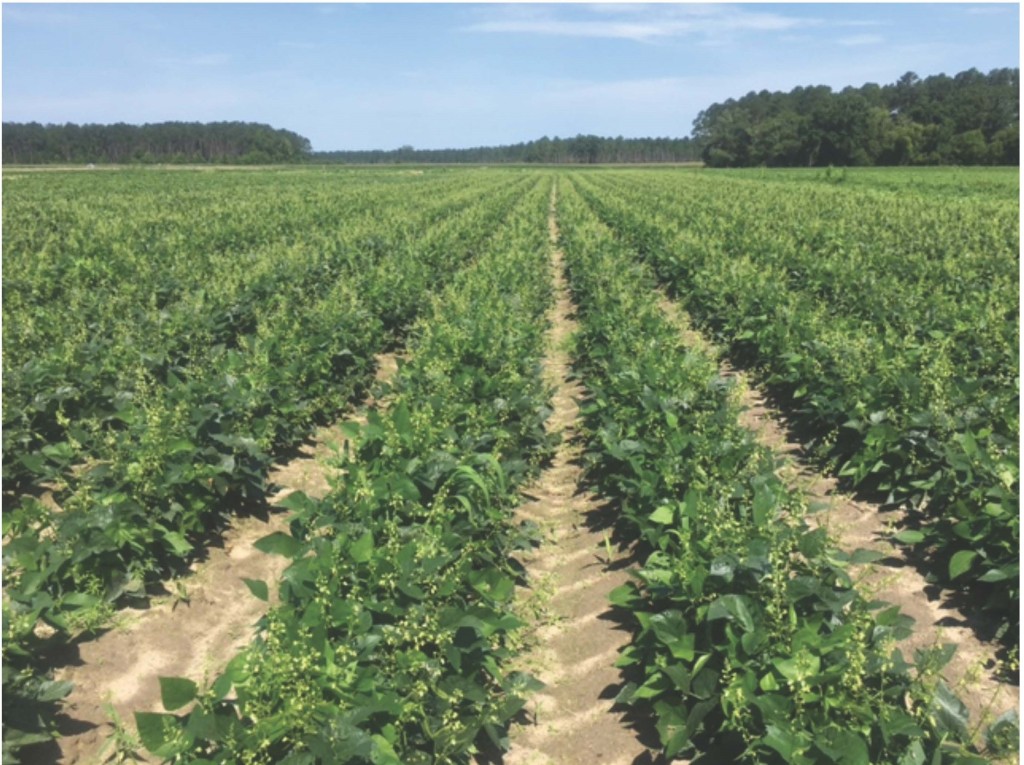
In the Fall of 2022, Extension Agents throughout South Carolina surveyed growers on specialty crop acreage for the year. This was the first year of what is expected to be an annual survey. For this first year, data was collected for six crops: collard greens, lima beans, peaches, strawberries, sweet corn, and watermelon. The goal…
-
2022 Watermelon Stats
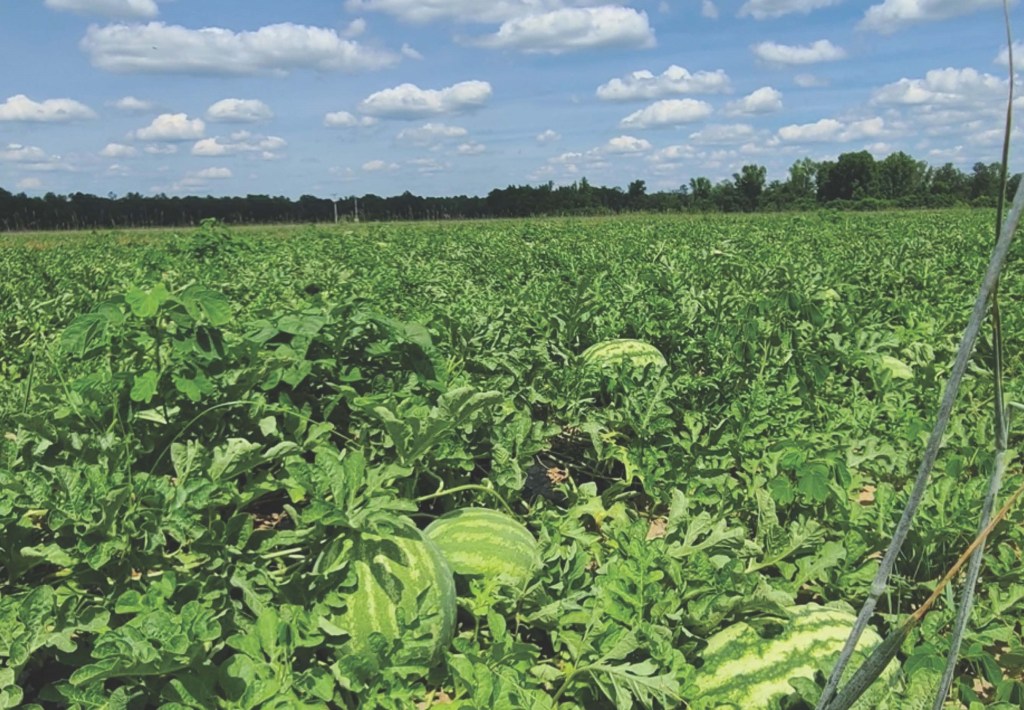
In the Fall of 2022, Extension Agents throughout South Carolina surveyed growers on specialty crop acreage for the year. This was the first year of what is expected to be an annual survey. For this first year, data was collected for six crops: collard greens, lima beans, peaches, strawberries, sweet corn, and watermelon. The goal…
-
2023 Fusarium Wilt on Seedless Watermelon Experiment – Week 7 Observations
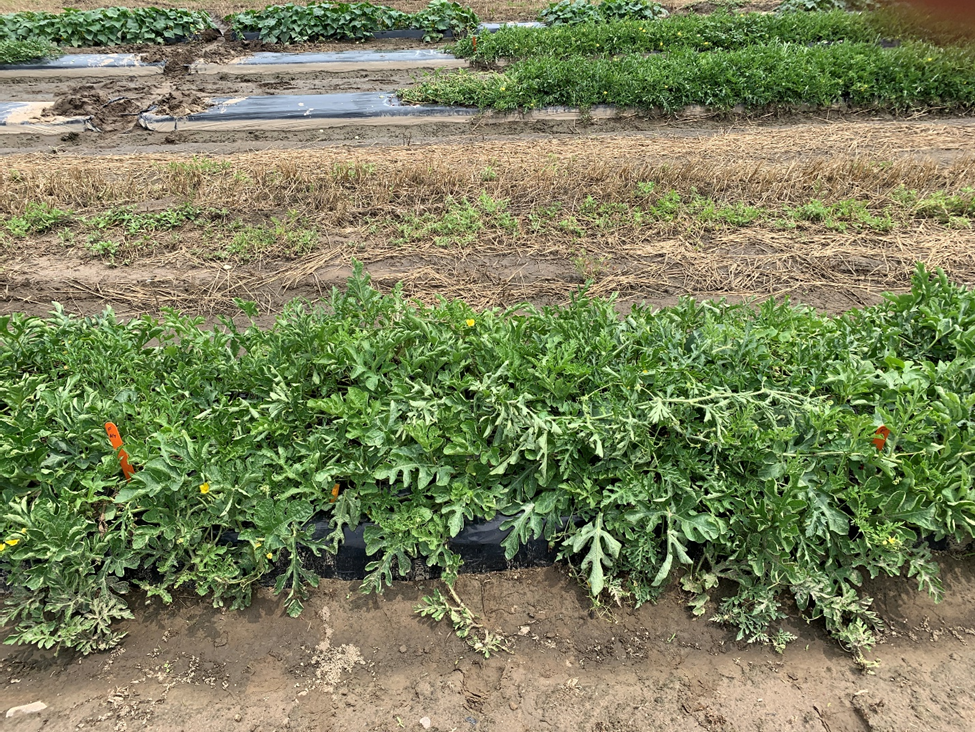
From Clemson Plant Pathologist Tony Keinath This year’s Fusarium wilt experiment includes 3 seedless cultivars, 3 fungicide treatments applied via drip irrigation, and grafting. This experiment is supported in part by a USDA SCRI grant. Transplants were set April 5 in a field infested with Fusarium races 1 and 2. These preliminary results are based…
-
Urgent: Powdery Mildew Found on Watermelon in Charleston, SC

From Clemson Plant Pathologist Tony Keinath. Powdery mildew was found on three cultivars of seedless watermelon at the Clemson Coastal REC on May 23, 2023. All watermelon crops in South Carolina should be 1) scouted for powdewry mildew and 2) if found, sprayed to prevent powdery mildew from reducing yields by up to 40%. When…
-
2023 Fusarium Wilt on Seedless Watermelon Experiment – Week 5 Observations
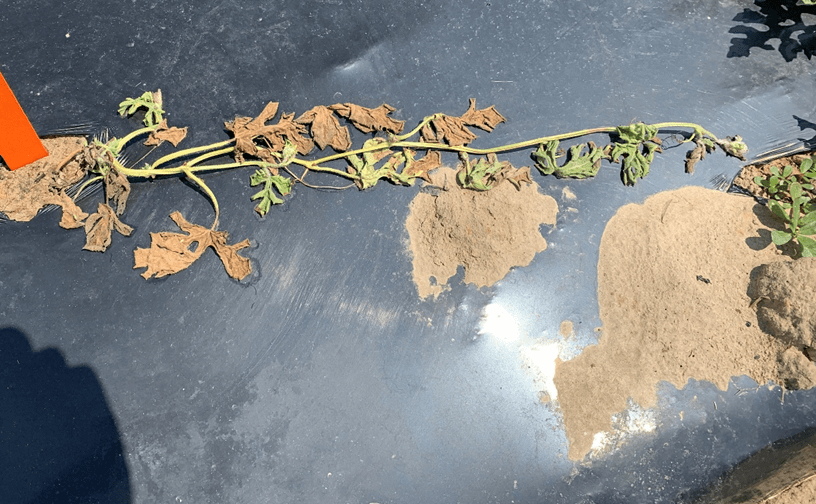
From Clemson Plant Pathologist Tony Keinath This year’s Fusarium wilt experiment includes 3 seedless cultivars, 3 fungicide treatments applied via drip irrigation, and grafting. (This experiment is supported in part by a USDA SCRI grant.) Transplants were set April 5 in a field infested with Fusarium races 1 and 2. Right on schedule, symptoms of…
-
2023 Fusarium Wilt on Seedless Watermelon Experiment – Week 3 Observations
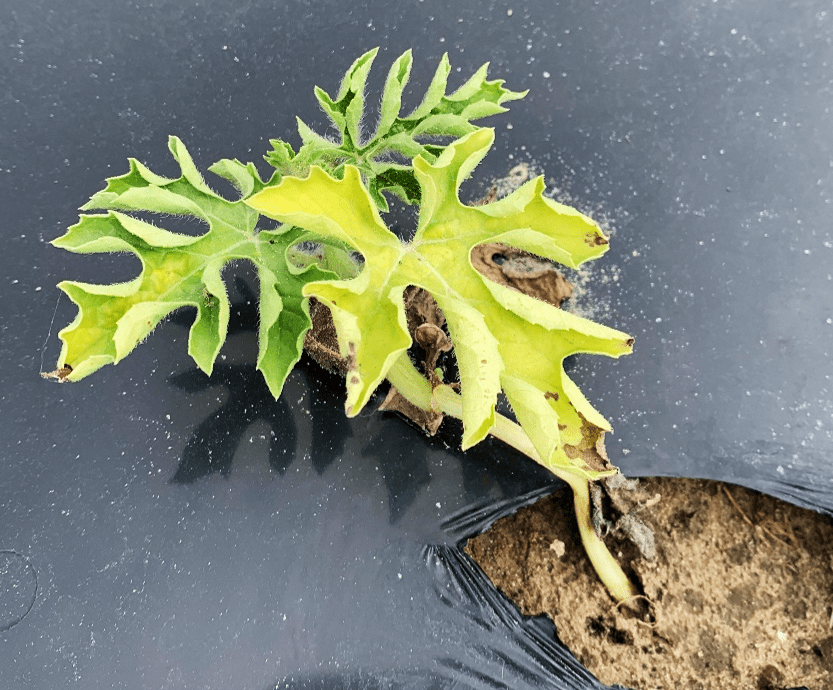
From Clemson Plant Pathologist Tony Keinath This year’s Fusarium wilt experiment includes three seedless cultivars, three fungicide treatments applied via drip irrigation, and grafting. This experiment is supported in part by a USDA SCRI grant. There also is a side experiment with SP-7 pollenizers grafted onto ‘Carolina Strongback’ rootstock and non-grafted SP-7 supported in part…
-
Pythium Damping-Off of Seedless and Pollenizer Watermelons
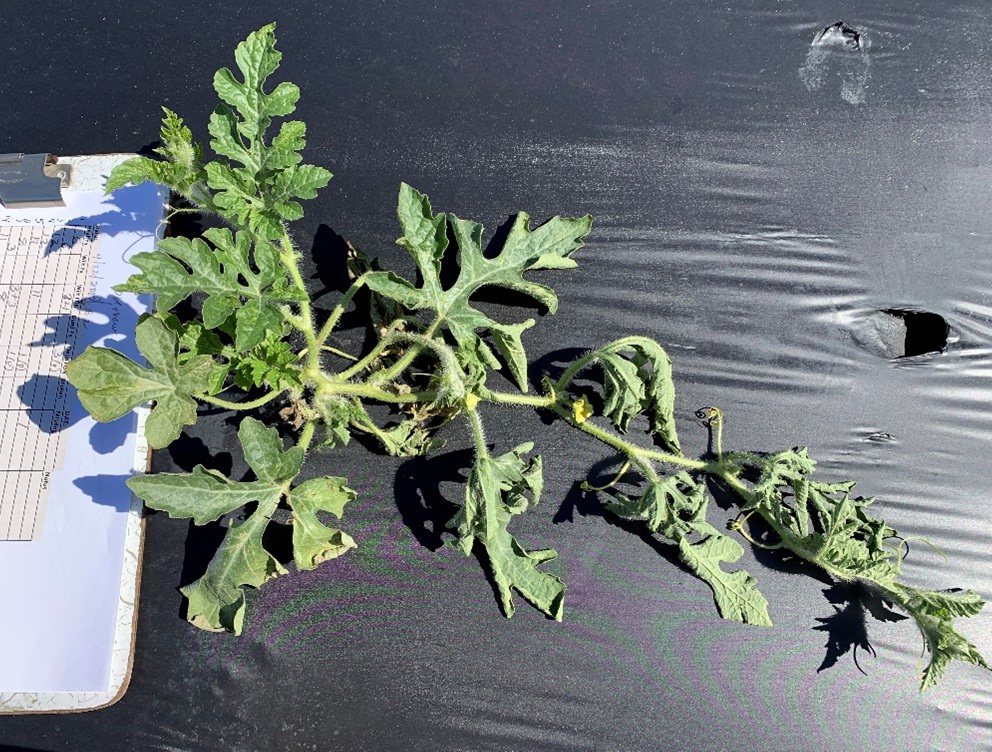
From Clemson Plant Pathologist Tony Keinath. Stand loss in transplanted spring seedless watermelons is usually not a serious issue in South Carolina, due to relatively sandy soils in the major production areas. Two pathogens that can cause post-transplanting damping-off and plant death are the fungus Fusarium and the water mold Pythium. Fusarium can kill seedlings…
-
How Seedless Watermelon Cultivars React to Fusarium Wilt: Average Results of 2021 and 2022 Trials
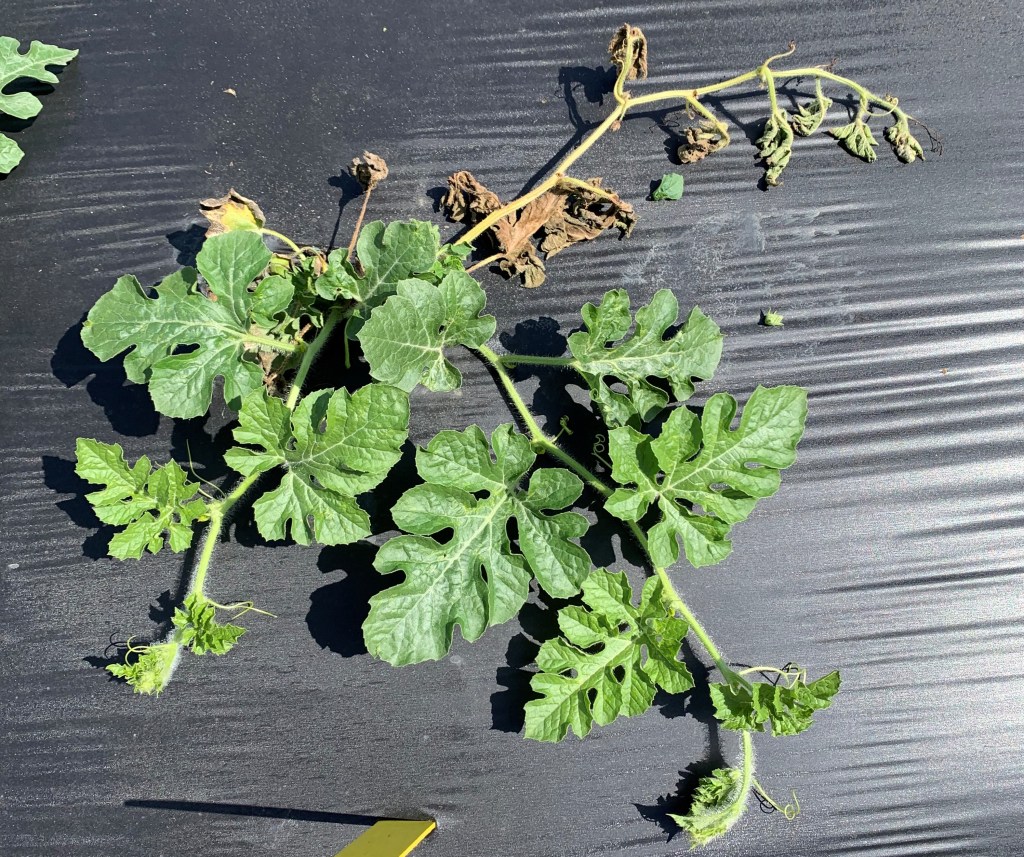
From Tony Keinath, Extension Vegetable Pathologist. As part of a large USDA Specialty Crop Research Initiative grant, I have been working with Dr. Jonathan Schultheis, Horticulturist at NCSU, to evaluate seedless watermelon cultivars grown in plots naturally infested with the Fusarium wilt fungus. The South Carolina trials were done in my Fusarium-infested field at the…
 The South Carolina Grower