Tag: Question of the Week
-
Question of the Week – Spined Soldier Bugs
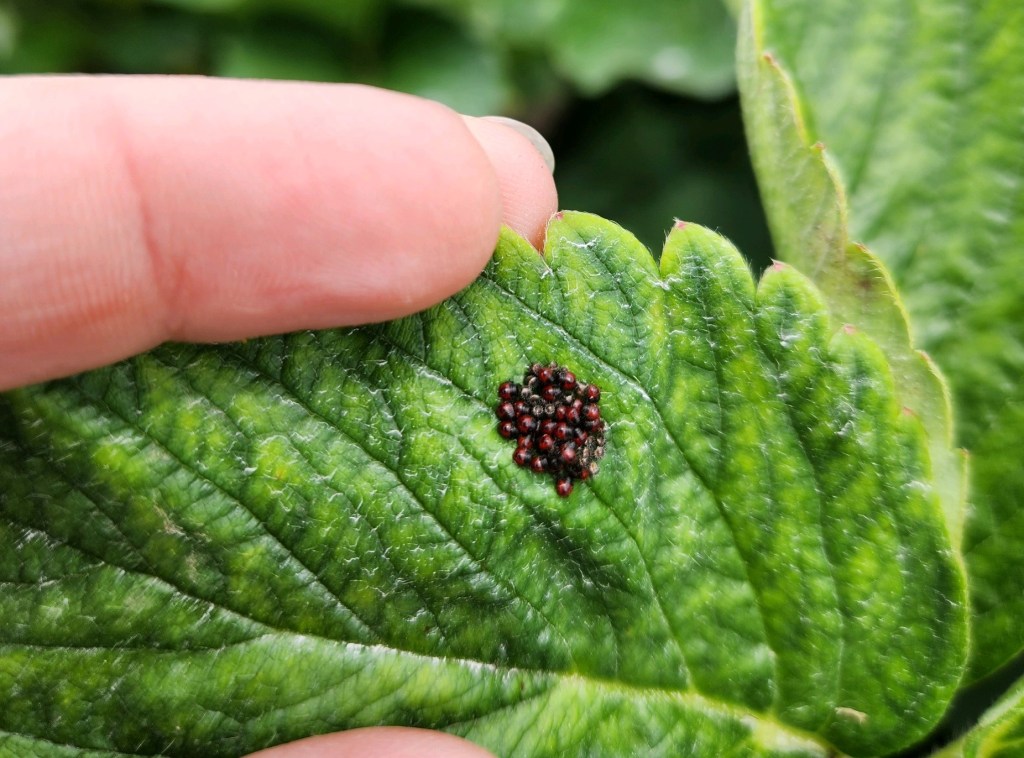
This week, the question was: What is happening on this strawberry leaf? These are the eggs and nymphs of a predatory stink bug called the spined soldier bug (Podisus maculiventris). These beneficial insects feed on over 100 pest species of insects and can be found in many crops. These were located in a strawberry field…
-
Question of the Week – Parasitic Wasp Pupae
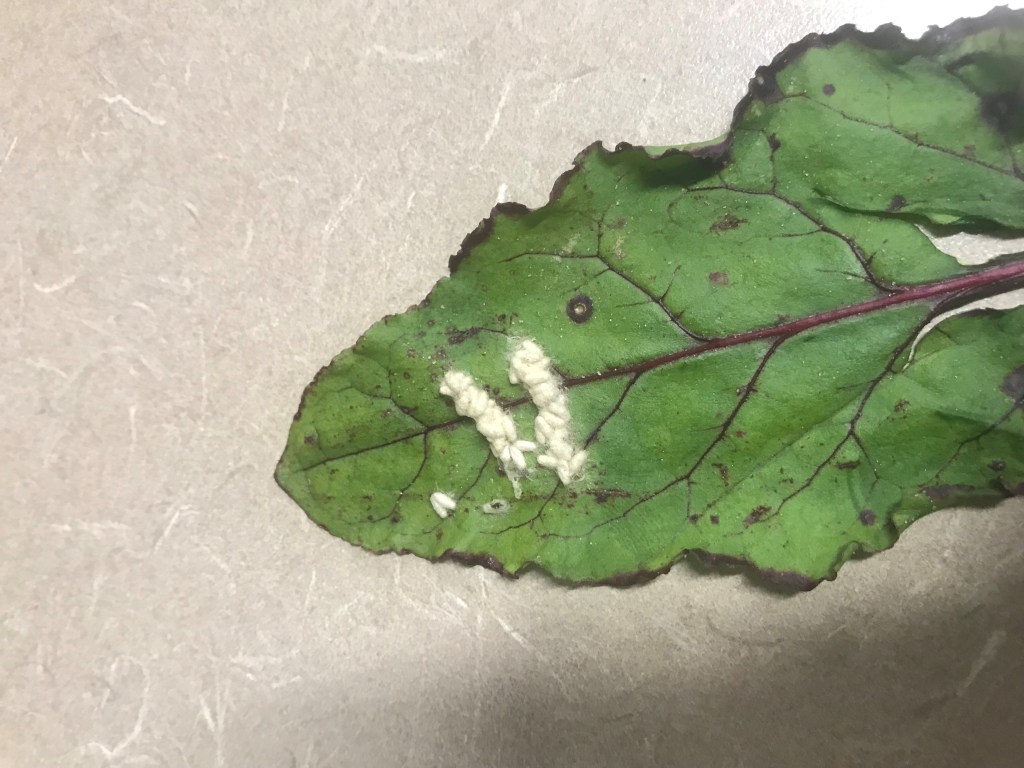
This week, the question was: What is the white-colored stuff on this beet leaf? This is a cluster of parasitic wasp pupae. The adult wasp would have laid eggs into a caterpillar to provide food for the developing larvae. The larvae develop inside the caterpillar and then exit it to pupate, usually killing it in…
-
Question of the Week – Lady Beetle Eggs
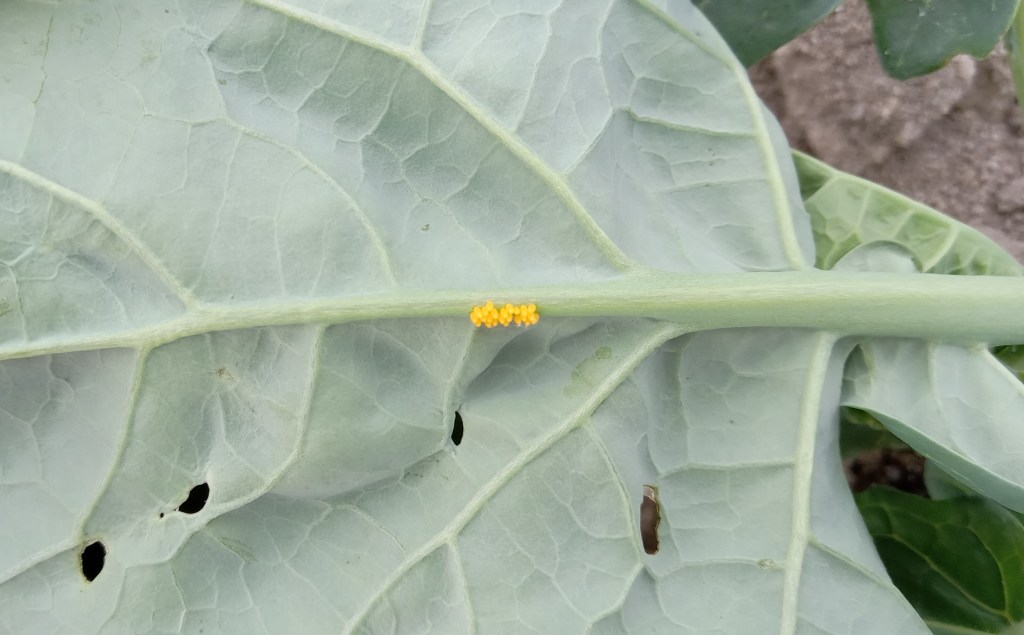
This week, the question was: What are these orange-colored things stuck to the bottom of this collard leaf? This is a cluster of lady beetle eggs. Lady beetles are great insects to have around, especially if you have problems with aphids, their favorite food. Adults eat aphids whole, while the nymphs, seen below, pierce and…
-
Question of the Week – Parasitic Wasp Cocoon
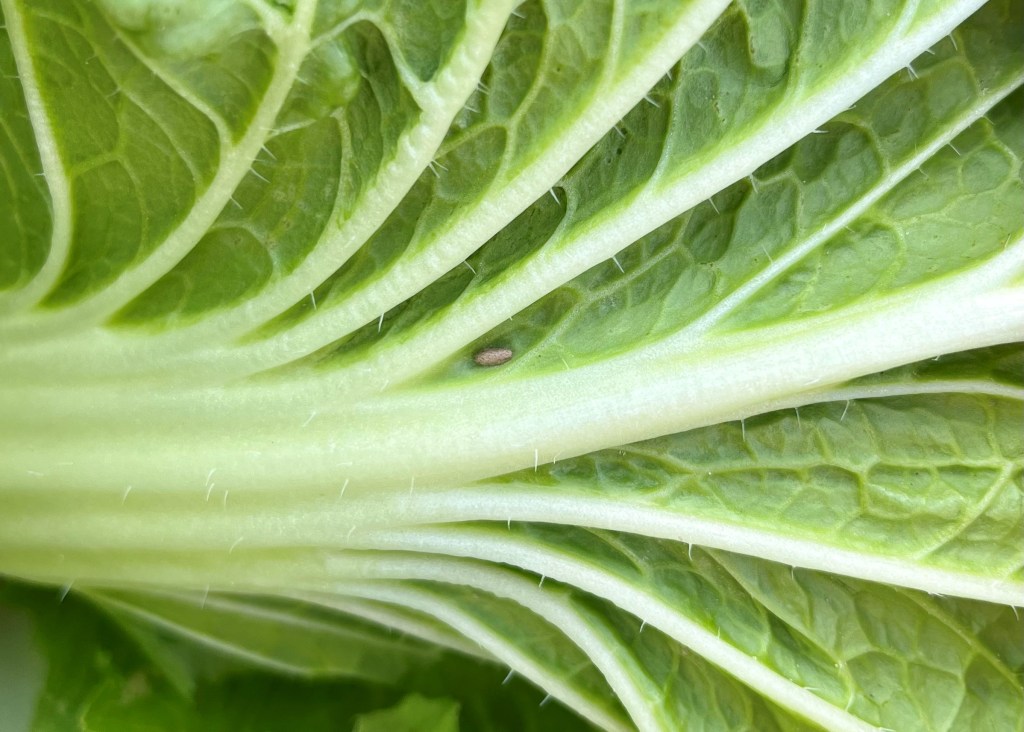
This week, the question was: What is this brown oval object on the underside of this napa cabbage leaf? This is the cocoon of a parasitic wasp (Microplitis plutellae) that attacks and kills diamondback moth larvae. This wasp will lay an egg inside of the caterpillar, where the wasp larva feeds before emerging from the…
-
Question of the Week – Poison Ivy
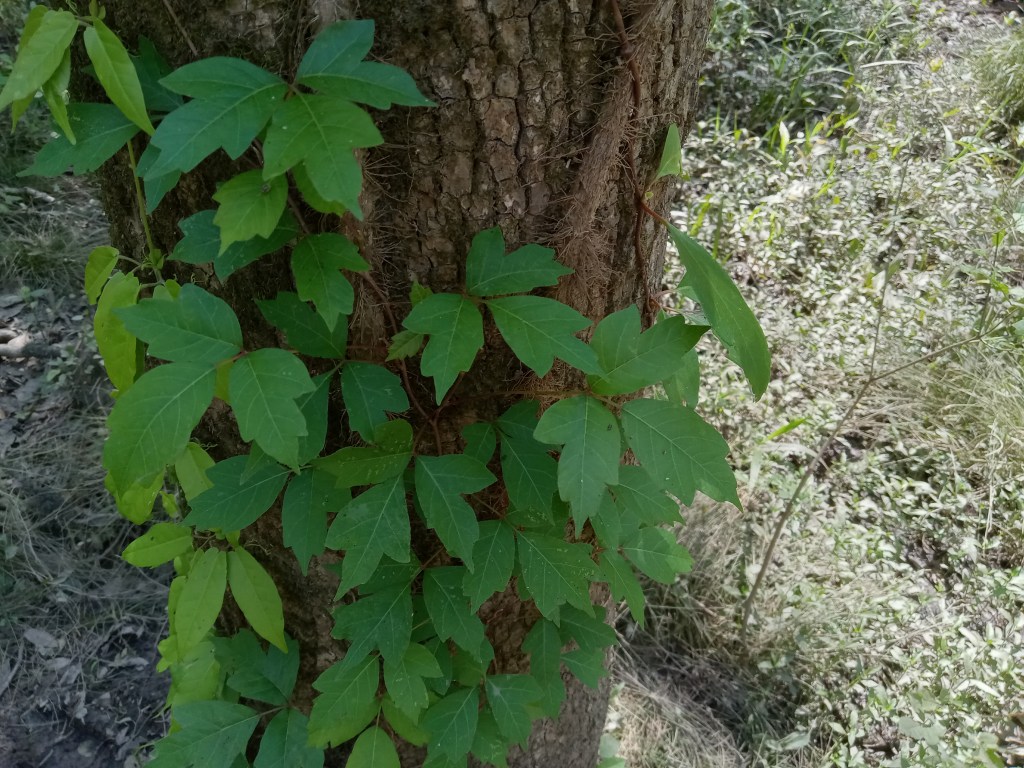
This week, the question was: What is the vine growing on this tree trunk? This is poison ivy (Toxicodendron radicans). This is a plant that everyone should be able to identify. Around 85% of people are allergic to poison ivy, though sensitivity varies greatly. Poison ivy is native to the Southeast and is recognizable by…
-
Question of the Week – Curly Dock
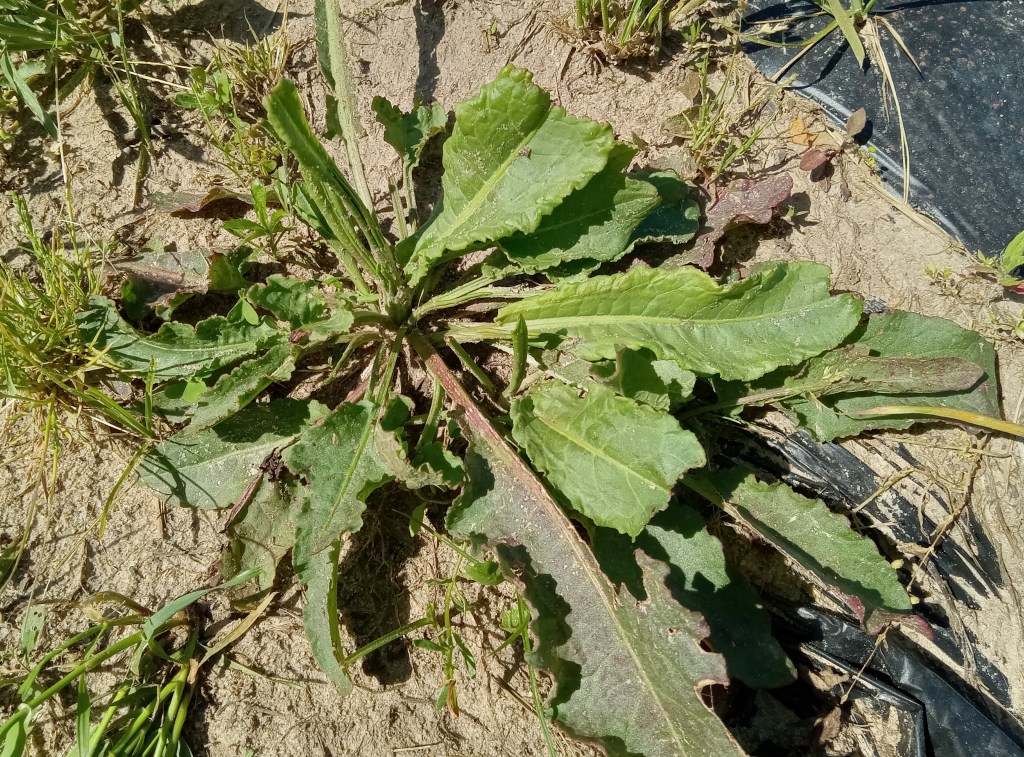
This week, the question was: What is this weed growing up in the row middles of this strawberry field? This is curly dock (Rumex crispus). Curly dock is a perennial weed that thrives in wet conditions but is also quite tolerant of drought. It is commonly found in the row middles in strawberry fields, especially…
-
Question of the Week – Phytophthora Crown Rot
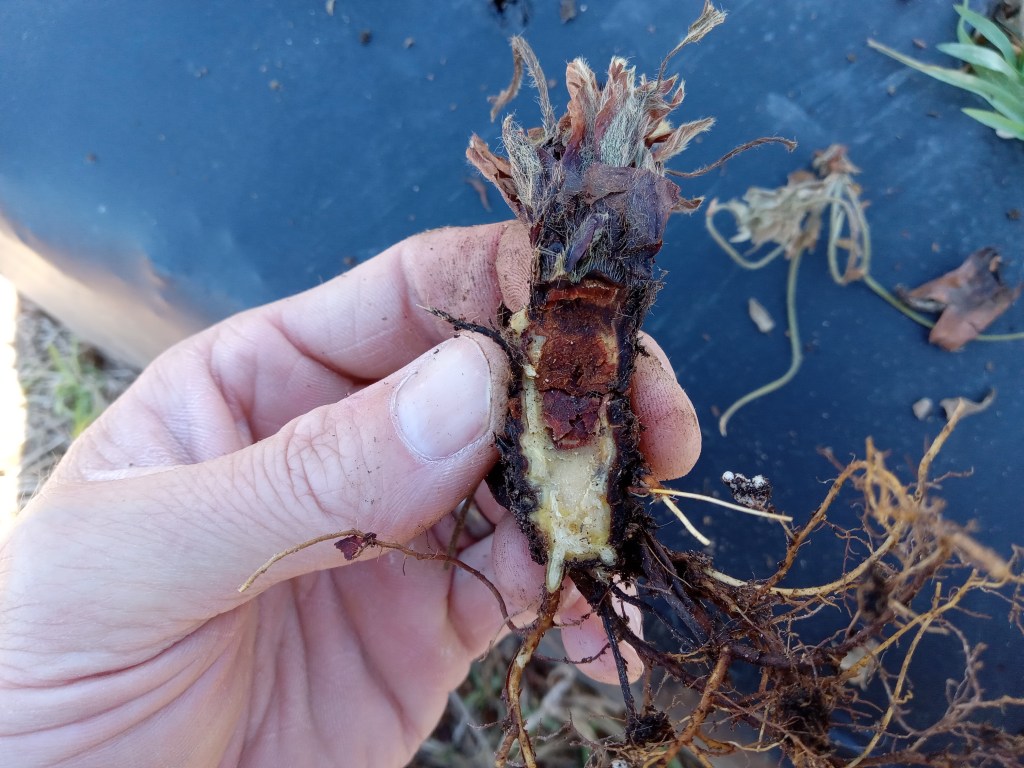
This week, the question was: What caused the dark brown discoloration in this strawberry crown? This discoloration is a common symptom of Phytophthora crown rot. Wet conditions favor this disease; therefore, we tend to see it develop after periods of increased rainfall, especially in low areas in the field. The first symptom we notice is…
-
Question of the Week – Parasitoid Wasp
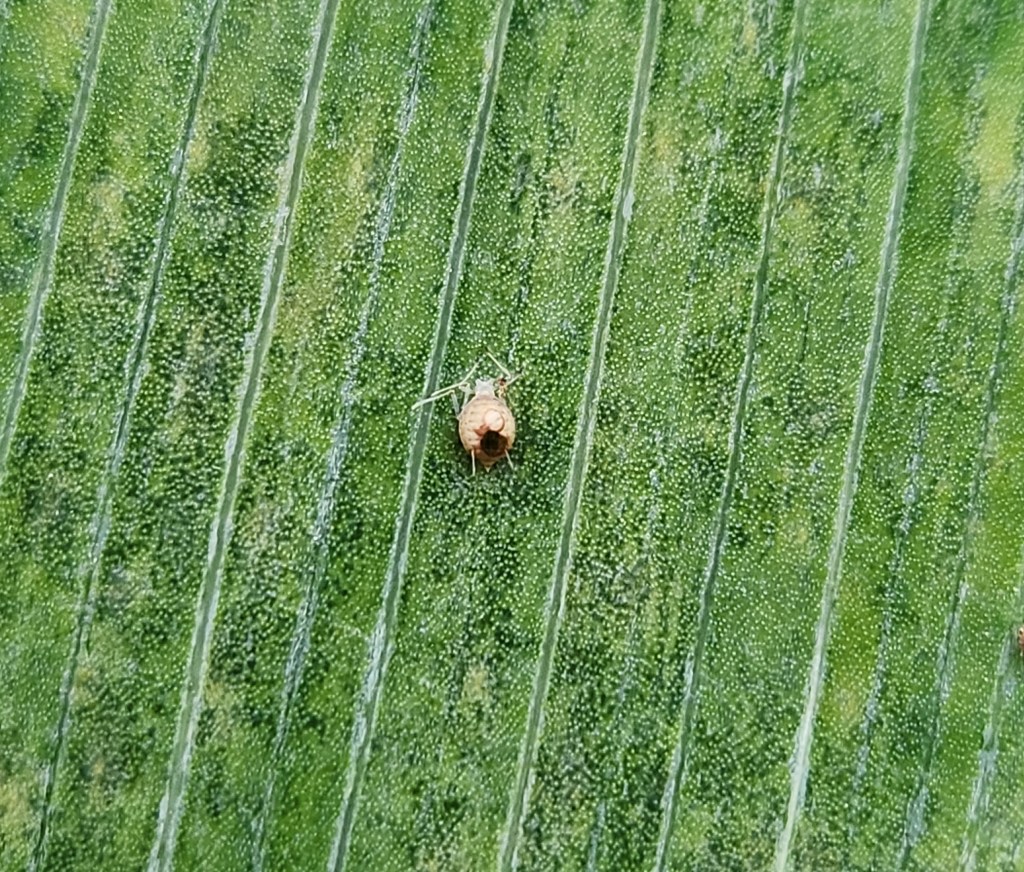
This week, the question was: What happened to this aphid? This aphid has been parasitized by a tiny parasitoid wasp. Parasitoid wasps lay eggs in a host, like this aphid. As the egg hatches and the larva develops, it causes the aphid to swell, making it appear bloated. When the larva matures, it bores out…
-
Question of the Week – Stinkhorns
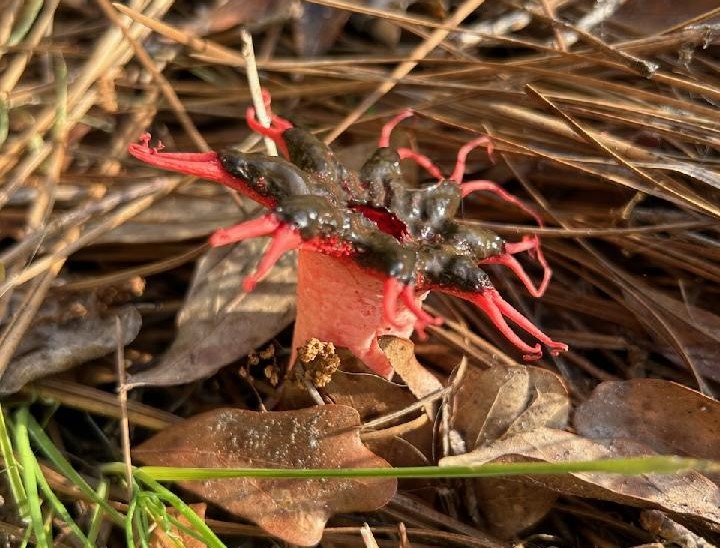
This week, the question was: What is this specialty crop that Zack is growing in Charleston? If you knelt down and gave this mushroom a sniff, I can promise you would not take a bite out of it. This mushroom belongs to a group known as stinkhorns. They get their name from the terrible (to…
-
Question of the Week – Cold Damage

This week, the question was: What happened to the new growth on this holly? This dark-colored tissue was damaged by the cold weather we experienced early last week. Damage to new growth is most likely to occur in the Spring when a frost or freeze follows a period of warm weather where new growth was…
 The South Carolina Grower