As strawberry harvest is in full swing, sunscald has appeared on berries across the state. Issues with powdery mildew and spider mites are also still active. While we are all anxiously awaiting the rain forecast for this weekend, remember that rain can easily damage ripening strawberries. Be ready to sanitize fields.
Check out this recent article from Clemson Plant Pathologist Tony Keinath, highlighting the confusion that can arise in diagnosis and management due to the multiple similar common names that are used for different plant diseases.
Key Takeaways for Growers This Week
- Strawberry harvest is in full swing – it’s a great time to buy local berries
- Sun scald is common on strawberries – resulting from near-record temps
- Powdery mildew is active – causing red spots on strawberry foliage
- Spider mites are active in multiple crops – use appropriate miticides when needed.
The latest episode of the SC Grower Exchange Podcast is available now.
Lowcountry Report
Anna Sara Hill
- After a hot, dry week, temperatures will be a little cooler this week, with rain showers possible next weekend.
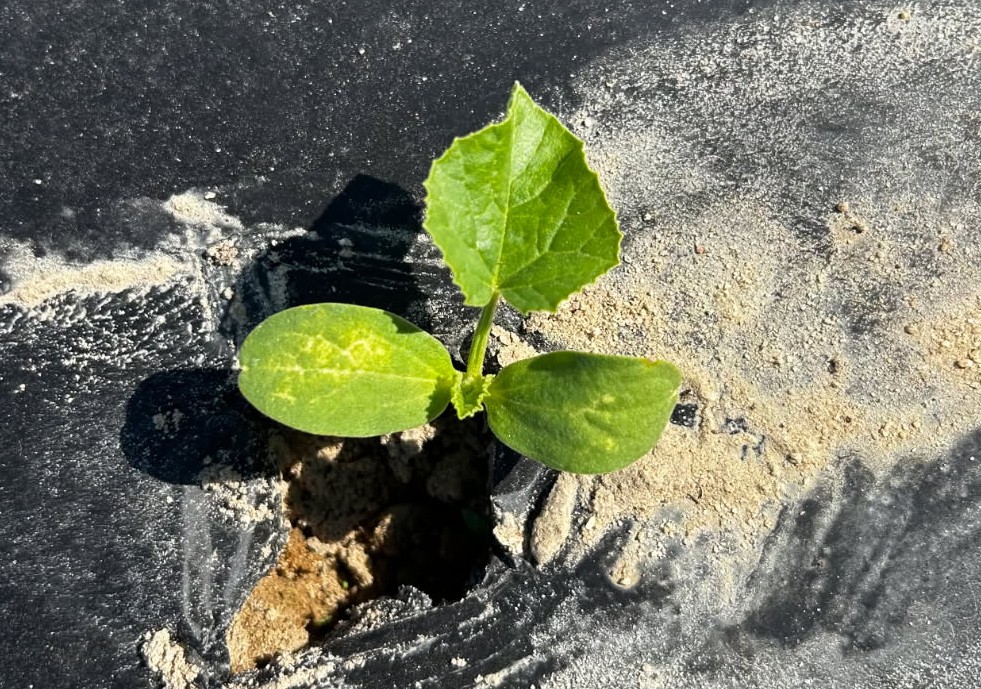
- Spider mites were the primary pest observed this past week in watermelon and cantaloupes. Because they were young transplants, the spider mites were likely carried over from the greenhouses. It is advisable for growers who still have plants in greenhouses to contact their contracted greenhouse and request that their plants be scouted for spider mites and other pests and treated if present.
- When scouting fields for spider mites, pay special attention to areas near drive rows, where populations tend to build up. Spider mites thrive in hot, dry weather, and populations can build up rapidly if left untreated. Under ideal weather conditions, their life cycle can be completed in five days. Webbing indicates a severe infestation, so early detection and treatment are key to gaining control.
- Early in the season, on small plants that are not flowering, the best treatment for spider mites is Abamectin. Later in the season, when pollinators are present, switch to Acramite or another selective miticide that is less harmful to pollinators. Abamectin has translaminar activity. Use an adjuvant with penetrating oil to improve efficacy. A sticker/spreader that increases surface tension and helps keep the product on the leaf surface would inhibit leaf penetration, thereby reducing the translaminar activity of products such as Abamectin. Check the product’s AI percent and apply at label rates. Make a follow-up treatment in seven days to clean up any escapes or newly emerged spider mites.
Zack Snipes
- I don’t think I’ll spend too much time talking about how dry and dusty it is. For growers who have water, things look great.
- As dry as it is, I think we need to be pulse irrigating. This means running our systems for 15-30 minutes, waiting an hour or more, and running another 15–30-minute cycle. In our sandier soils, pulsing like this allows time for water to settle in the bed, and when the next irrigation cycle starts, the first band of water is pushed out to the sides rather than down. Imagine cutting the bed open with a shovel and looking at the bed profile. When we pulse irrigate, the water pattern will look like a Christmas tree. If we just turn on the irrigation and let it run for hours, the sides or the shoulder of the bed will be powder dry. The worst thing we can do right now is turn the irrigation on for hours at a time. When we do this, our water goes straight down, flushing out all our fertility.
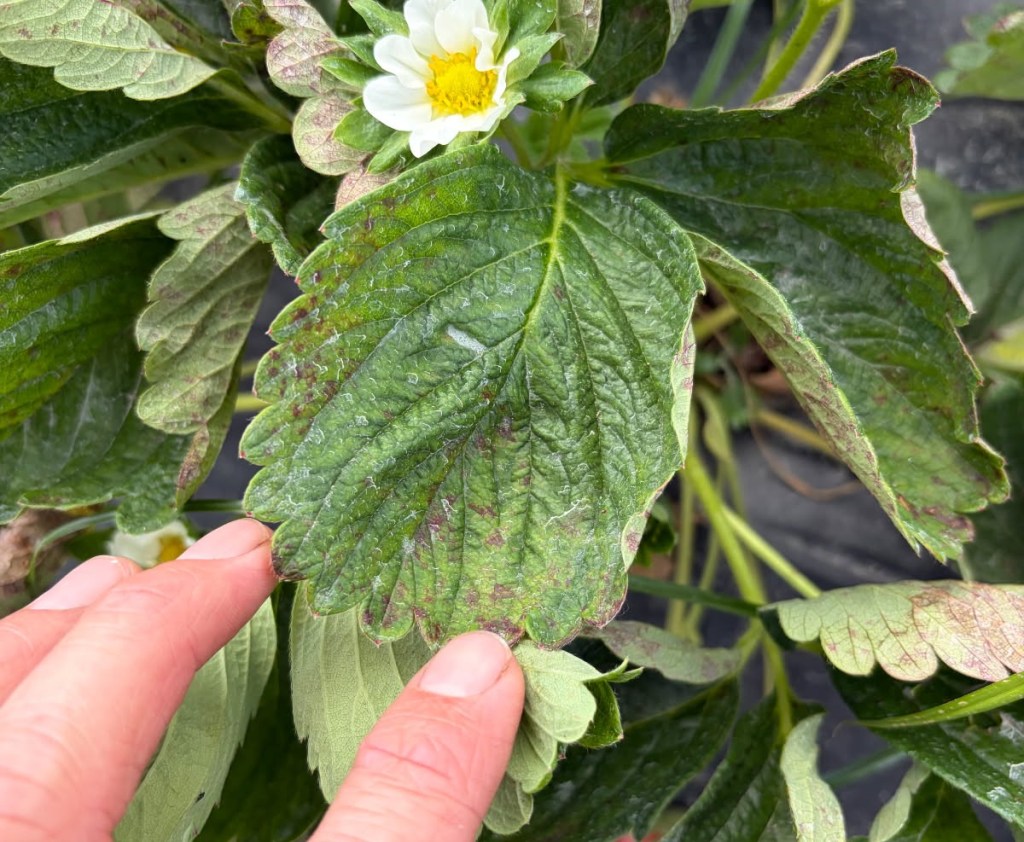
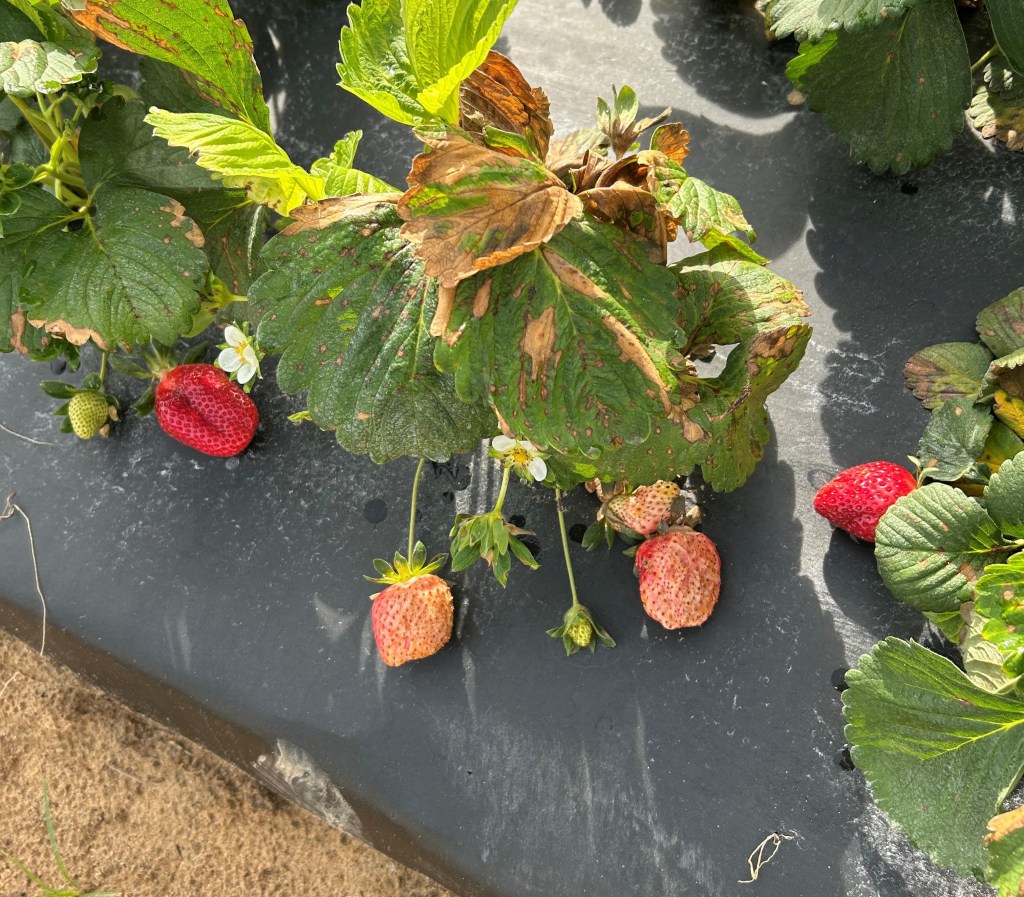
- Strawberries are coming in at heavy volumes, but I am seeing issues. Because it’s so dry, powdery mildew has jumped on our plants. The first symptom I notice when I pull up to a field is that the foliage is slightly light green rather than glossy green. The leaves will be somewhat cupped and will have purple lesions (see photo). The MYIPM app lists all the products we can use on this, along with their efficacy. I am also seeing sunburned berries on every farm I visit.
- The tomato crop looks really good where we have enough water. I have seen some smaller plants in some spots and found that the irrigation line was off-center and the roots were not getting enough water.
Midlands Report
Sarah Scott
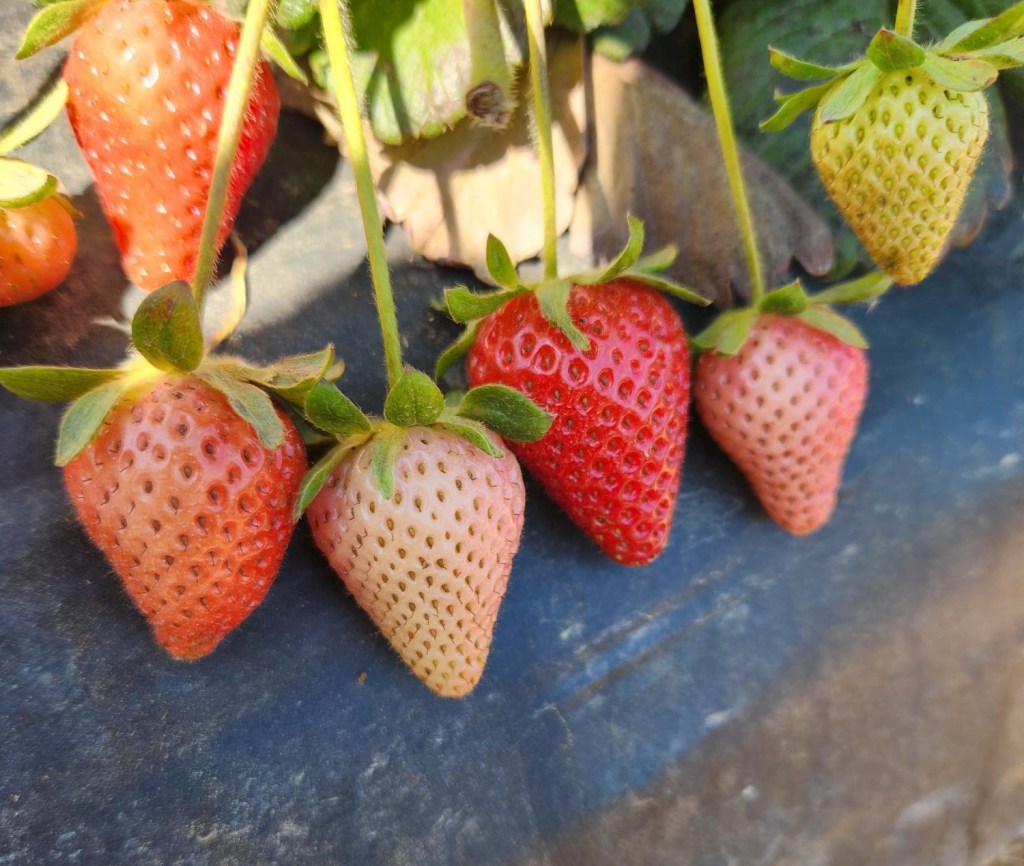
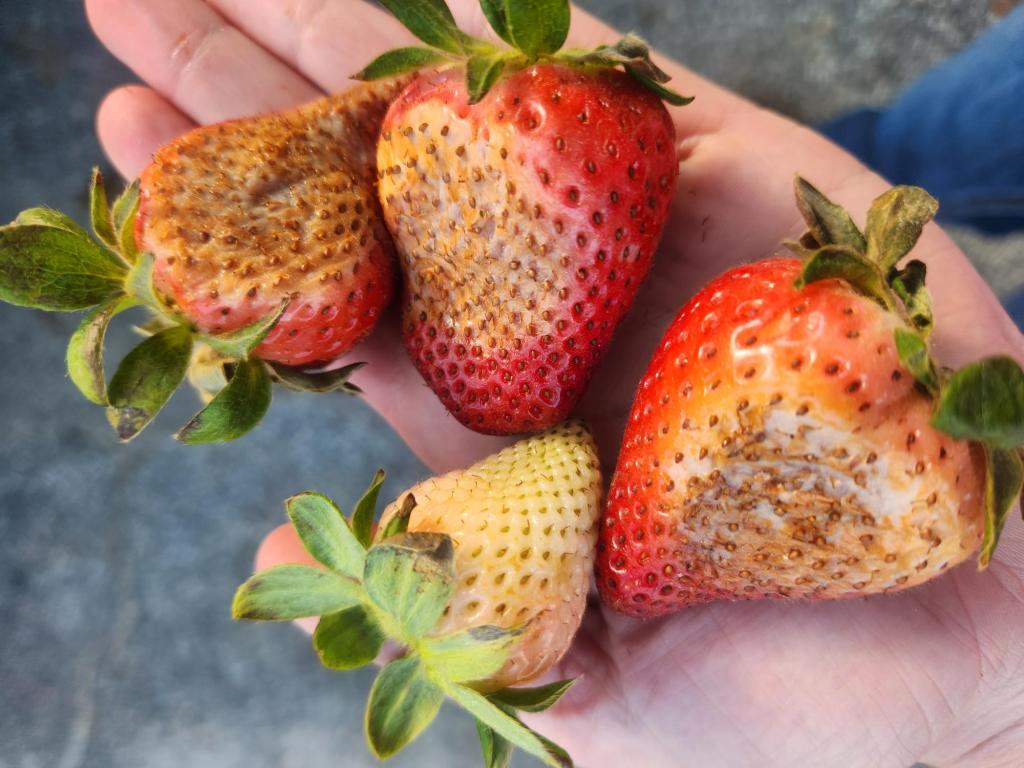
- Last week, we saw strawberry fields with some extreme cases of sunscald. Hot, dry weather has caused berries to look bronzed and blistered. In plants with less canopy protection, the issue was worse. It looks like we will be cooling down to “normal” temperatures for the next week or so, but if we return to extreme, early-season heat, growers should consider lowering their Nitrogen rates. High levels of N can increase berry softness, potentially amplifying damage from issues like sunscald.
- Dry, dusty conditions can also cause spikes in mite and thrips populations, so growers should closely scout for such increases.
Upstate Report
Andy Rollins
- Strawberry crops experienced sunscald on several farms last week. Proper irrigation of the crop will help with this. On farms where I found higher percentages of this problem, I also found beds that were way too dry. For a properly irrigated strawberry bed, grab a handful of soil near the plant. Make a tight fist with the soil approximately 4-6” off the ground and drop it. With sufficient moisture, the soil should break apart but retain some clumping. Last week, it would also have been advisable to run irrigation for multiple short periods during the hottest parts of the day. This would have helped keep the plants from the stress they were under. I do not like running overhead irrigation for this purpose, as it increases the potential for grey mold. Lastly, please adjust your foliar sprays to early morning (5am-8am). Afternoon temperatures remained very high until late. Avoid the use of additional surfactants in the applications, as this will significantly increase the amount of damage. This is recommended for other crops as well. We’re still fighting thrips and spider mite damage on strawberries.
- The peach crop has large differences in fruit size. The smallest fruit are beginning to drop on their own, but I am not sure they will all drop on their own. The trees are increasing the size of the largest and medium-sized fruit, but the smallest and latest set fruit are not growing. Increasing drought stress on trees is starting to show in the yellowing of the oldest leaves. Late afternoon leaves are showing early signs of wilt. We are concerned about the ongoing drought this week, but hopeful about the predicted rains this weekend. If growers can irrigate, I recommend they do so, starting with the earliest-cropping varieties they have a crop on.
Question of the Week
Why are the roots of this peach tree exposed?
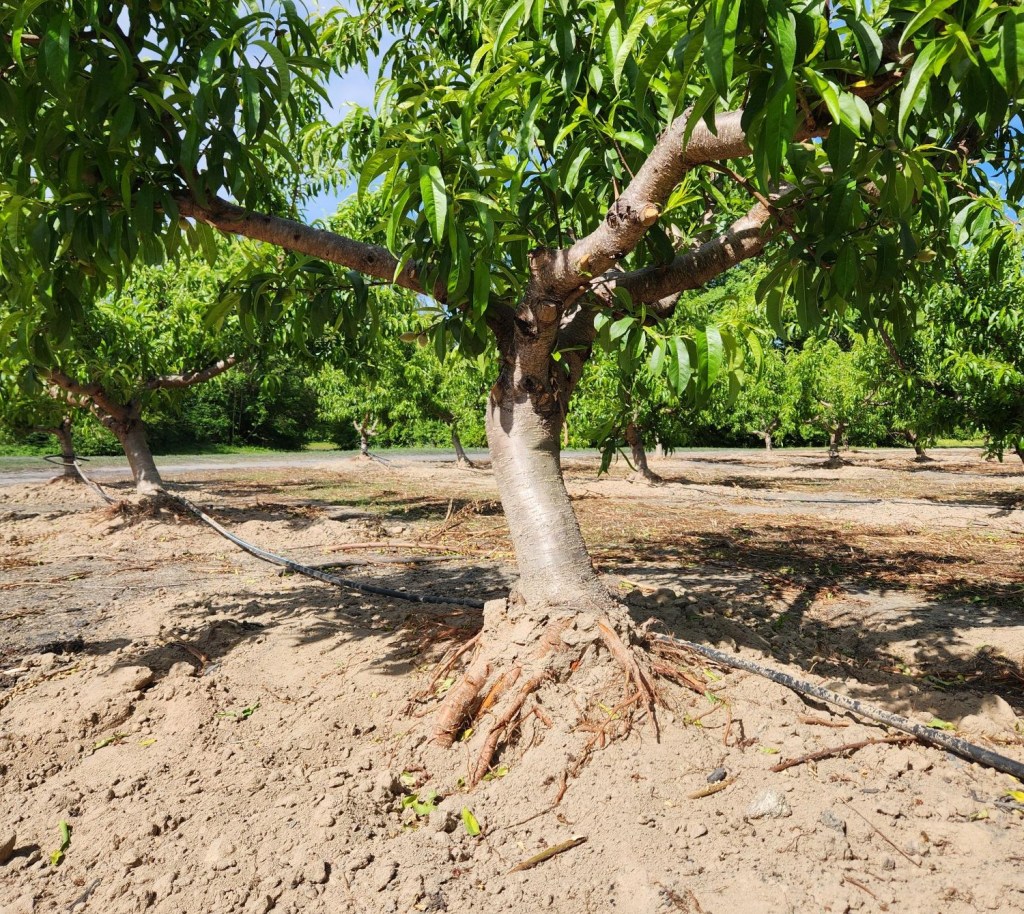
Answer in the comments below and check back on Thursday to see the answer.
Don’t forget to look at the Resources tab for links to crop handbooks, helpful websites, and related blogs. Have a great week!


One response to “South Carolina Field Update (April 20, 2026): Near-Record Heat Brings Sun Scalding Issues In Strawberries”
Zach hit it with a tractor
LikeLike