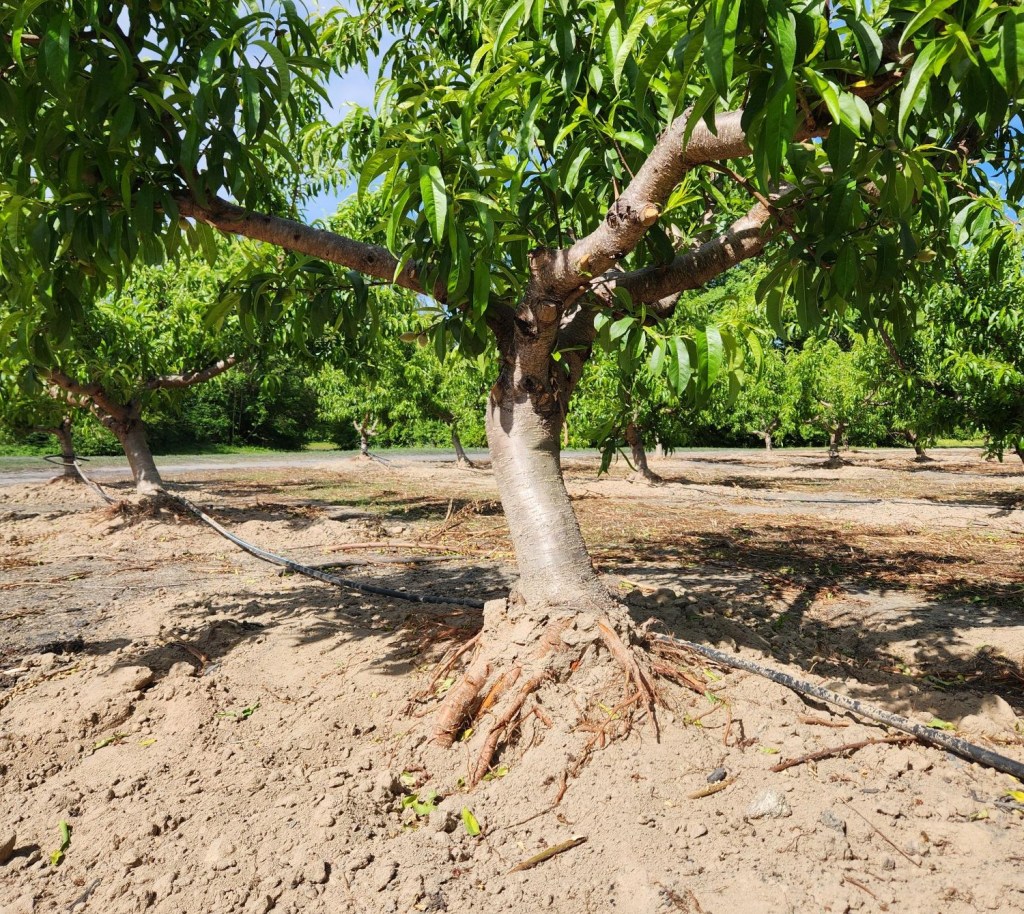
Why are the roots of this peach tree exposed?
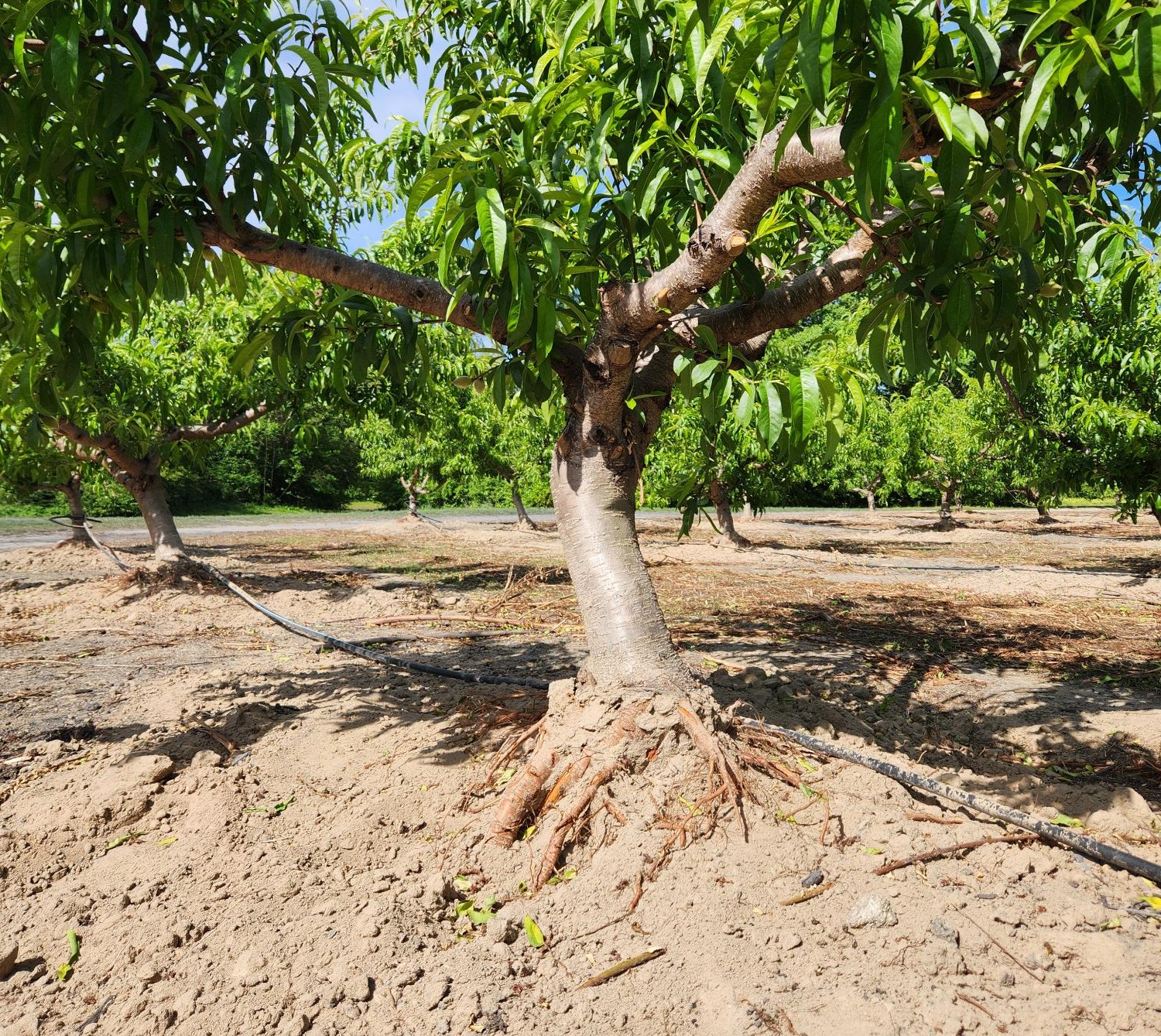
One of the biggest disease issues peach growers in South Carolina face is Armillaria Root Rot (ARR). The main reason this disease is so challenging is that we currently do not have a foolproof option for controlling its spread. The best and most effective way, researchers have found, to slow the spread has been through cultural control options, including planting trees on shallow berms and, after 2 years of growth and establishment, excavating the soil around the roots using an air spade or other mechanism. ARR is a soilborne fungus that spreads by growing along roots underground. It has been determined that this fungus can survive for decades on roots, decaying or even dead wood in the soil.
Back to the root collar excavation… Once trees are established (and before laying irrigation) growers go through and remove the soil from the primary roots which exposes them to light and air (solar heating). This practice has proven to slow the growth and colonization of the fungus, which extends the life of a peach tree by several years.
Clemson University has a dedicated team working to address issues facing peach growers across the state and has been collaborating with others around the country to find ways to manage ARR.
This week’s question is from Sarah Scott, Midlands Fruit and Vegetable Extension Agent.

