Category: Brassicas
-
Updated Fungicide Recommendations to Manage Alternaria Leaf Spot (Black Spot) on Brassicas
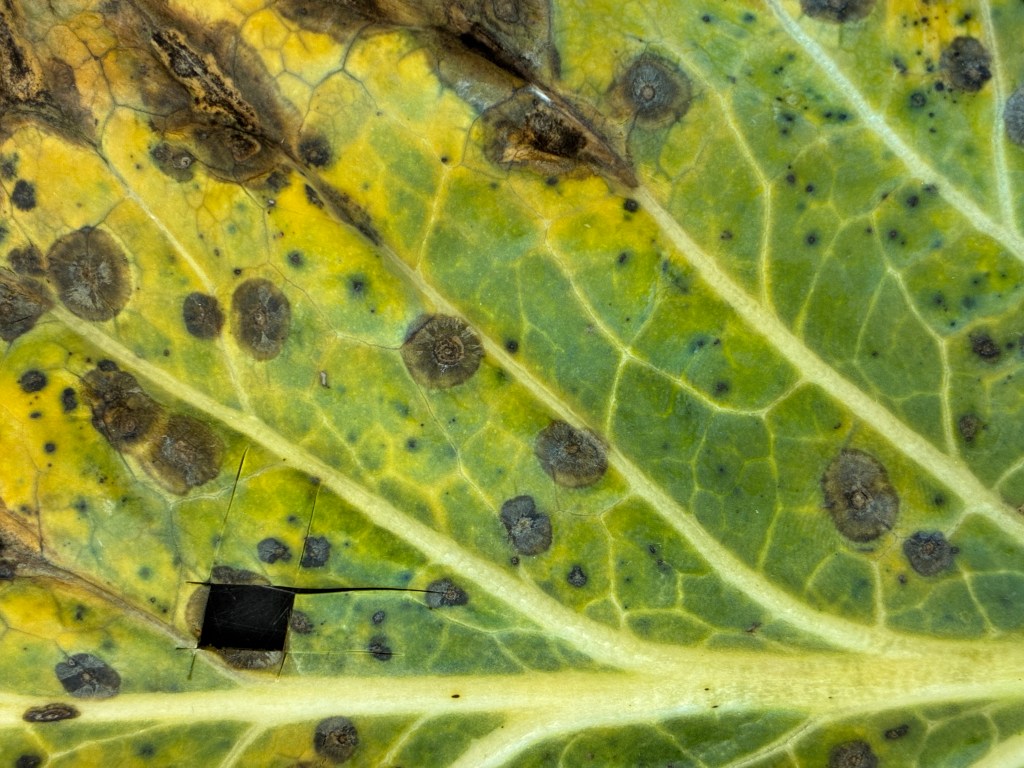
By Tony Keinath, Clemson Plant Pathologist Despite some unusually cold weather in January and February, Alternaria black spot is active on overwintered brassicas. Although the brassica Alternaria fungus (Alternaria brassicicola) present in South Carolina supposedly prefers warm temperatures, I doubt that old information is accurate today. Growers should be on the lookout for tan to…
-
Hold Off on Second White Mold Sprays in South Carolina
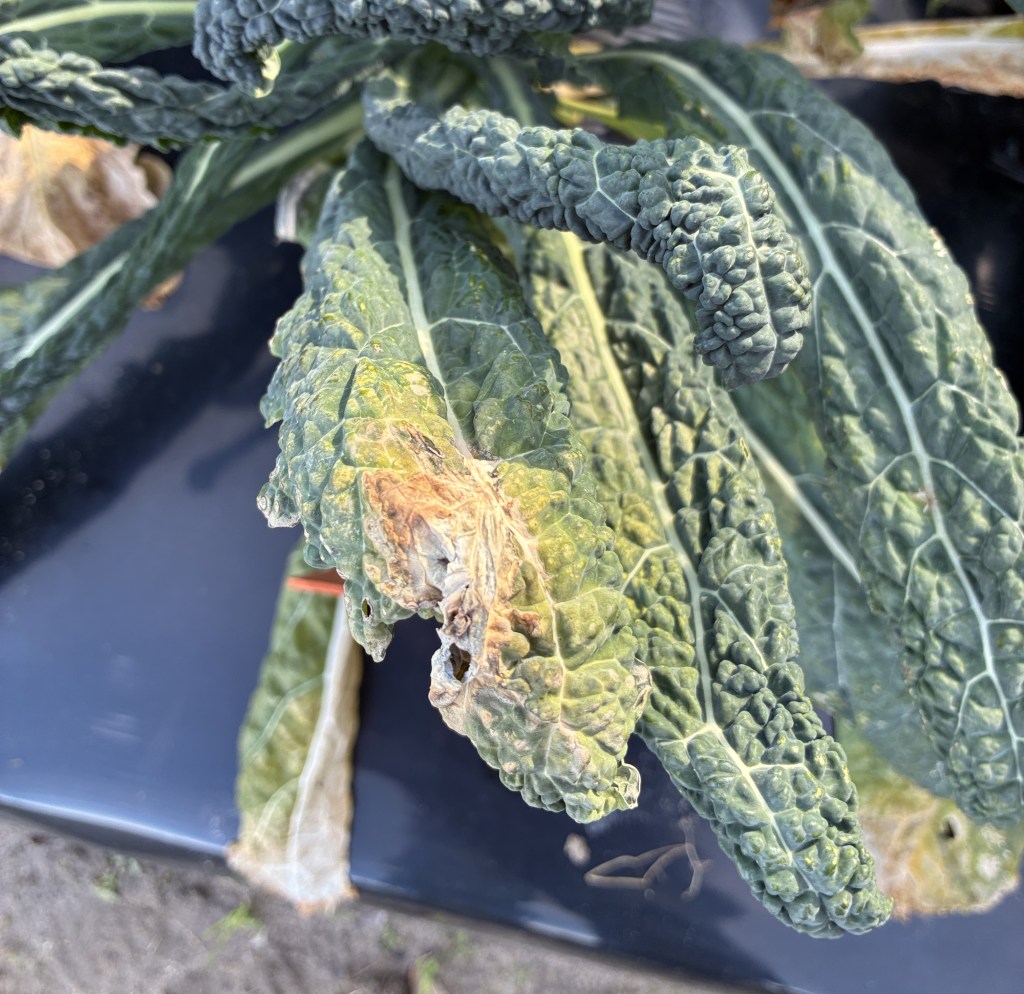
From Tony Keinath, Clemson Extension Plant Pathologist Last week, I advised South Carolina brassica growers to spray brassica crops to protect them from white mold, based on symptoms seen on kale and stock, a brassica winter annual, in Charleston. The initial symptoms were triggered by the cold temperatures of Dec. 16 and 17 that completed…
-
Southern Blight is an Unusual Disease on Kale
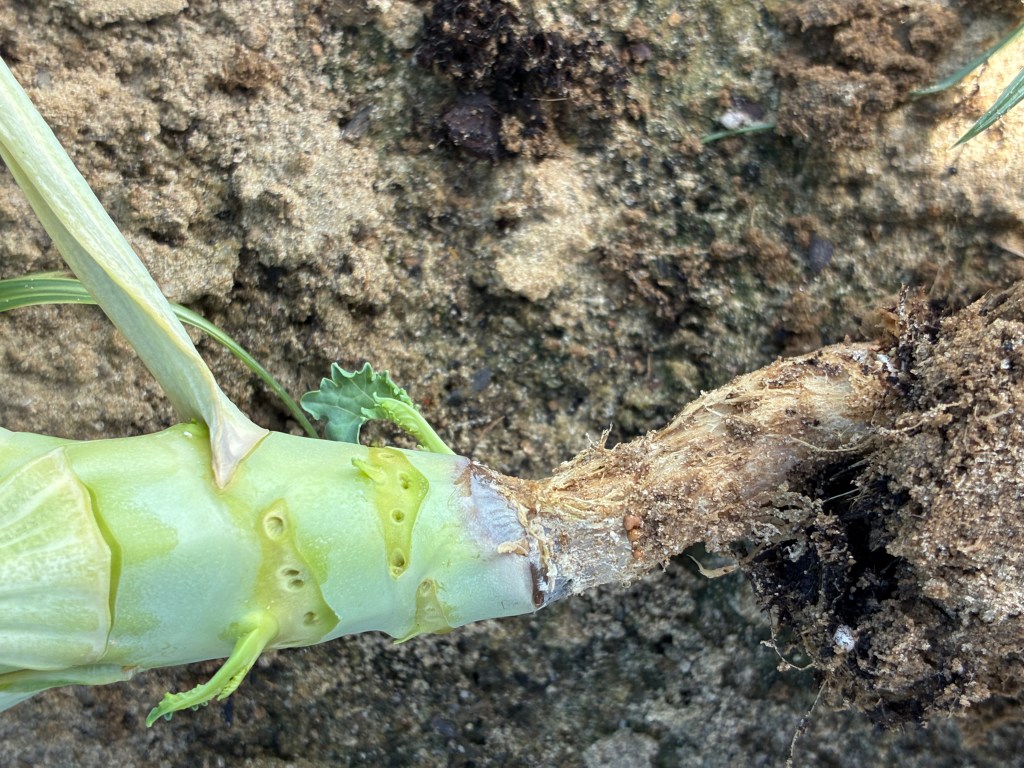
By Clemson Plant Pathologist Tony Keinath Southern blight is rarely seen on kale or any other brassica crop. In the United States it’s been reported on other brassica vegetables grown in Alabama and Texas. This week, I was surprised to see southern blight causing stem rot just above the soil line on several plants of…
-
White Mold is Active so Spray Now
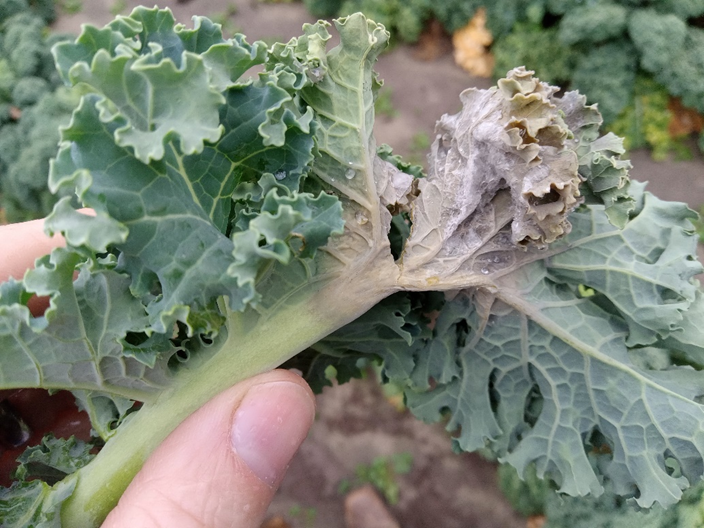
From Clemson Plant Pathologist Tony Keinath and Extension Associate Justin Ballew The freezing weather the week of January 21, 2025, was just what the Sclerotinia white mold fungus was waiting for. While cold temperatures discourage most animals from being active, freezing temperatures trigger Sclerotinia sclerotia (the survival structures in soil) to germinate, produce tiny mushrooms,…
-
White Mold on Kale and Other Cool-Season Vegetables

From Clemson Plant Pathologist Tony Keinath Sclerotinia white mold, a cool-season disease on several different vegetable crops, is present on collard and (probably) on kale. It is particularly common on over-wintered crops. The white mold fungus has a complex life cycle. The fungus, Sclerotinia sclerotiorum, survives long-term and over the summer as sclerotia in soil.…
-
2022 Collard Stats
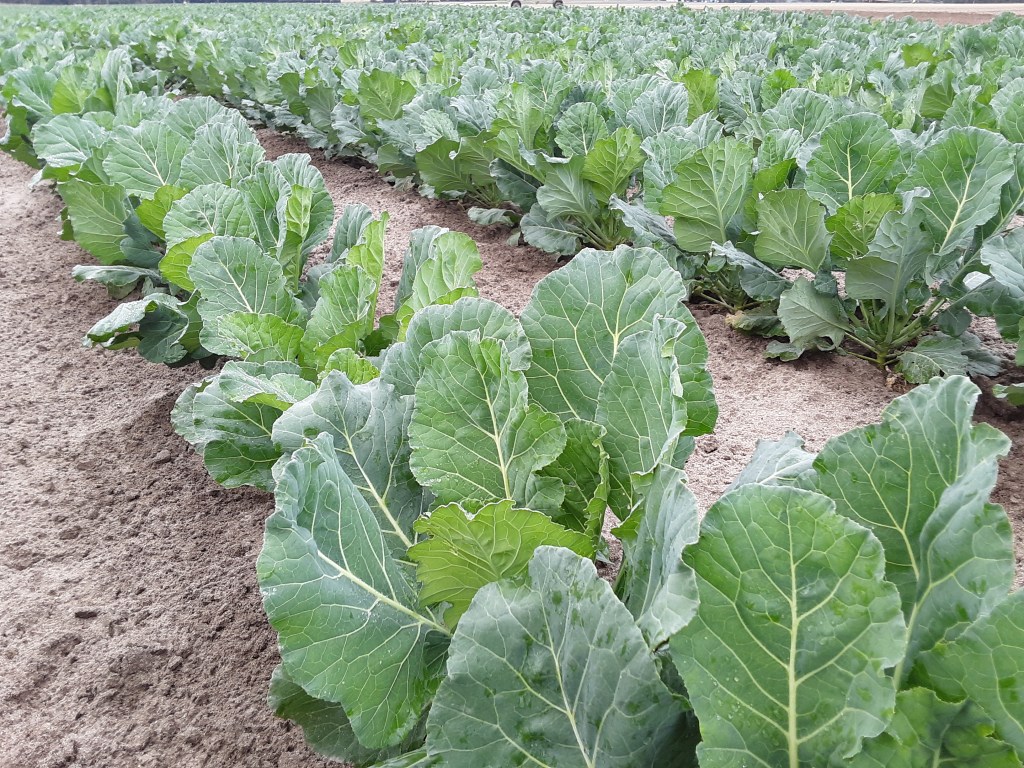
In the Fall of 2022, Extension Agents throughout South Carolina surveyed growers on specialty crop acreage for the year. This was the first year of what is expected to be an annual survey. For this first year, data was collected for six crops: collard greens, lima beans, peaches, strawberries, sweet corn, and watermelon. The goal…
-
Black Rot Review: How to Manage this Disease on Brassica Crops
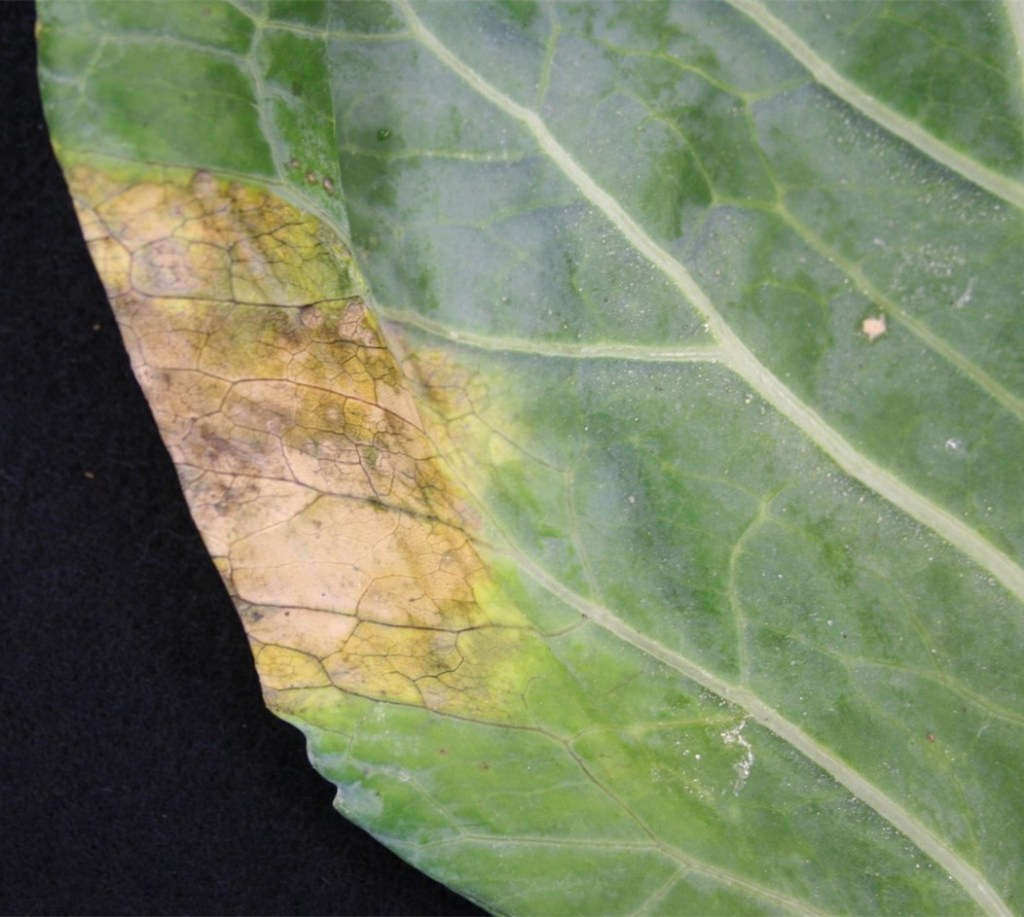
From Clemson Plant Pathologist Tony Keinath. Black rot is the most common disease caused by bacteria on brassica crops. It was widespread in the Lowcountry in fall 2022, so it’s time for a review of this serious disease. Recognizing Black Rot Most often, black rot starts at the edges of the older leaves on brassicas.…
-
Biopesticides (Seem to) Perform Poorly Against Black Spot on Kale
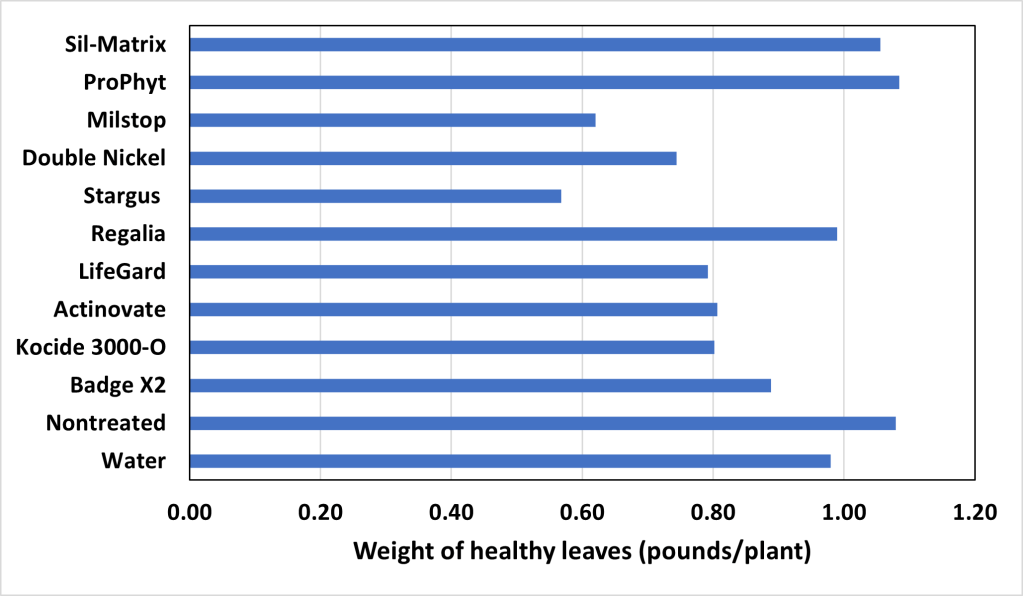
From Clemson Plant Pathologist Tony Keinath. As part of a USDA Organic Transitions Program grant, we tested 10 biopesticides on organic kale ‘Oldenbor’ to see if any product controlled Alternaria leaf spot, a.k.a. black spot. Unfortunately, none look promising as no biopesticides reduced black spot compared to the nontreated control based on repeated greenhouse trials…
-
Fog and Downy Mildew on Collards
From Clemson Plant Pathologist Tony Keinath. Foggy fall mornings are nature’s warning that conditions are favorable for brassica downy mildew to get started on collard and kale. Remember that because downy mildew affects the harvested, edible portion of the crop, control practices must be very effective to increase yields. Use the following practices to maximize…
 The South Carolina Grower