Tag: Brassicas
-
Weekly Field Update – 10/31/22

Happy Halloween! Don’t forget to check out the Women in Ag Conference coming up this weekend (11/4-11/5) in Clemson. It will start Friday with tours of Clemson’s research farms and continue Saturday with a variety of educational sessions. Register here. Be sure to scroll all the way to the bottom to see this week’s Question…
-
Weekly Field Update – 10/10/22
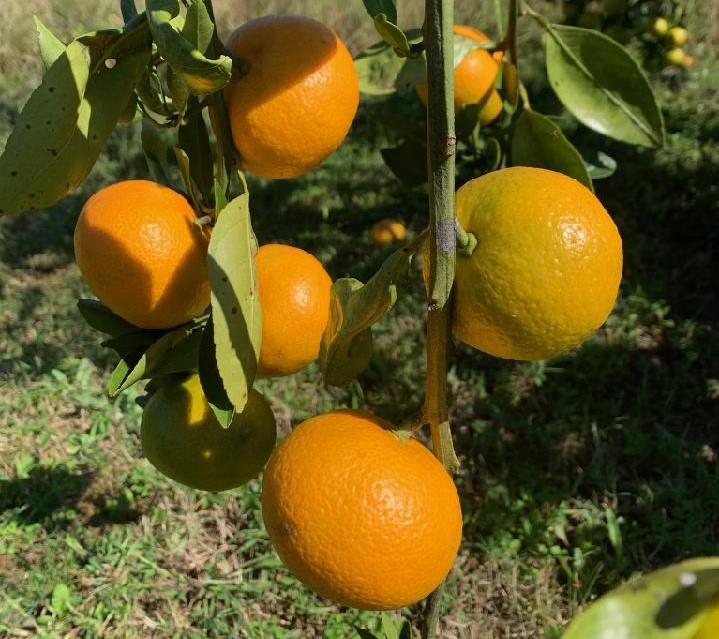
A big congratulations to Kerrie Roach as she is transitioning to a new role as a Nursery Inspector with the Clemson Department of Plant Industry (DPI). Kerrie has served Extension and the great folks of Oconee, Anderson, and Pickens Counties extremely well in her 6 years as a horticulture agent. We will miss Kerrie very…
-
Weekly Field Update – 10/3/22
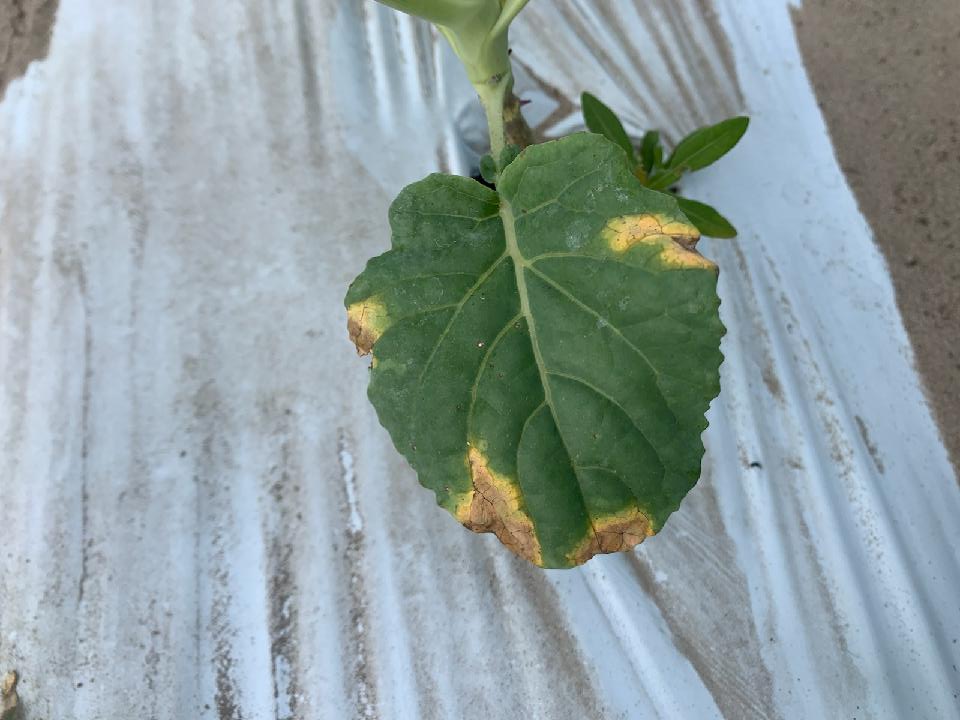
Do you grow cole crops? Do you have diamondback moth in your fields? Have you experienced reduced efficacy of insecticides to manage them? We are looking for cole crop farms throughout SC to collect diamondback moth larvae from. We will test these larvae in the lab against a range of common insecticides to determine if…
-
Weekly Field Update – 9/26/22

Coming up this week, there are a couple more waste pesticide collection events: Lexington on 9/27 and York on 9/28. See more details on the Upcoming Events page. Be sure to scroll all the way to the bottom to see this week’s Question of the Week and check back on Thursday for the answer! Statewide…
-
Biopesticides (Seem to) Perform Poorly Against Black Spot on Kale
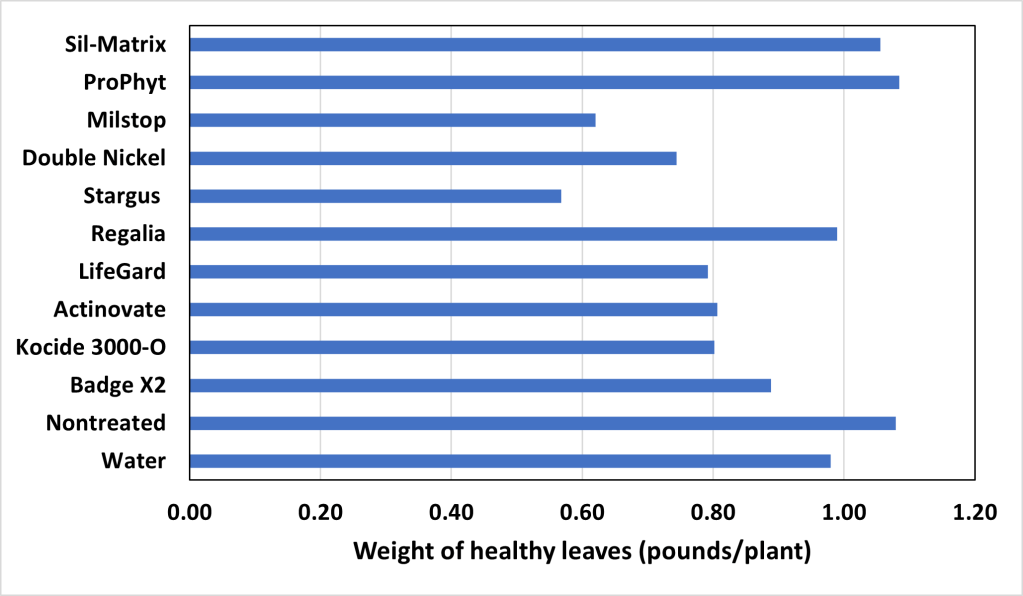
From Clemson Plant Pathologist Tony Keinath. As part of a USDA Organic Transitions Program grant, we tested 10 biopesticides on organic kale ‘Oldenbor’ to see if any product controlled Alternaria leaf spot, a.k.a. black spot. Unfortunately, none look promising as no biopesticides reduced black spot compared to the nontreated control based on repeated greenhouse trials…
-
Question of the Week – Cross-striped Cabbageworm
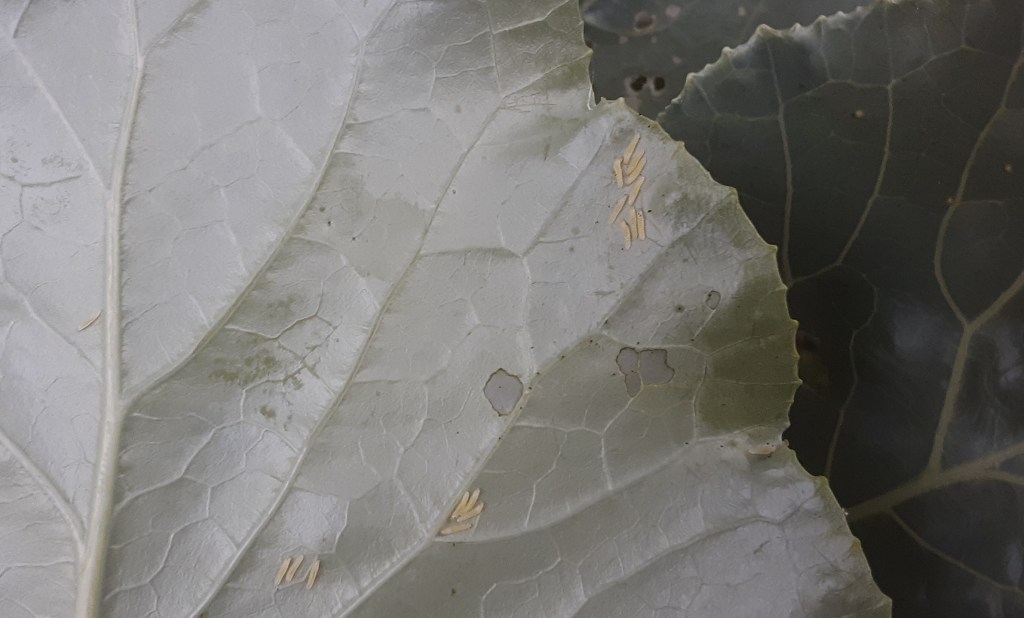
This week, the question was: Which brassica-feeding caterpillar is commonly found in groups on a single leaf, as shown here? These are cross-striped cabbageworms (CSCW). CSCW moths lay eggs in clusters of 3 to 25 rather than singly like most other brassica caterpillar pests. Because there are numerous caterpillars feeding on a single leaf once…
-
Question of the Week – ICW Crysalis

This week, the question was: What is stuck to this collard leaf? This is the chrysalis of an imported cabbageworm (ICW). The ICW is an unusual brassica feeding caterpillar in that the adult stage is a butterfly, rather than a moth. Because of this, it pupates in a chrysalis, instead of a cocoon. The adult,…
-
Question of the Week – Boron or Pollination
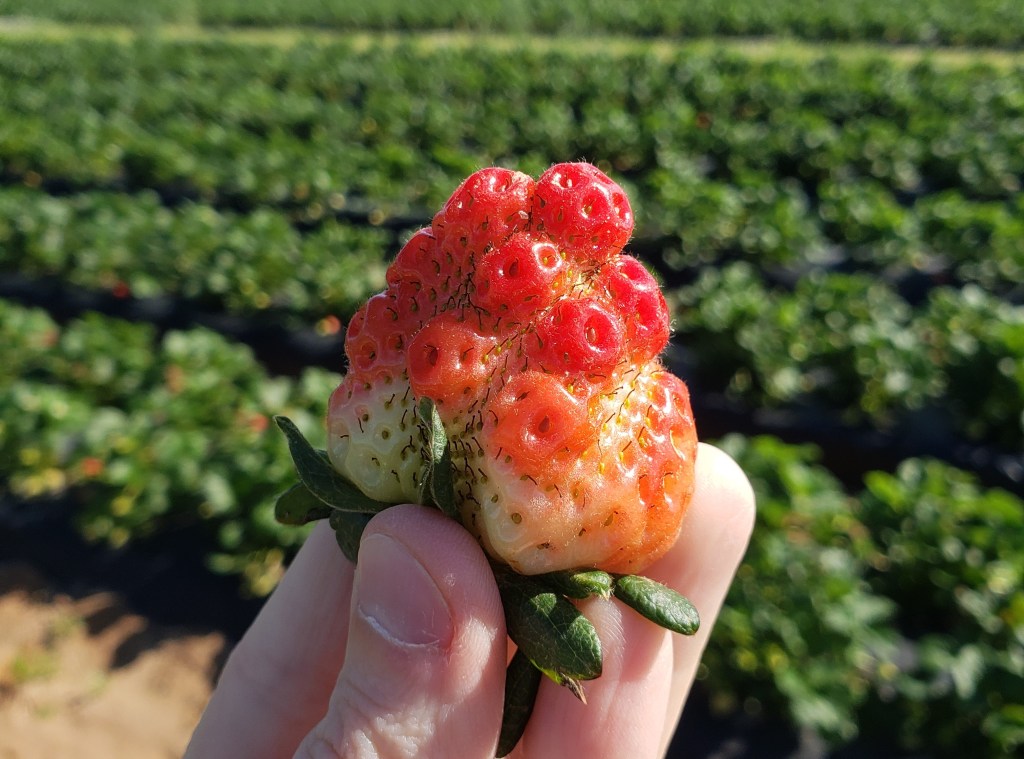
This week, the question was: What is wrong with this strawberry? This funky shape is the result of either poor pollination or a boron deficiency. The easiest way to distinguish the cause is by taking a tissue sample to look at nutrient levels in the plants. If misshaped berries are common across the whole field,…
-
Weekly Field Update – 4/11/22
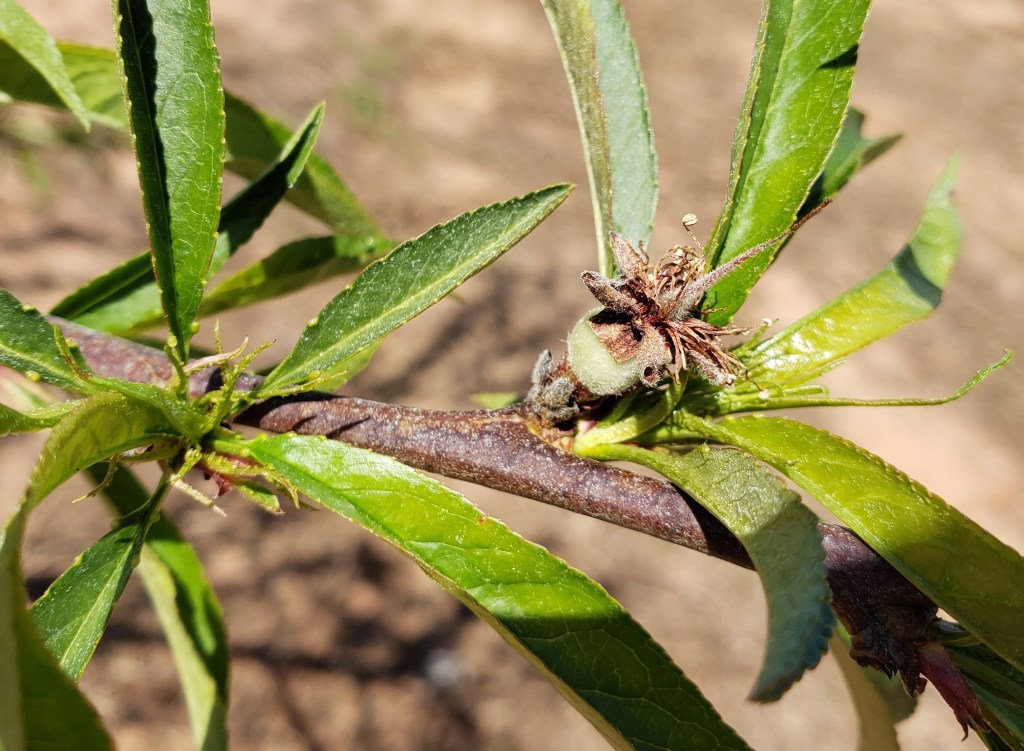
Coming up tonight is the Upstate Vegetable Grower Meeting. Click here to view more details. Be sure to scroll all the way to the bottom to see this week’s Question of the Week and check back on Thursday for the answer! Coastal Region Rob Last reports, “Crops are generally looking good In the area. Strawberries…
-
Question of the Week – Virus
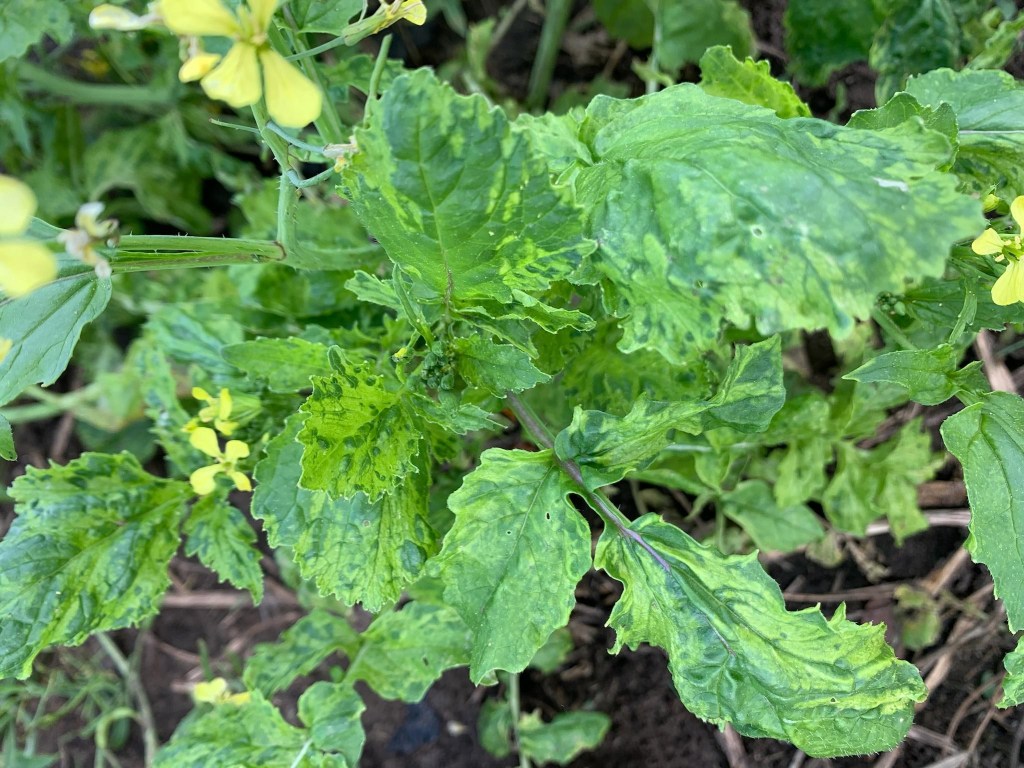
This week, the question was: What’s going on with this tie-dyed-looking wild mustard? This wild mustard is suffering from a virus. Numerous viruses affect plants in the brassica family and may be transmitted by aphids, flea beetles, cucumber beetles, or by seed. Viruses may cause a variety of symptoms including stunting, leaf distortion, mosaic patterns,…

