Tag: Watermelon
-
Deep Dive: Fusarium Wilt in Watermelons
Calling all watermelon growers… Make sure to tune in to the latest SC Grower Exchange episodes including our deep dive into Fusarium Wilt. Commercial Horticulture agent, Rob Last, talks with Professor of Plant Pathology Research and Extension Vegetable Pathologist, Dr. Anthony Keinath, and discusses recent observations and tips for dealing with fusarium wilt, specifically in…
-
More Evidence that Choosing Grafting or the Right Cultivar is More Important than Using Fungicides to Manage Fusarium Wilt of Watermelon

By Clemson Plant Pathologist Tony Keinath My 2024 Fusarium wilt experiment at Coastal REC, Charleston, SC, was a streamlined version of the 2023 experiment with 2 fungicides, 2 cultivars, and grafting, except we tested 1 different fungicide and 1 different cultivar. The 2024 results, however, matched the results from 2023 (see title). Already at 3…
-
Weekly Field Update – 5/28/24
We hope everyone had a safe and happy Memorial Day Weekend. This week, we have a virtual Produce Safety Rule Training for any that needs this required training. Keep an eye on the Upcoming Events tab periodically so you don’t miss anything. Also, check out the latest episode of the SC Grower Exchange Podcast below.…
-
2022 Watermelon Stats
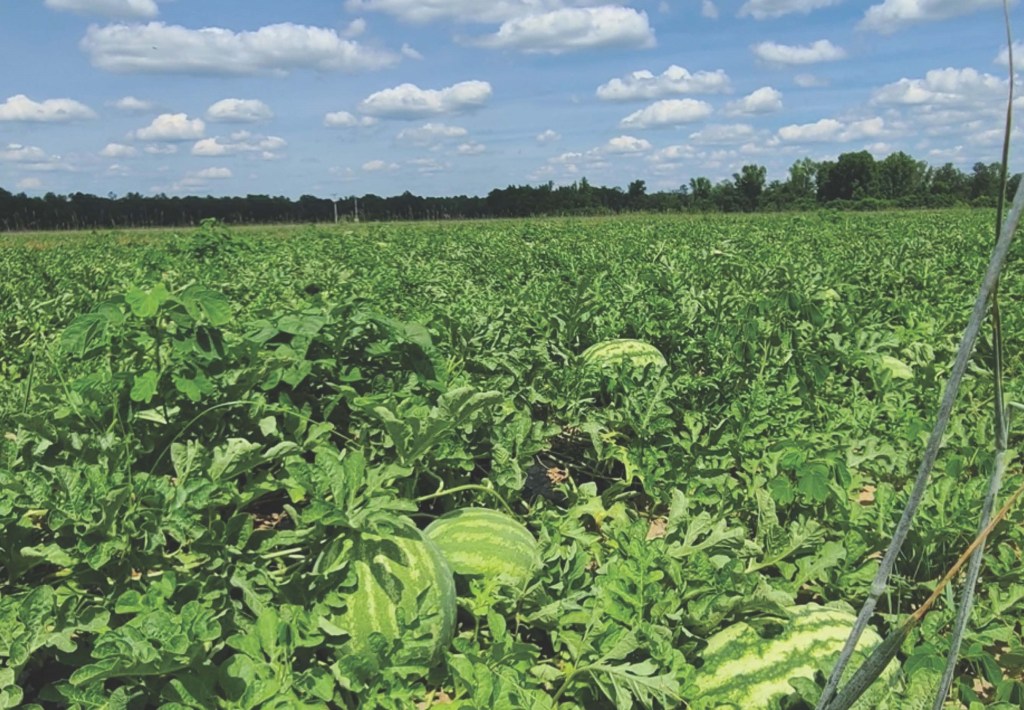
In the Fall of 2022, Extension Agents throughout South Carolina surveyed growers on specialty crop acreage for the year. This was the first year of what is expected to be an annual survey. For this first year, data was collected for six crops: collard greens, lima beans, peaches, strawberries, sweet corn, and watermelon. The goal…
-
2023 Fusarium Wilt on Seedless Watermelon Experiment – Week 7 Observations
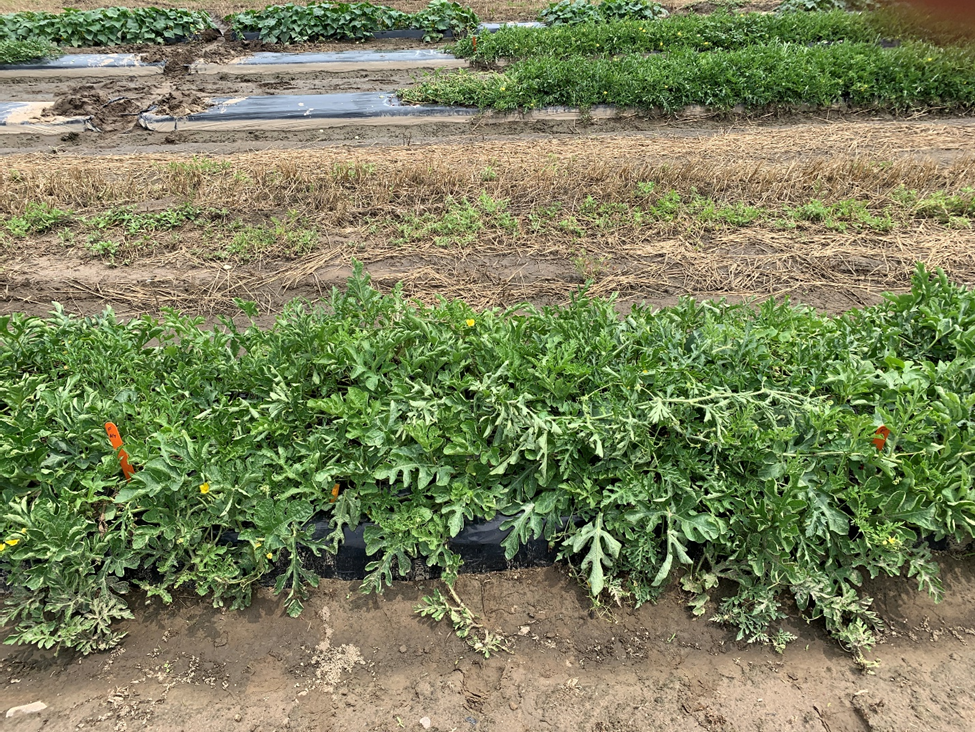
From Clemson Plant Pathologist Tony Keinath This year’s Fusarium wilt experiment includes 3 seedless cultivars, 3 fungicide treatments applied via drip irrigation, and grafting. This experiment is supported in part by a USDA SCRI grant. Transplants were set April 5 in a field infested with Fusarium races 1 and 2. These preliminary results are based…
-
Urgent: Powdery Mildew Found on Watermelon in Charleston, SC

From Clemson Plant Pathologist Tony Keinath. Powdery mildew was found on three cultivars of seedless watermelon at the Clemson Coastal REC on May 23, 2023. All watermelon crops in South Carolina should be 1) scouted for powdewry mildew and 2) if found, sprayed to prevent powdery mildew from reducing yields by up to 40%. When…
-
2023 Fusarium Wilt on Seedless Watermelon Experiment – Week 5 Observations
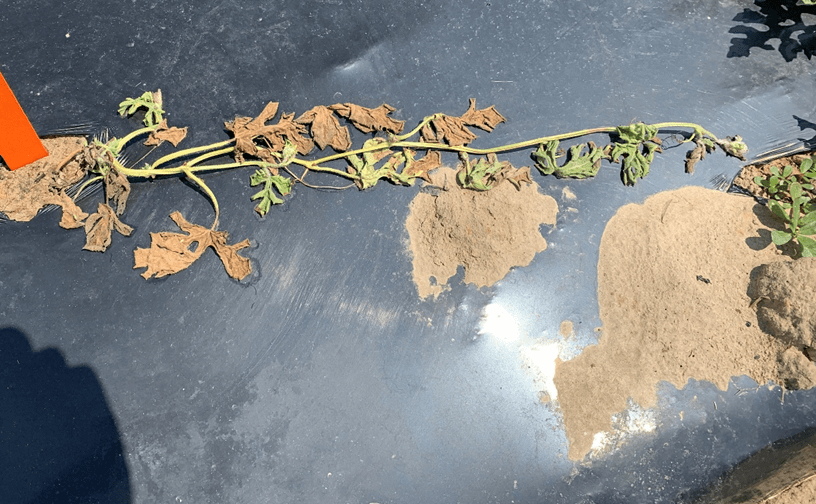
From Clemson Plant Pathologist Tony Keinath This year’s Fusarium wilt experiment includes 3 seedless cultivars, 3 fungicide treatments applied via drip irrigation, and grafting. (This experiment is supported in part by a USDA SCRI grant.) Transplants were set April 5 in a field infested with Fusarium races 1 and 2. Right on schedule, symptoms of…
-
2023 Fusarium Wilt on Seedless Watermelon Experiment – Week 3 Observations
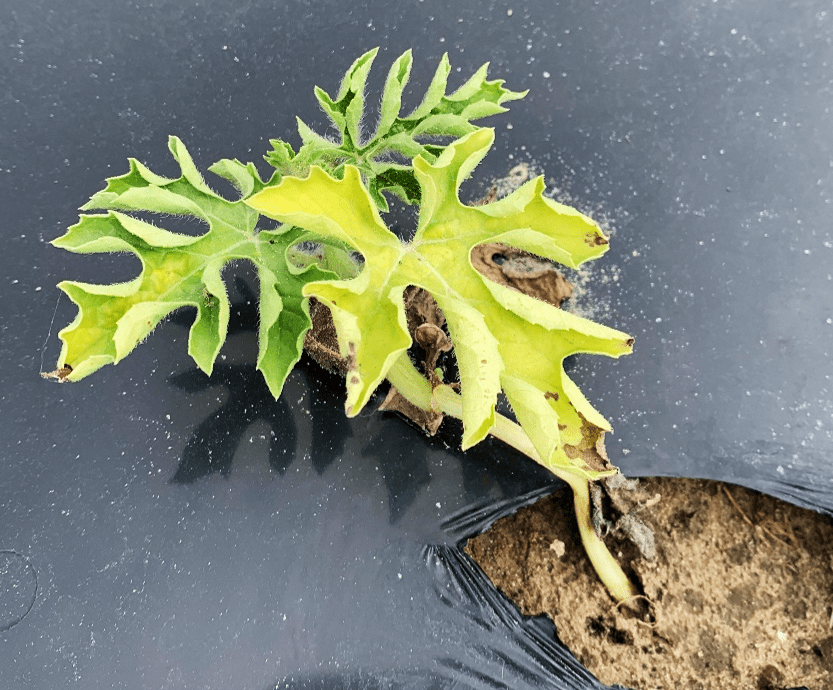
From Clemson Plant Pathologist Tony Keinath This year’s Fusarium wilt experiment includes three seedless cultivars, three fungicide treatments applied via drip irrigation, and grafting. This experiment is supported in part by a USDA SCRI grant. There also is a side experiment with SP-7 pollenizers grafted onto ‘Carolina Strongback’ rootstock and non-grafted SP-7 supported in part…
-
How Seedless Watermelon Cultivars React to Fusarium Wilt: Average Results of 2021 and 2022 Trials
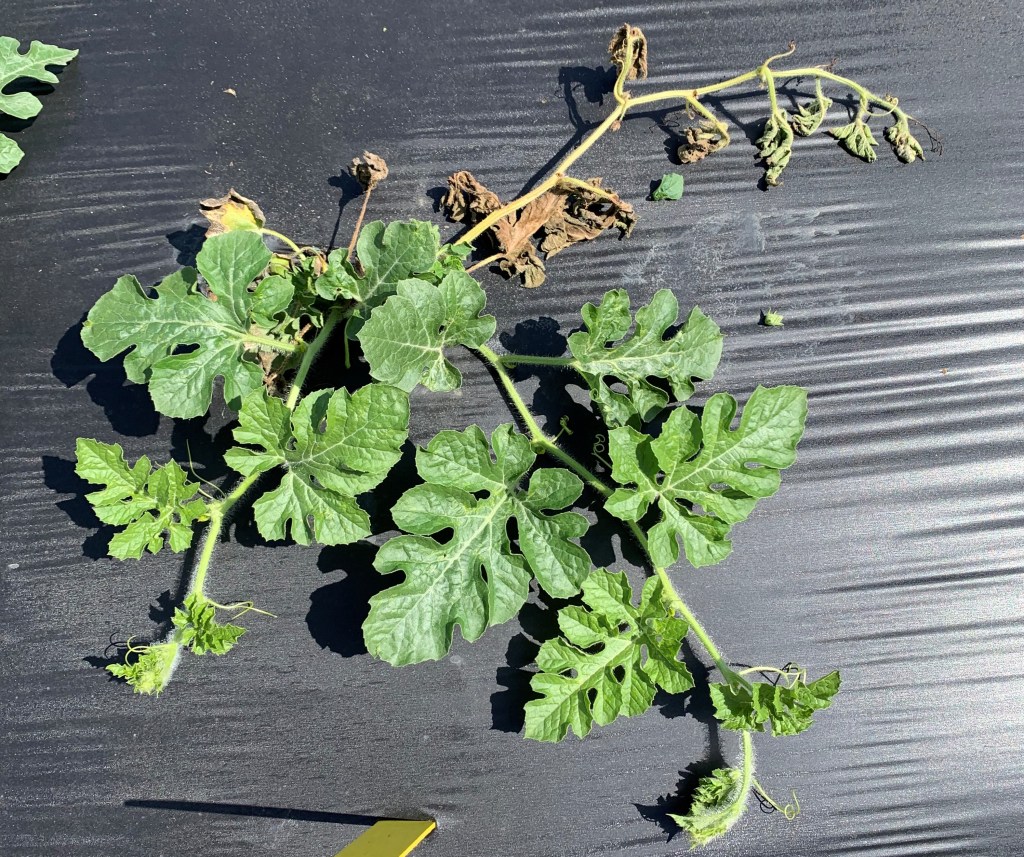
From Tony Keinath, Extension Vegetable Pathologist. As part of a large USDA Specialty Crop Research Initiative grant, I have been working with Dr. Jonathan Schultheis, Horticulturist at NCSU, to evaluate seedless watermelon cultivars grown in plots naturally infested with the Fusarium wilt fungus. The South Carolina trials were done in my Fusarium-infested field at the…
-
2023 Gummy Stem Blight Control for Watermelon Growers: Early is on Time
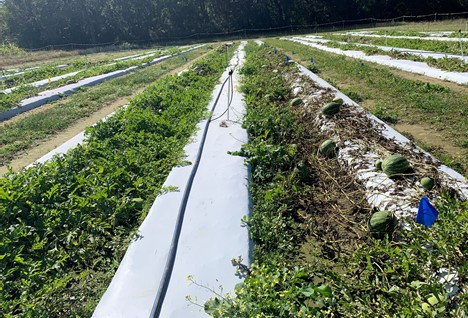
From Tony Keinath, Extension Vegetable Pathologist. The recent freeze in the lower part of South Carolina more than ended the 2022 watermelon season. It’s not too early to plan for gummy stem blight control in 2023 to allow time to buy the right fungicides in case of shortages. As the saying goes, early is on…
 The South Carolina Grower