Tag: cucumber
-
Question of the Week – Pickleworm
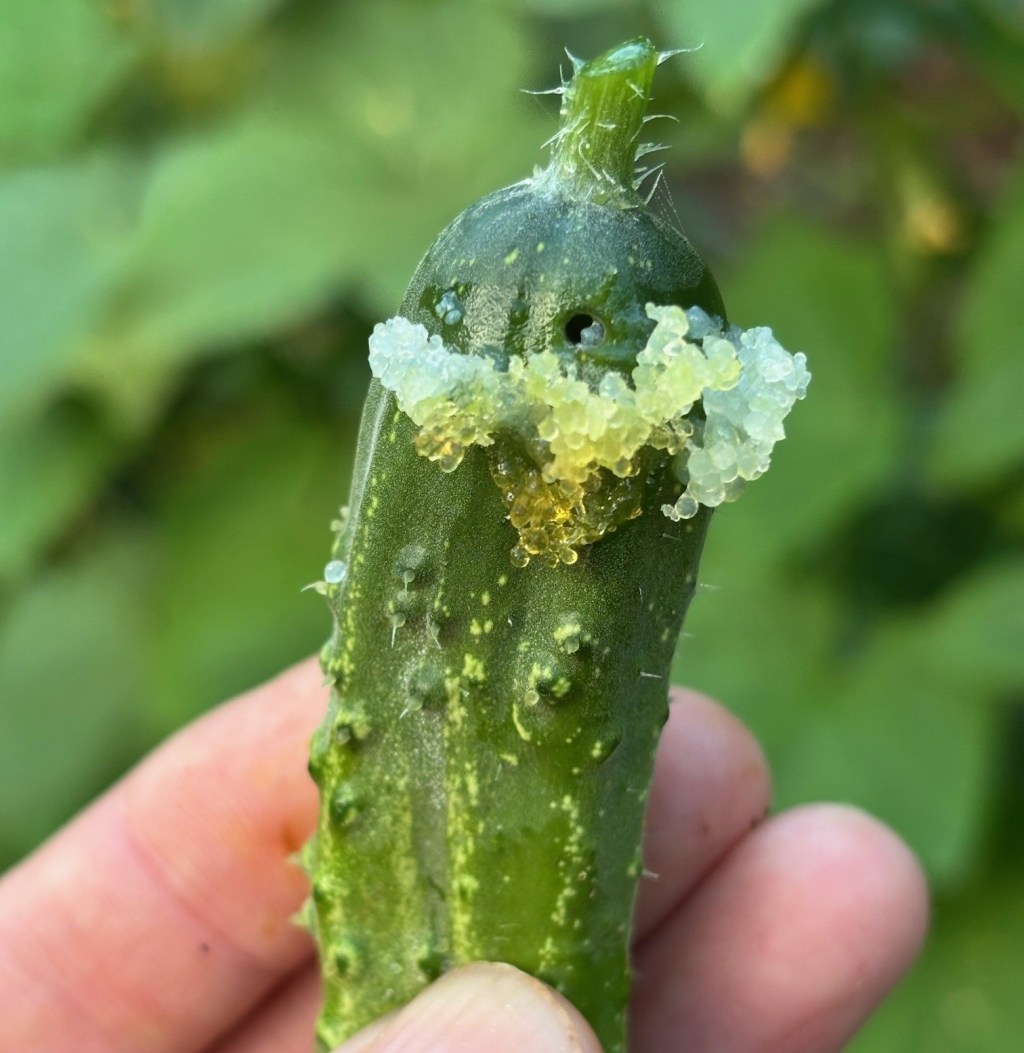
What is going on with this cucumber? The hole and gelatinous material are clear evidence that the cucumber was recently attacked by a pickleworm. Pickleworms are caterpillars and the larva of pickleworm moths (Diaphania nitidalis). They feed on the flower buds and fruits of cucurbit crops including cucumbers, squash, zucchini, and melons. The young caterpillars…
-
Good Progress on Breeding a Downy Mildew-Resistant Pickling Cucumber, 2024 Update
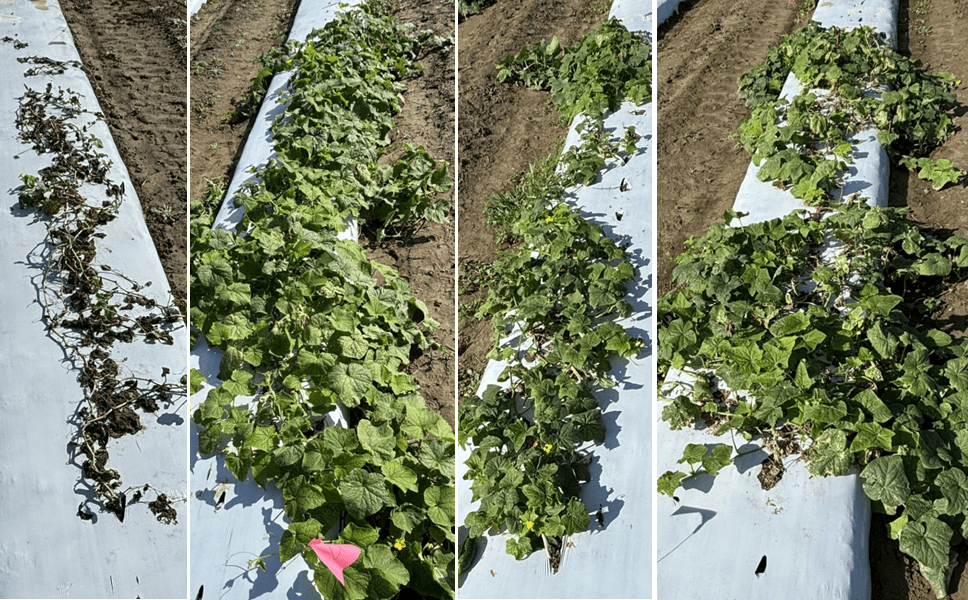
From Clemson Plant Pathologist Tony Keinath I am part of an exciting collaboration with Dr. Michael Mazourek from Clemson University to help him complete the breeding and selection process for a new pickling cucumber with high levels of resistance to downy mildew. Field work at the Clemson Coastal REC in Charleston started last fall. We…
-
Question of the Week – Squash Beetles
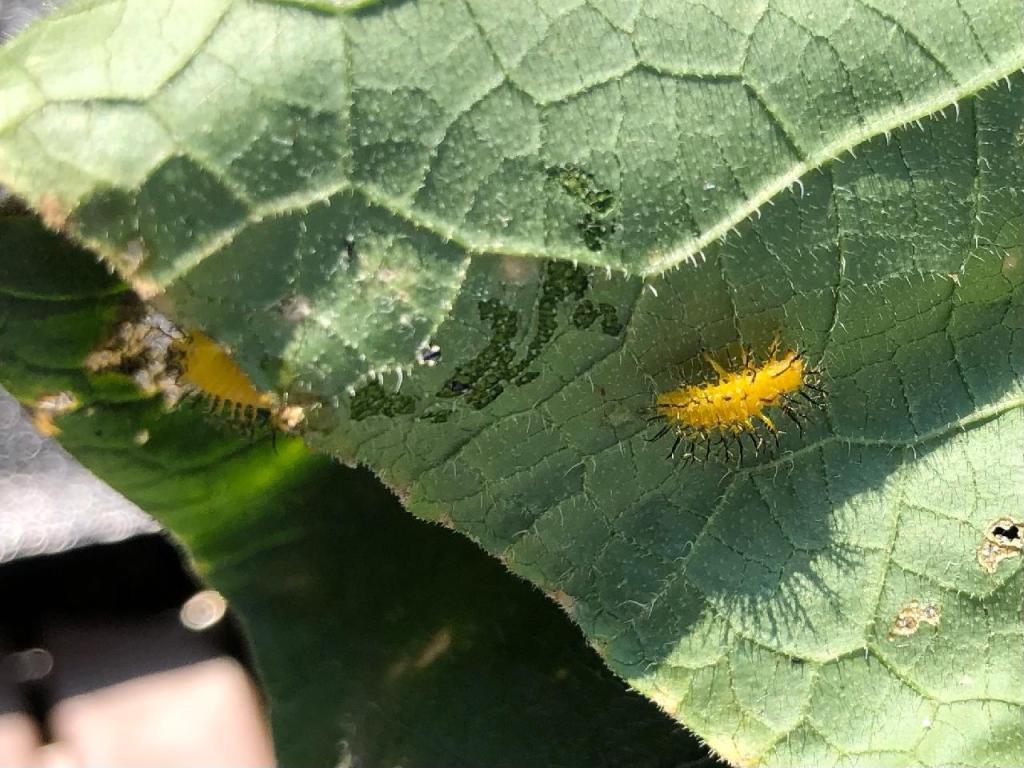
This week, the question was: What is this critter that was found on the underside of a cucumber leaf? This spiky looking thing is a squash beetle larva. This is one of two species in the lady beetle family that feed on vegetable crops. The other is the Mexican bean beetle. Squash beetle adults look…
-
Question of the Week – Pickleworm
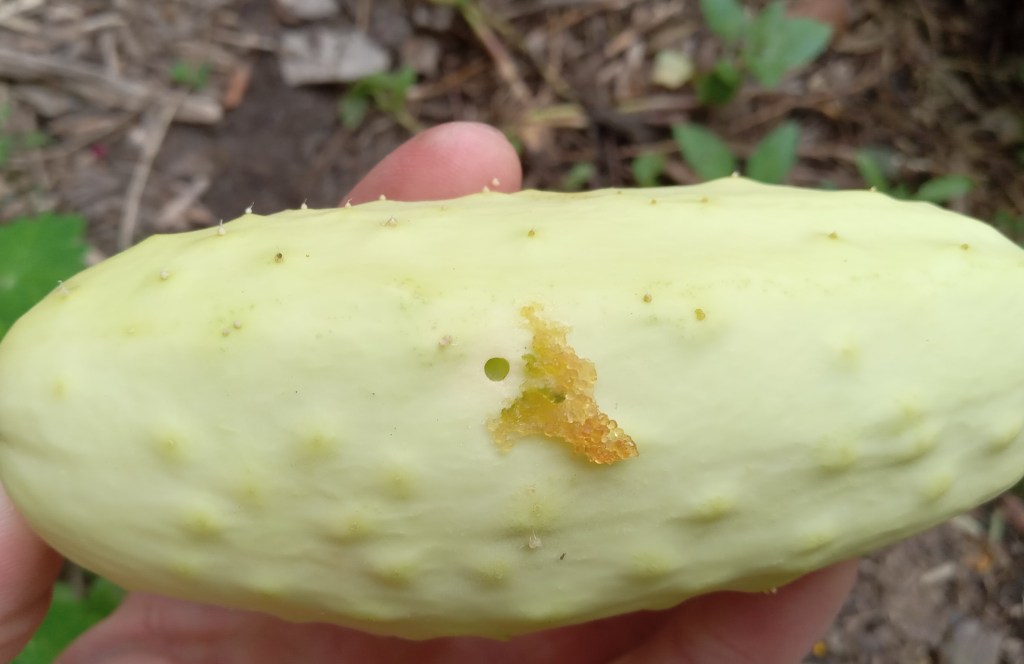
This week, the question was: What caused the hole in the side of this cucumber? (Nothing is wrong with the color. This cultivar is called Silver Slicer.) This week’s question is a review from a post Tom Bilbo wrote recently about pickleworms. Pickleworms feed on the blooms and tunnel into the developing fruit of cucurbit…
-
Planting Cucumbers Early Avoids Downy Mildew and Increases Yield without Fungicides
From Clemson Plant Pathologist Tony Keinath Growers who have flexibility in deciding when to plant cucumbers should plant them within 1 month of the earliest recommended planting date for their region. Planting dates for commercial growers are in the Southeast Vegetable Crop Handbook (Pg 75). Planting dates for home gardeners are in fact sheet HGIC…
-
Weekly Field Update – 5/24/21
Coastal Rob Last reports, “As we mentioned last week, cucurbit downy mildew has been confirmed in cucumber crops locally. All cucurbit growers should be applying downy-mildew specific fungicides such as Ranman tank mixed with either chlorothalonil or mancozeb. Other pests and disease levels in cucurbits remain low. Tomatoes and peppers are developing well with good fruit…
-
Cucurbit Downy Mildew Found In SC
Cucurbit downy mildew was found in SC this week in Bamberg, Barnwell, and Calhoun Counties. In each case it was found on cucumbers and for now severity seems low. This is about two weeks earlier than in the past couple years. If not already doing so, all cucumber and cantaloupe growers in SC should begin…
-
Field Update – 6/29/20
Coastal Rob Last reports, “In our area crops are generally looking good with watermelons and cantaloupes coming to harvest. From a pest perspective, we are finding some early pickleworm and melon worm damage occurring. In addition, cucumber beetles and squash bugs remain active. Cucurbit downy mildew is being found in the area and as such…
-
Field Update – 6/8/20 (Downy Mildew Arrives in SC)
Statewide Downy mildew was found in Charleston, SC late last week on cucumbers. This is the first confirmed report of the 2020 season. If not already doing so, all cucumber and canteloupe growers should begin applying protective fungicides to help prevent or manage downy mildew. Ranman tank-mixed with a protectant such as chlorothalonil, mancozeb, or…
 The South Carolina Grower