Month: June 2022
-
Question of the Week – Turmeric
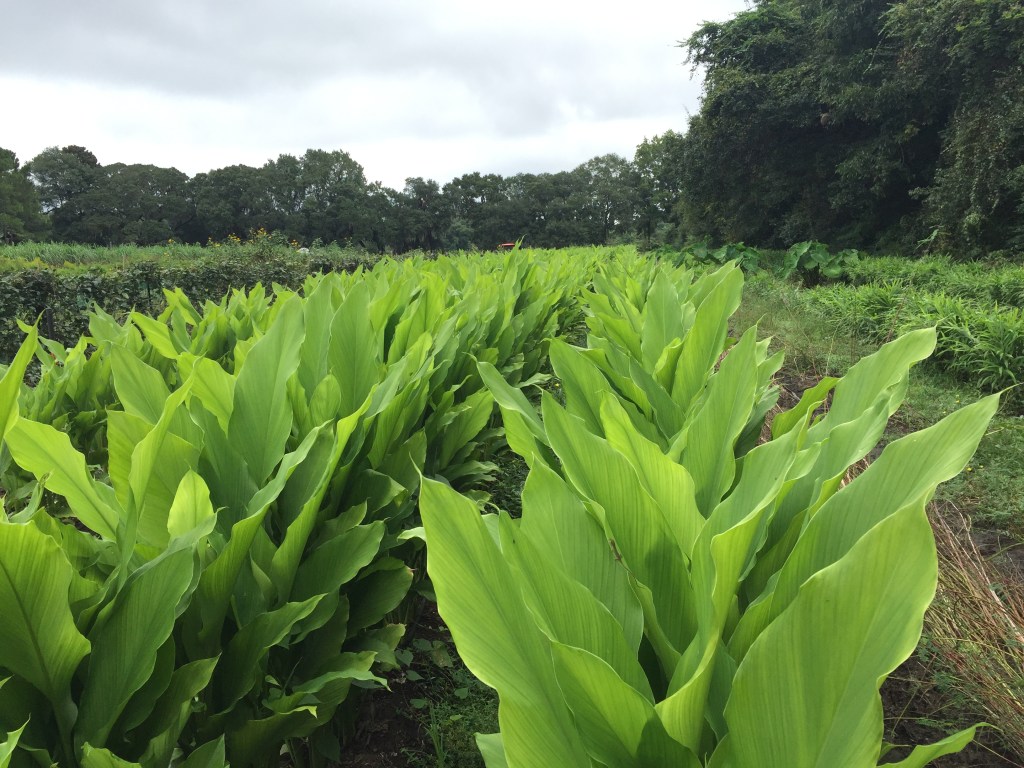
This week, the question was: What is this crop being grown on John’s Island, SC? This is turmeric. This plant is grown for its swollen roots (rhizomes) which will be dug and harvested in the fall. Turmeric is a close relative of ginger that is a traditionally popular ingredient in Asian, African, and Caribbean dishes.…
-
Biopesticides (Seem to) Perform Poorly Against Black Spot on Kale
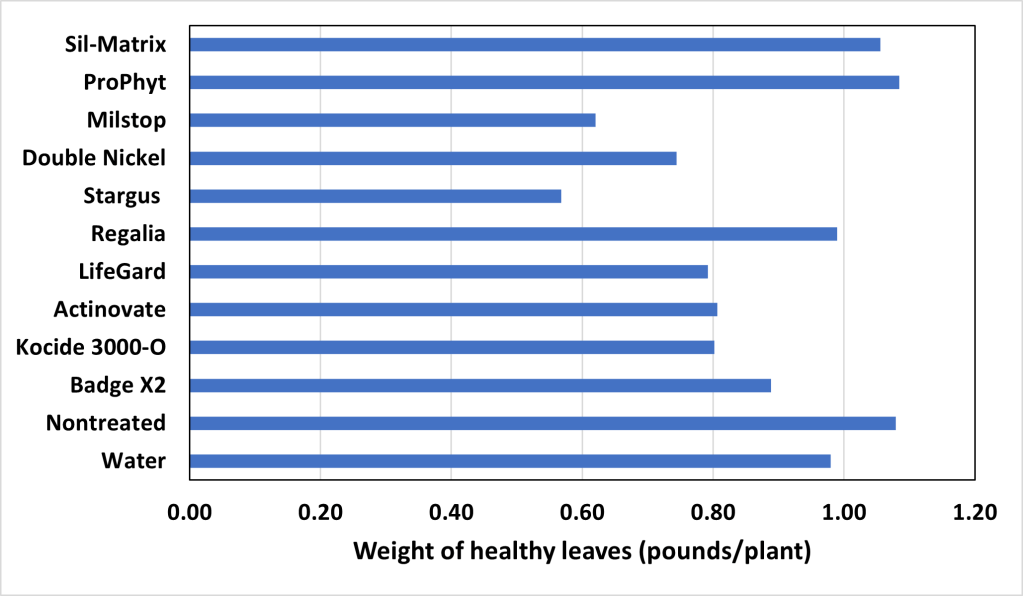
From Clemson Plant Pathologist Tony Keinath. As part of a USDA Organic Transitions Program grant, we tested 10 biopesticides on organic kale ‘Oldenbor’ to see if any product controlled Alternaria leaf spot, a.k.a. black spot. Unfortunately, none look promising as no biopesticides reduced black spot compared to the nontreated control based on repeated greenhouse trials…
-
Weekly Field Update – 6/27/22

Be sure to scroll all the way to the bottom to see this week’s Question of the Week and check back on Thursday for the answer! Coastal Region Zack Snipes reports, “It is hot and very, very dry in the Lowcountry. We desperately need some rain on the coast. Many irrigation ponds are at very…
-
Charcoal Rot Showing Up in Cantaloupe

From Clemson Extension Agent Rob Last and Plant Pathologist Tony Keinath. Charcoal rot was identified in a cantaloupe crop in South Carolina this week. The fungus responsible for the disease is Macrophomina phaseolina, a soil-borne fungus that survives as microsclerotia. The fungus affects more than 800 host plants. These range from corn and soybean to…
-
Question of the Week – TSWV
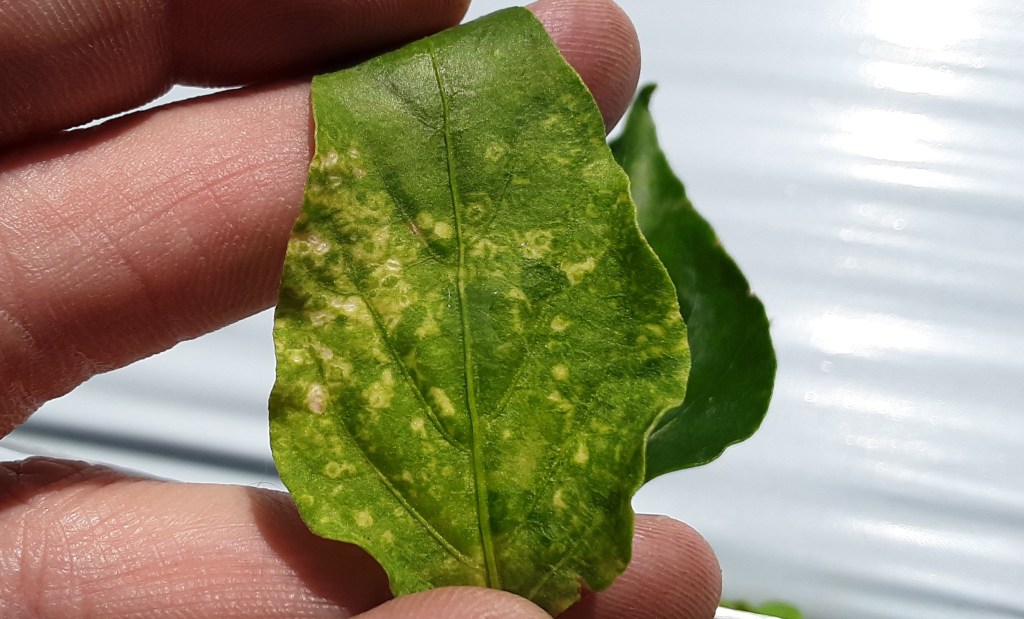
This week, the question was: What is going on with this pepper leaf? This pepper leaf is showing symptoms of a virus, likely tomato spotted wilt virus (TSWV). TSWV is an important virus of tomato, pepper, eggplant, peanuts, tobacco, etc. that causes significant yield loss to infected plants. Numerous ornamental and weed species are also…
-
Weekly Field Update – 6/20/22
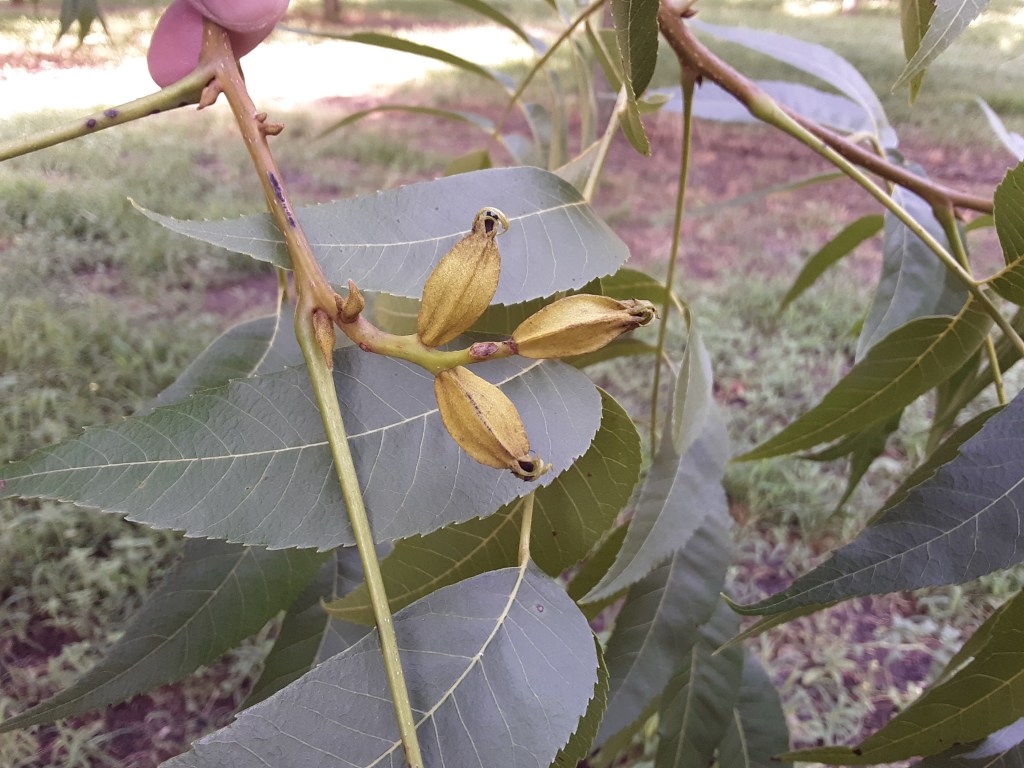
Be sure to scroll all the way to the bottom to see this week’s Question of the Week and check back on Thursday for the answer! Coastal Region Rob Last reports, “Pest and diseases are beginning to increase in the area. Powdery mildew is apparent in cucurbit crops. The most efficacious treatments are Vivando and…
-
Question of the Week – Cross-striped Cabbageworm
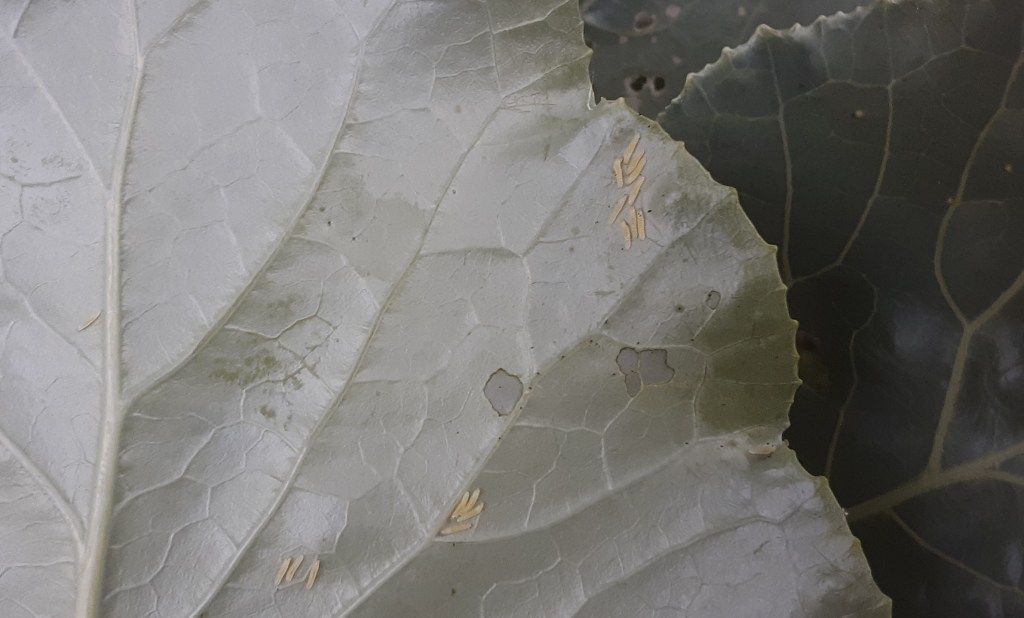
This week, the question was: Which brassica-feeding caterpillar is commonly found in groups on a single leaf, as shown here? These are cross-striped cabbageworms (CSCW). CSCW moths lay eggs in clusters of 3 to 25 rather than singly like most other brassica caterpillar pests. Because there are numerous caterpillars feeding on a single leaf once…
-
Resistance to Tebuconazole is Widespread in the Gummy Stem Blight Fungus in South Carolina

From Clemson Plant Pathologist Tony Keinath. Cucurbit growers should reduce the use of tebuconazole to manage gummy stem blight as the pathogenic fungus has become moderately resistant to this very commonly used fungicide. Seven watermelon fields were sampled in 2019 (six fields) and 2021 (one field) in Beaufort, Bamberg, Barnwell, and Hampton counties. Of 229…
-
Weekly Field Update – 6/13/22

Be sure to scroll all the way to the bottom to see this week’s Question of the Week and check back on Thursday for the answer! Statewide Extension Entomologist Tom Bilbo reports, “As tomatoes and other fruiting vegetables progress, make sure you’re protecting yields from insect and mite pests. I’ve seen a fair bit of…
-
Managing Southern Blight on Tomato and Pepper After Detection

From Clemson Plant Pathologist Tony Keinath. As reported in the June 6 edition of SC Grower, southern blight is showing up in crops of tomato and pepper. At this late date in the growing season, the best fungicide option for conventional growers is Priaxor, two applications made 2 weeks apart at a cost of $34…
 The South Carolina Grower